Interview with Baek Mikyung, Hit Drama Writer Behind the "Strong Woman..." Series
Some names arrive before their voice. Baek Mikyung-her name is now a genre of its own. When one of her dramas airs, viewers find themselves wondering not "What story will it be this time?" but "What kind of human tapestry will she unravel now?" Her female characters are captivating without being conventionally beautiful, dignified without being necessarily kind. They are both funny and sad, seemingly fragile yet ultimately unbreakable.

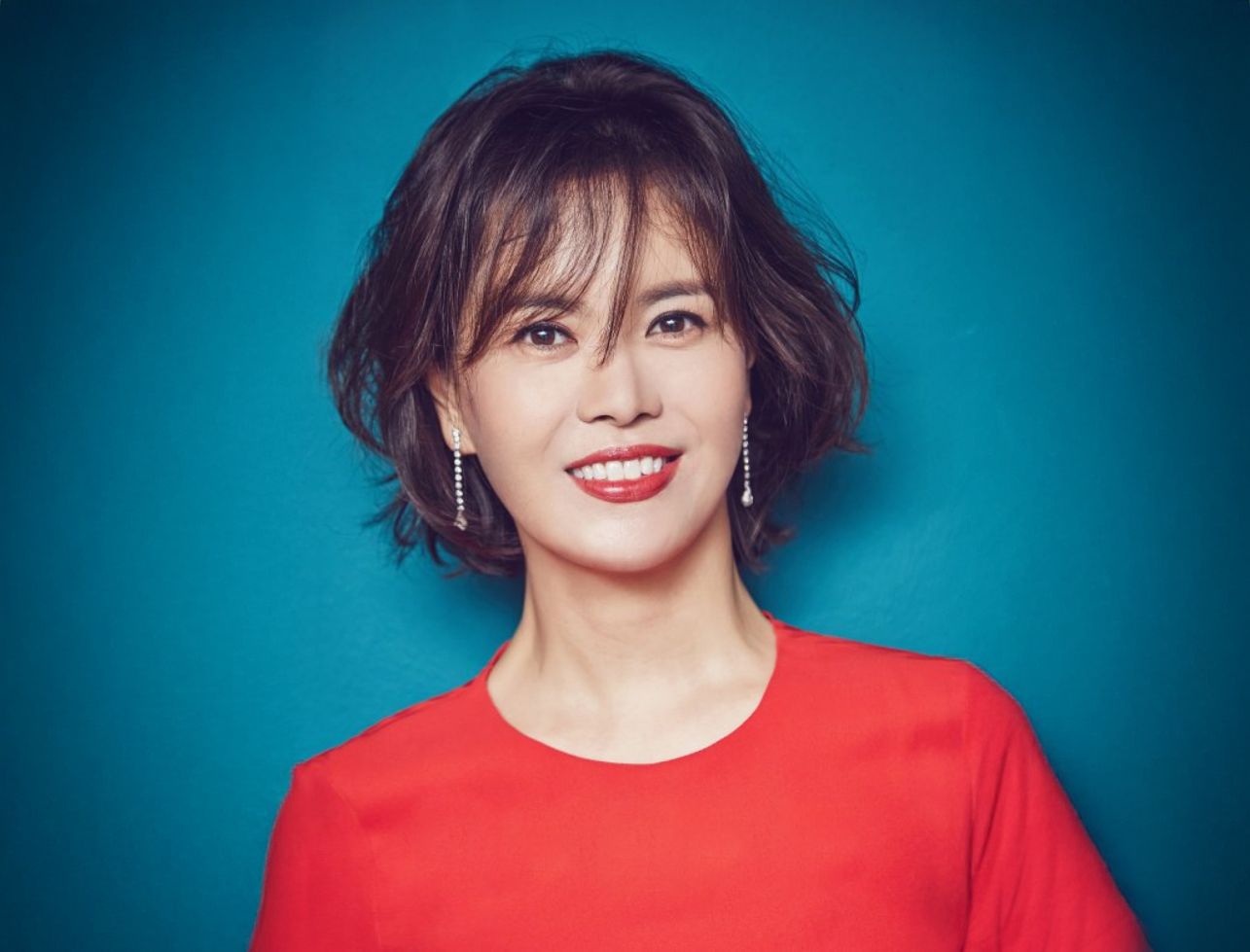
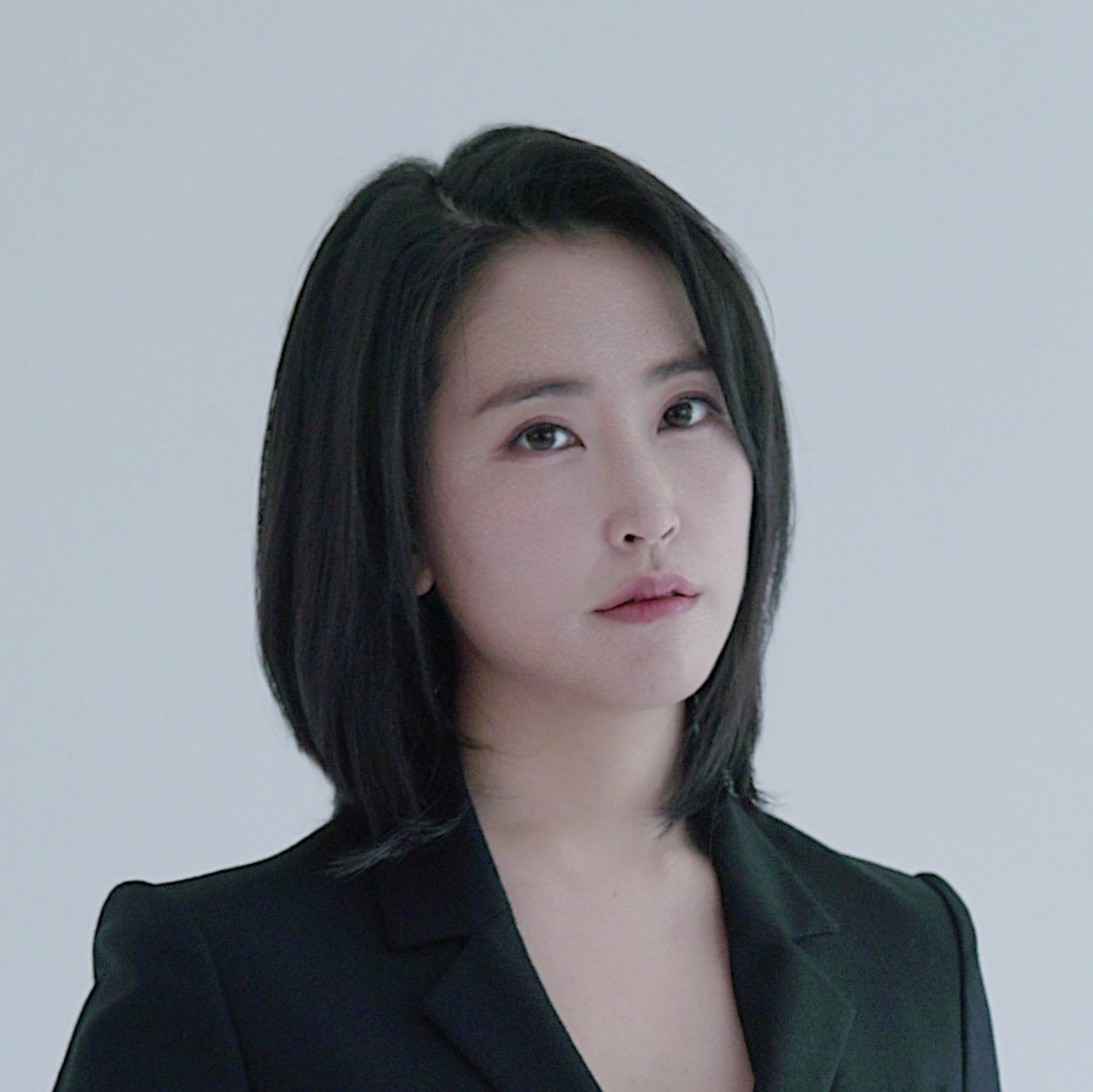
After 10 years since her debut, writer Baek Mikyung, who explores the space between desire and forgiveness, now says it is time to tell human stories beyond just women's narratives. Photo by the writer
원본보기 아이콘Characters who breathe with tension and wit, pain and affection, solidarity and desire, all intricately intertwined. "A writer is someone who looks straight at human deficiency," she says. Her touch breathes life not only into protagonists but also into peripheral figures. From "Strong Woman Do Bong Soon" to "Graceful Woman," "Mine," and now "Strong Woman Gangnamsoon," her narratives of solidarity have expanded. She has never hesitated to speak of desire, nor been stingy in depicting forgiveness.
"My representative work hasn't come out yet." It's not because she's greedy. She simply believes she hasn't yet created a work into which she poured her entire soul, as Michelangelo did with his ceiling frescoes, to the point of wearing down his cartilage. Stepping away from the efficiency-driven works of her past, she now declares her intent to take on a creative challenge that will consume her. In that work, she wants to talk about "capital"-a narrative of money and desire, where vulgar capitalism clashes with aristocratic capitalism. "The only themes that can unite everyone in the world are money and mothers. They are, without a doubt, the ultimate keywords that transcend generations and races." Right now, she is writing again, asking what it means to be "human" in a world saturated with desire.
Recently, While Viewing Michelangelo's Ceiling FrescoFelt the Creative Agony of "Wearing Down My Cartilage"Have I Ever Poured My All Into a Work Like That?Honestly, My Magnum Opus Has Yet to ComeThe Responsibility of Creating CharactersDeepening Concerns Over What Voice I Should Give Them
Beginning - Rhythm and Philosophy
-What is your secret to releasing seven dramas in ten years without a break?
▲Drama is popular culture, and I believe popular culture must breathe in sync with the public. I try to match my energy with theirs. I wake up at the same time, work just like any other city worker. On weekends, I rest and sometimes visit the bustling Han River. I especially love the Han River, so I make sure to run for 40 minutes and walk for another 40 minutes there at least twice a week, rain or snow, every Wednesday and Saturday. Watching people from their teens to their 80s running together there gives me a lot of inspiration. We now live in an era where generations communicate and, as a result, experience conflict. In the past, there was no conflict because there was no communication, but now, conflict arises from communication. I never write on weekends. Instead, I visit museums or galleries and spend time in nature appropriate for the season.
-What experience has had the greatest impact on your creative world in recent years?
▲The biggest impact came from seeing Michelangelo's ceiling fresco in Italy recently. When I saw it 20 years ago, I just thought, "It's big, it's beautiful." But seeing it again as a creator going through a slump, I reflected on the pain of creation, watching how Michelangelo, in his 30s, completed his work through sheer persistence, even as his cartilage wore down. It made me wonder if I, too, should have a magnum opus like Michelangelo's ceiling. At the same time, my sense of responsibility for the characters I create deepened. In the past, characters were an extension of myself, but now I am more concerned with giving voice to those who must exist in society. Especially, I feel as if invisible figures-women, the elderly, people with disabilities-are constantly reaching out to me. I strive to meet a diverse range of people without prejudice. I meet and talk with homeless people, ex-convicts, sexual minorities-characters often considered taboo on TV-to hear their stories.

Where is the end of desire? Those who already belong to the upper class, those struggling desperately to enter it. The lives of two women standing in the middle, and the figures who have drunk the bitter cup called 'desire' surrounding them are realistically portrayed in Baek Mi-kyung's work,
"Strong Woman" Series Started for FunThinking Deeply About How Female CharactersCan Fight and Influence Society Under Certain ConditionsNext Work: "Strong Woman Jangchungdong"Will Properly Address the Now-Blurry Concept of Good and Evil
Development - Growth and Turning Points
-How has the "Strong Woman" series evolved?
▲With "Do Bong Soon," I just wanted to create a fun female character. But starting with "Gangnamsoon," I began to consider the structures female characters are placed in and the social conditions under which they fight. I also started thinking about how they can influence others outside their immediate world. In the upcoming "Strong Woman Jangchungdong," I plan to show an even more evolved story. The main character is initially ambiguous in terms of gender, only later revealed to be a woman. This time, I want to properly address the concept of good and evil, much like how "The Dark Knight" posed a clear agenda on morality. This villain remains powerful because they genuinely believe what they're doing is right. I think, in this era where the definitions of good and evil have become so ambiguous, we need to talk about these concepts clearly.
-You once said you want to stop writing women's narratives.
▲Women's narratives have already become a genre, and many writers are working in this space. I am proud to have opened that door, but now I feel it's time to tell human stories, not just women's stories. My contribution was putting the female protagonist's name first in the title. I feel I've written enough about women's narratives. Still, I also feel a sense of responsibility that there may be voices of women I haven't yet heard. I am wary of women's narratives becoming "exclusive property." Women's stories are not just women's stories-they are human stories.

The representative work of writer Baek Mi Kyung, Strong Woman Do Bong Soon, is considered a pioneering piece of female narrative, prominently featuring the female protagonist's name in the title. Photo by JTBC
원본보기 아이콘-What is the global impact of female characters in Korean dramas?
▲I don't think female characters are especially respected in K-dramas yet. That's why I want to depict characters who are not passive beings seeking love, but who think independently, recognize their own desires, don't hide them, and fight against the system. This isn't just a trend-it's a reflection of how women in Korean society have fought against social structures. The evolution and improvement that occurred in Korea, a country with a deep-rooted patriarchal culture, are now being recognized by global viewers as "women who resemble me" or "women I want to resemble."
-Why do you focus so much on solidarity among minorities and different social classes in your work?
▲I think of myself as quite courageous. Even when broadcasters or collaborators say, "This won't get ratings," I still have the courage to say, "We need to do it anyway." That was the case when I wrote about the love story of Namsoon's grandmother, Gil Junggan, in "Strong Woman Gangnamsoon." Everyone said it would lower ratings, but who could ignore her confession: "Even when you grow old, your heart still beats. Your chest may sag, but does your heart?" I believe that, even at the risk of discomfort, drama protagonists should be different from ordinary people. In "Mine," Lee Boyoung desperately tries to protect Hajun, a son who is not her biological child. Breaking conventions and stereotypes-this, to me, is what defines a protagonist.
What Kind of Narrative Do You Want to Try in Ten Years?Melodramas About Sexuality and Desire Among People in Their 60sA Writer Is Someone Who Faces Human DeficiencyEven Peripheral Characters Deserve to Breathe
Transition - Challenge and Boldness
-Which character in your works reflects you the most?
▲That character hasn't appeared yet. Until now, I was too shy to reveal myself, so I hid behind my writing. Of course, it's impossible to completely separate the writer from the work. But now that I'm older and less embarrassed, I think a character resembling me will emerge in future works. In the short-form project I'm currently preparing, the female lead is quite similar to who I was in my twenties.
-Is there a narrative or genre you'd like to try in ten years?
▲By then, I'll be in my 60s, and as we enter the era of centenarians, the elderly will become much younger in spirit. People in their 60s today are truly young. I want to write melodramas about the sexuality, love, and desire of older people-stories like the love lives of mothers-in-law. While such stories can't be broadcast now, I think it will be possible by then, as our generation will be a healthy, established part of society. Also, I want to write about a truly "crazy" woman as the protagonist-a woman society can't handle, a story that explores the extremes of female emotion and instinct.

Writer Baek Mi Kyung says that in "Mine," Lee Bo Young's desperate efforts to protect her son Ha Jun, who is not her biological child, the breaking of conventions and stereotypes, are scenes that clearly demonstrate the protagonist's character. Photo by tvN
원본보기 아이콘-How are you preparing for the rapidly changing content distribution landscape?
▲Can you really prepare? (Laughs) I may anticipate some aspects, but you can't really prepare. I'm working on short-form content, commerce content, and also writing to keep traditional broadcasting alive. I have to accept and adapt to this flow, constantly adjusting. There is no right answer. "Flexibility" is the best word for it. In an era where everything changes so quickly, writers must keep adapting to survive.
-How do you view the creative environment after the advent of AI, and do you use it in your writing?
▲I use AI a lot. It's been a while since I've worked without an assistant writer-AI has taken over that role. I mainly use it for research, and I often have conversations with ChatGPT. I even joke, "It knows me better than my boyfriend." But even AI admits it: "I can't write words that truly resonate with human emotion." Stories that begin with pain and move toward forgiveness and love-the trembling and lingering resonance of those emotions can only be captured by humans. Works based solely on data and plot can be risky, but writers who create moving stories don't need to compete with AI.
-What is the one principle you refuse to compromise on as a writer?
▲I believe stories about the socially disadvantaged must be told. Even in B-grade comedies, there must be a theme and a message. Drama is entertainment, but it should give people something to think about. Above all, I focus on "forgiveness"-stories where people forgive each other. I want to write about giving even villains a chance. In this era of hasty condemnation, I believe true drama shows that even those people have their own reasons and deficiencies.

After writing continuously for 10 years since "Dear Eundong," writer Baek now says it is time to respond with "good works" instead of calculated ones. Photo by the writer
원본보기 아이콘These Days, AI Serves as My Assistant WriterBut Only Humans Can Touch the Tremor and Resonance of Emotion
Conclusion - Resonance and Message
-What message do you think dramas should deliver to the 2030 generation?
▲The 2030 generation dislikes being preached to. So these days, instead of presenting clear messages, I try to ask questions through the actions and choices of my characters. They are a generation that appreciates emotional detail and the nuances of relationships, so they want empathy. I try to write in a way that shows the process rather than the answer, sincerity rather than perfection. What I want to tell them is this: In this world, the process is more important than the result. It's not about what happened, but "so," "because of that," and "despite everything"-that is what real drama is.
-Any advice for aspiring writers?
▲Find your own language. Trends are hard to keep up with and constantly change, so don't chase them. We live in an era of diversity-short-form viewers and those watching sitcoms from 20 years ago coexist. If you have your own language, there will be people who want to hear it. Hold on to your originality and identity. This job is more about stamina than talent, and persistence is more important than sensitivity. Only those who truly want to write, who have a real desire to write good stories, should become writers. It's not a career that brings as much wealth and fame as people think. Being a writer is less about writing and more about managing your mental health.
-If we meet again in three years, what do you think you'll be talking about?
▲I want to be able to say, "I have no regrets because I did my best." I plan to work really hard for the next three years. This is the time when I can still maintain my physical strength, imagination, and creativity. It's been ten years since I became a writer. They say even rocks can be pierced in ten years. It was a time when the world recognized my name. Now, I feel a healthy pressure to write truly great works, and I feel a sense of mission and responsibility as a writer. For the next three years, I want to pour everything I have into my work. I might retire or do something other than drama writing. After three years of hard work, I think I'll take a sabbatical. Still, I'm genuinely happy that there are more people who find joy because of me and my works.
▶About Baek Mikyung
-
Reporter Kim Heeyun film4h@asiae.co.kr
-
Edit Yang Hyejin adoretj@asiae.co.kr
© The Asia Business Daily(www.asiae.co.kr). All rights reserved.
!["Please Help Us": How Much Do Those Bowing 90 Degrees These Days Actually Earn? [Data Pick]](https://cwcontent.asiae.co.kr/asiaresize/323/2026052010120870131_1779239528.png)