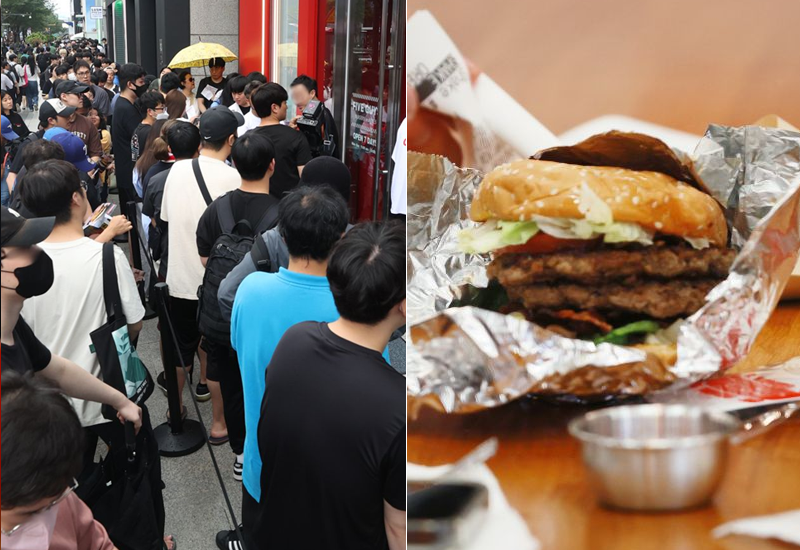
Five Guys opened its first store on Gangnam-daero, Seoul in June 2023 and has since increased the number of stores in major commercial areas in Seoul and Gyeonggi Province.
Five Guys, the American burger brand led by Kim Dongseon, the third son of the Hanwha Group and Executive Vice President overseeing Future Vision at Hanwha Galleria and Hanwha Hotels & Resorts, is reportedly being put up for sale just over two years after its launch in Korea. Five Guys gained immense popularity at its debut in the Korean market, with customers lining up before opening hours. Hanwha even secured the Japanese business rights, expanding its territory. Amid this success, the sudden move to sell the domestic business rights has drawn significant attention.
With the department store division?the core of Hanwha’s retail business?suffering declining performance, Kim has spearheaded a series of new investments, including the acquisition of Ourhome, Korea’s second-largest group catering company, as well as the expansion of Baskoop Creamery, an ice cream specialty store, and Five Guys’ entry into Japan. Industry watchers believe the sale is a strategic decision to secure much-needed capital.

Key stakeholders including Kim Dongseon, Vice President of Hanwha Galleria (fourth from the left), are taking a commemorative photo at the first anniversary event of Five Guys' domestic launch last year. Photo by FG Korea
원본보기 아이콘Five Guys Opens Its 8th Store Today... Sale Considered Two Years After Launch
FG Korea, the operator of Five Guys, announced on the 25th that it would open its eighth store in Korea, located in Yongsan, Seoul. The new location occupies 413.1 square meters (about 125 pyeong) on the third floor of Yongsan I’Park Mall Living Park and offers 118 seats. The store will operate daily from 10:30 AM to 10:00 PM.
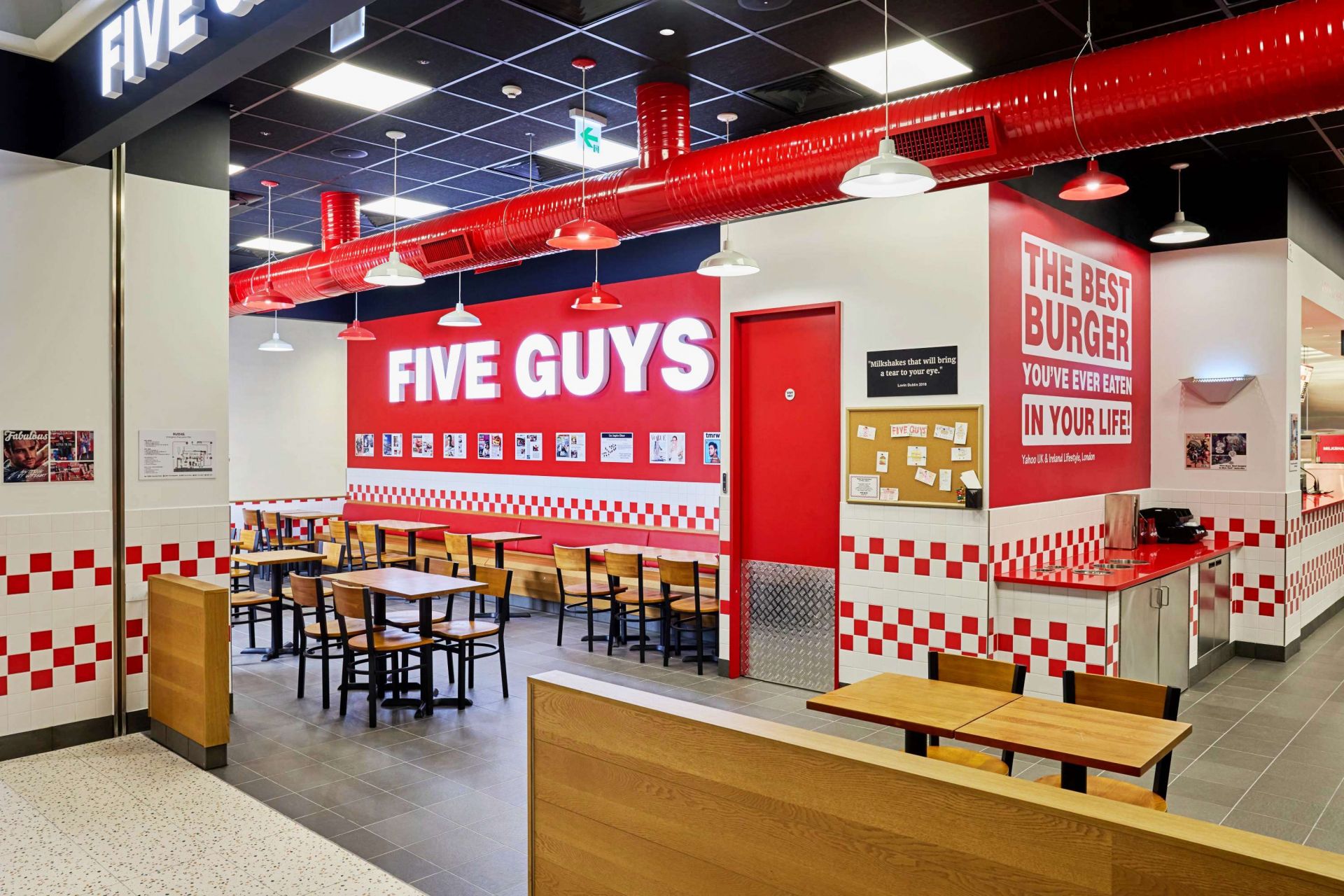
It expanded to the fifth store last year, and as of this day this year, the number of stores has increased to eight. It plans to open the ninth store within the year.
Initially, the vision was to expand the number of domestic stores to more than 15 by 2028,
but the company explained that store expansion is progressing faster than the current plan.
In its first year, Five Guys enjoyed such popularity that customers lined up before opening, and its performance was strong. According to the company’s audit report, 2023 sales reached 10 billion won, with the Gangnamdaero branch alone achieving “surprise results” over eight months. Last year’s revenue was 46.5 billion won, up 365% year-on-year. However, as this figure represents the combined annual sales of five stores, it was not as explosive as the first year. Operating profit last year was 3.4 billion won, turning around from a 1.3 billion won operating loss in the first year.
Nevertheless, Hanwha Galleria is now pursuing a sale of Five Guys just two years after its launch. Hanwha Galleria, which owns 100% of FG Korea, recently distributed teaser letters (brief investment guides) to several private equity fund (PEF) managers regarding the sale of Five Guys’ domestic business rights. Hanwha Galleria explained, “Having achieved results beyond expectations in just two years, we are reviewing various options, including strengthening brand competitiveness, and the sale of domestic business rights is being discussed as part of this process. We are also considering the sale from the opposite perspective of business expansion.”

Five Guys Establishes Japanese Subsidiary... Is Hanwha Facing a Cash Crunch?
The main reason cited for Hanwha Galleria putting Five Guys up for sale is a lack of liquidity. After securing the rights from global headquarters to launch Five Guys in Japan in July last year, FG Korea established a Japanese subsidiary this February. The company plans to open more than 20 stores in major Japanese cities, including Tokyo, over the next seven years. To support this, FG Korea conducted two capital increases totaling 7 billion won in December last year and May this year.
On July 14, FG Korea borrowed 4 billion won from Hanwha Galleria for the purpose of opening new stores and operating the subsidiary. The loan will be provided in installments over three occasions: this month, August, and November.
Hanwha Galleria itself is also facing a cash shortage due to underperformance in its core department store business. As of the first quarter of this year, Hanwha Galleria’s short-term liabilities due within a year stood at 574 billion won, far exceeding its liquid assets of 324.7 billion won. In particular, short-term borrowings due within a year increased by about 25 billion won to 129 billion won in the first quarter, up from 104.1 billion won at the end of last year, while Hanwha Galleria’s cash and cash equivalents amounted to only 47.9 billion won.


Expected to Maximize Sale Value Amid Performance Rebound
The department store business, which focuses on luxury brands, has lost momentum and is struggling to secure cash. Luxury goods account for 40% of Galleria Department Store’s total sales, a higher proportion than competitors, whose luxury sales typically range from 20% to 30%. However, due to high inflation and weakened consumer sentiment, the company recorded an operating loss of 1.1 billion won last year, swinging into the red. Department store sales reached 396.4 billion won, up 12.6% year-on-year, but considering that the 2023 sales figure excludes two months due to the spin-off and relisting from Hanwha Solutions in March, it is likely the business actually shrank.
Despite this, Kim has actively pursued expansion by positioning food and beverage (F&B) businesses?including dining, hamburgers, wine, and coffee?as new growth engines. In addition to subsidiaries such as Vino Galleria (wine importer), Hanwha B&B (bakery), and Pure Plus (beverages), two more companies were added in the first half of this year: the Five Guys Japan subsidiary and Baskoop Creamery, which operates the premium ice cream brand “BENSON.” Hanwha Galleria’s F&B division posted revenue of 64 billion won last year, more than six times the previous year’s 10.4 billion won, but the proportion of total sales remains in the 10% range.
An industry insider commented, “Although Kim has led various new business initiatives, the results have not been clearly proportional to the investments. Five Guys is one of the few businesses with relatively strong sales, so it appears the company judged this to be the right time to sell the business rights at a fair value.” Hanwha Galleria stated that, if the sale of Five Guys proceeds, the funds will be invested in rebuilding the Seoul luxury store and strengthening the business portfolio by developing new growth engines.
-

Reporter Kim Heungsoon sport@asiae.co.kr
-
Edit Kong Sumin hyunhj@asiae.co.kr
© The Asia Business Daily(www.asiae.co.kr). All rights reserved.
!["Please Help Us": How Much Do Those Bowing 90 Degrees These Days Actually Earn? [Data Pick]](https://cwcontent.asiae.co.kr/asiaresize/323/2026052010120870131_1779239528.png)