

It is also pointed out that employment policies need to be flexible to maximize the period of wage employment. This is because it is difficult to be reemployed after retirement, and the 'possibility of continued work' is greater in self-employment, leading people to choose self-employment. The important point here is not 'employment extension' but 'employment contract renewal.' If the government extends the statutory retirement age to 65, there may be a negative effect of reduced new hiring of young workers.
Editor's NoteAmong member countries of the Organisation for Economic Co-operation and Development (OECD), Korea ranks seventh in the proportion of self-employed workers. Moreover, most self-employed people are concentrated in industries with low barriers to entry, such as restaurants and real estate (rental businesses). As self-employed workers compete in low-profit sectors, the number of business closures each year approaches one million. Considering that the second baby boomer generation (born 1964?1974) began reaching the statutory retirement age last year, the proportion of self-employed people aged 60 or older is expected to reach 2.48 million by 2032. This trend of retirees turning to self-employment after retirement places a significant burden on the macroeconomy. To address the challenges facing self-employment, the period of wage employment must be structurally extended, and government financial support should be improved to encourage business closure support or industry transition. Asia Economy has analyzed the realities of self-employment in Korea based on statistical data and government policies. In addition, we aim to present policy directions for the government regarding self-employment through the perspectives of various experts and international case studies.
Korea ranks 7th in self-employment rate among OECD countries
Reemployment after retirement is common in advanced economies
Korean companies avoid reemployment due to employment security burdens
Second baby boomer retirements in full swing
2.48 million self-employed expected by 2032
61.7% of new self-employed enter unprofitable sectors
Reemployment after retirement is common in advanced economies
Korean companies avoid reemployment due to employment security burdens
Second baby boomer retirements in full swing
2.48 million self-employed expected by 2032
61.7% of new self-employed enter unprofitable sectors
Insufficient Preparation for Old Age... 46% of Retired Self-Employed Are Livelihood-Based
Korea's self-employment sector faces two structural problems. The proportion of self-employed workers is high relative to the size of the economy, and fierce competition takes place in low-profit industries. According to data from the OECD, in 2023, the countries with the highest rates of self-employment among member states were Colombia, Mexico, Greece, Turkiye, Chile, Costa Rica, and Korea, in that order. Except for Mexico, all these countries have lower economic development than Korea.
Why is the proportion of self-employment so high? While the answer is complex, a survey offers some explanation. Based on Statistics Korea's Economically Active Population Survey, the Bank of Korea analyzed why retirees choose self-employment. The data shows four main reasons: ▲livelihood-based (46%) ▲high-income pursuit (24%) ▲leisure pursuit (17%) ▲vulnerable type (13%). Nearly half fall into the livelihood-based category. Lee Jaeho, Deputy Head of the Macroeconomic Analysis Team at the Bank of Korea, said, "These individuals are estimated to be working long hours to make a living due to insufficient preparation for old age. The average monthly pension received is 790,000 won, and the average weekly working hours are 46."
As of last year, the average retirement age in Korea was 52.1 years. In other words, people turn to self-employment after retirement to earn a living. In advanced economies like the United States and Europe, reemployment after retirement is common. However, Korean companies are reluctant to rehire retirees.
In advanced economies, reemployment after retirement is common... Continued employment ensures stability in old age
In Korea, reemployment is avoided... Many become business owners out of necessity, but closure anxiety remains high
Donghyun Ahn, Professor of Economics at Seoul National University, explained, "While companies are the main agents of job creation, in Korea, it is virtually impossible to dismiss employees once hired, so companies avoid reemployment. As a result, most retirees turn to self-employment."
Professor Ahn also pointed out, "Korea has an unusually large population of people born in the 1970s, and as the second baby boomer generation, including them, started retiring last year, the number of self-employed will continue to rise for the time being, and the closure rate will remain high."
61.7% of Elderly Self-Employed Work in Low-Value-Added Sectors Such as Transportation, Warehousing, Accommodation, and Food Services
The real problem lies elsewhere. The vast majority of self-employed people work in "unprofitable" sectors. According to Statistics Korea, over the past ten years (2014?2024), the number of self-employed people aged 60 or older increased by 470,000. Of these, 61.7% (290,000 people) chose ▲transportation and warehousing ▲accommodation and food services ▲wholesale and retail ▲construction. All of these are industries that do not require specialized skills or knowledge.
This is also evident in annual statistics on the top industries for new business openings. According to the Korea Small Business Institute, over the past five years (2019?2023), the top three industries for new businesses were Korean restaurants (1st), private academies and study rooms (2nd), and beauty salons (3rd).
However, closure rates have also risen. The closure rate for restaurants increased from 18.70% in 2019 to 20.05% in 2023. For the service industry, the rate rose from 43.77% to 45.51%, and for the accommodation industry, it jumped from 58.46% to 63.36%. Specifically, the highest closure rates were seen in foreign restaurants, Korean restaurants, and cafes.
Low Barriers to Entry Lead to Fierce Competition... Declining Sales Share and Worsening Poverty
Low barriers to entry mean that starting a business is easy, but this also results in extreme competition. In particular, productivity among self-employed people aged 50 and older is very poor. For new self-employed people in their 30s, annual sales per person are 46 million won, and sales per hour are 26,000 won. For those in their 40s, annual sales per person are also 46 million won, and sales per hour are slightly higher at 27,000 won.
In contrast, for those in their 50s, annual sales per person drop to 40 million won, and sales per hour to 24,000 won. For those in their 60s, annual sales per person fall sharply to 30 million won, and sales per hour to 18,000 won. For those in their 70s, annual sales per person and per hour shrink further to 20 million won and 14,000 won, respectively. Due to excessive competition and low productivity, 35% of new self-employed people in their 60s earn less than 10 million won in annual operating profit.
The polarization problem among self-employed people is also severe. The Korea Small Business Institute divided self-employed people into four groups based on annual sales at Shinhan Card merchants and calculated the market share per 1% of each group. Over the past six years (2018?2023), the sales concentration among micro-business owners (annual sales of 300 million won or less) failed to reach 1 (0.45→0.42) of total sales.
During the same period, the market share of the top group (annual sales over 1 billion won up to 3 billion won) also declined from 5.00 to 4.40, but their market dominance remains stronger than that of micro-business owners.
Sumi Na, Research Fellow at the Korea Small Business Institute, analyzed, "The market concentration of low-income groups in everyday industries is fundamentally low, and although their numbers are large, their relative sales share continues to decline, worsening poverty. The gap between the overall average and the average for micro-merchants is increasing across all industries, indicating that the deepening polarization is a general phenomenon in everyday sectors."
Encourage Startups in Medium-Value-Added Sectors Instead of Restaurants and Cafes... Utilize Employment Contract Renewal After Retirement
Experts unanimously agree that to improve the current self-employment situation in Korea, job training and support measures are needed to encourage startups in medium-value-added sectors instead of the current focus on low-value-added businesses.
Park Jeongsu, CEO of the Institute for Industrial Policy and Strategy, said, "Self-employed people are largely divided into retired baby boomers and entrepreneurs in their 30s and older. The younger generation has moved into self-employment due to factors such as the slowdown in Korea's manufacturing sector and voluntary retirement. The government should strengthen job training and change support policies to encourage startups in medium-value-added sectors instead of low-barrier businesses like restaurants, accommodation, and service industries."
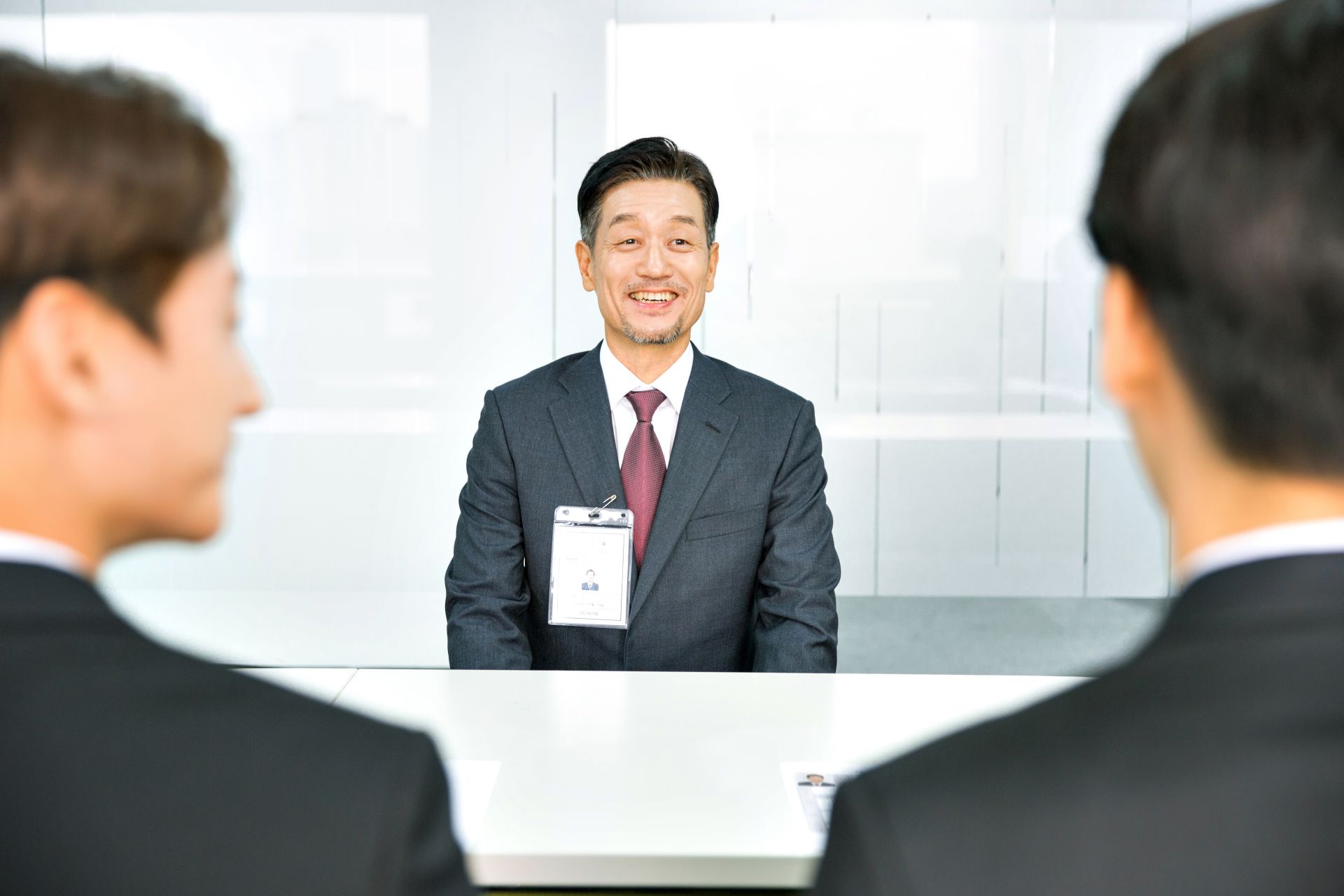
Kwangseok Kim, Professor of Economics at Myongji University, emphasized, "Most self-employed people in Korea start their businesses involuntarily and without adequate preparation, so first, a structure should be created that allows retired workers to be reemployed."
Japan's example is worth noting. As a super-aged society, Japan made "employment security" measures mandatory in 2004. Japanese companies are required to choose one of the following for workers up to age 65 at no more than 75% of their previous wages: ▲continued employment ▲extension of retirement age ▲abolition of retirement age.
Professor Kim also said that if employment contract renewal is not realistically possible, support should be provided so that retired workers can start businesses with adequate preparation. He said, "Instead of entering highly competitive, low-productivity sectors like restaurants and cafes, the government should guide people to take sufficient time to prepare for self-employment in industries with entry barriers. Furthermore, the government should distinguish between over-concentrated and underrepresented sectors and consider creating guidelines to prevent overcrowding in the self-employment sector and encourage startups in industries or regions where they are needed."

IndexImproving Small Business Public Support Structure
- Worried About Making a Living After Retirement: "All I Can Do Is Open an Unprofitable Restaurant or Cafe"
-

Reporter Hwang Yoonju hyj@asiae.co.kr
-
Edit Kim Yumi ymkim91@asiae.co.kr
© The Asia Business Daily(www.asiae.co.kr). All rights reserved.
!["Please Help Us": How Much Do Those Bowing Deeply for Your Vote Really Earn? [Data Pick]](https://cwcontent.asiae.co.kr/asiaresize/323/2026052010120870131_1779239528.png)