Foreigners Not Subject to Loan Regulations
Rapid Increase in Purchase of Collective Buildings in Seoul
Rapid Increase in Purchase of Collective Buildings in Seoul

by Lee Jungyun
by Choi Yujeong
Published 21 Jul.2025 14:35(KST)
The number of home purchases by foreigners surged following the June 27 measures. This is analyzed as a result of foreigners, who are not subject to loan regulations, engaging in speculative buying amid persistent expectations of rising housing prices. The National Assembly and other institutions are considering measures to require foreigners to obtain approval for real estate transactions in order to curb foreign purchases of real estate.
According to the Court Registration Information Plaza on July 21, the number of foreigners who applied for ownership transfer registration for collective buildings in Seoul (including officetels, apartments, row houses, and multiplex houses) from July 1 to 17 was 114. This represents a 17.5% increase compared to the same period last month, when there were 97 applicants.
While real estate purchases by foreigners increased, the number of major domestic buyers, including Korean nationals and corporations, declined sharply. The number of Korean buyers fell by 30.1%, from 9,950 to 6,959. The number of corporate buyers plummeted by 58.6%, from 915 to 379.
By nationality, Chinese nationals accounted for the largest number of foreign buyers, with 54. They were followed by 33 Americans and 8 Canadians. The number of Chinese buyers increased by 14 (35%) from 40 during the same period last month. The number of American buyers also rose by 6 (22.2%), from 27 to 33.
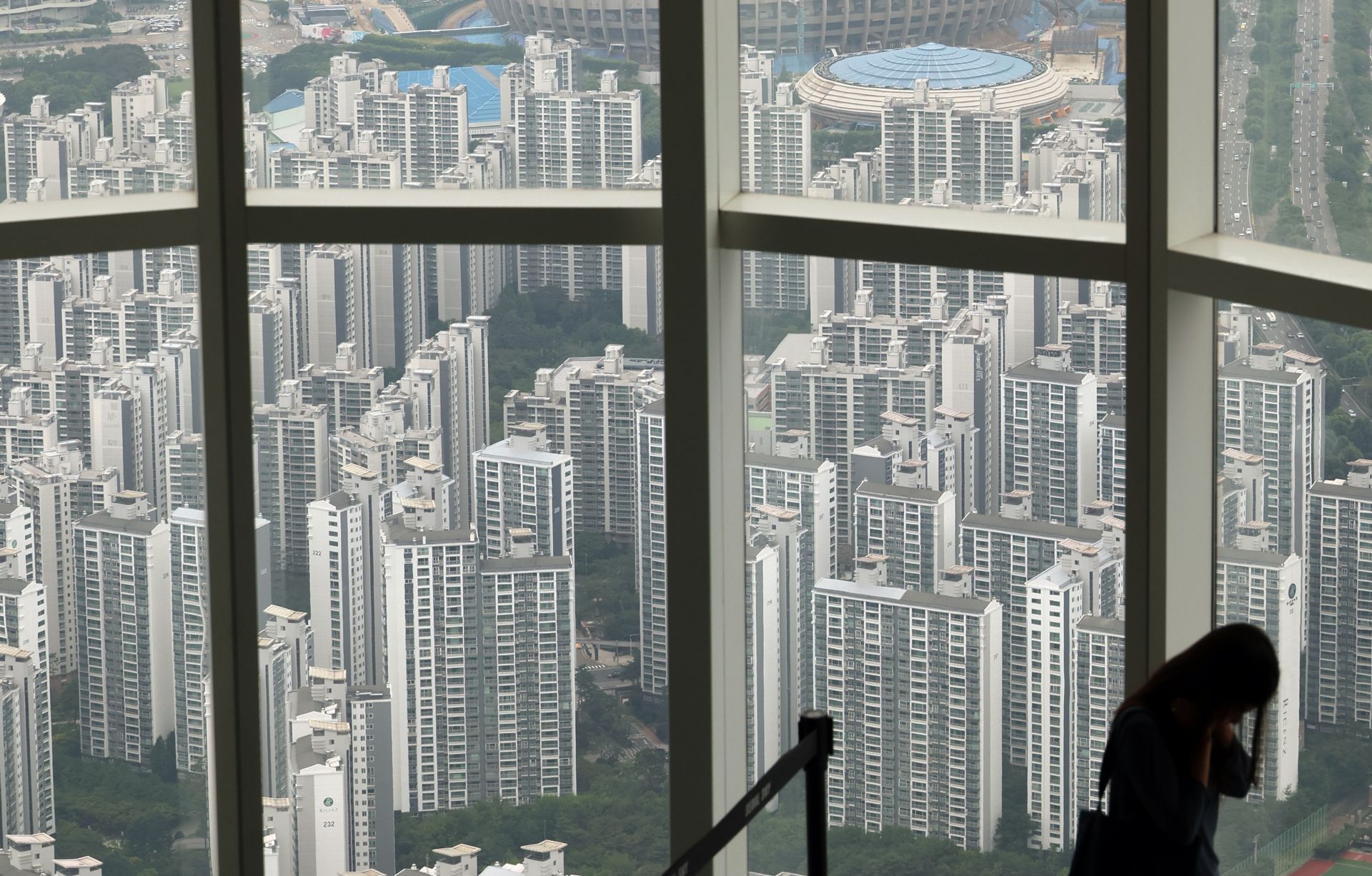
The number of foreigners purchasing collective buildings in Seoul has been on the rise this year. In January, there were only 110 such buyers, but the number nearly doubled to 204 in May. Although the figure slightly decreased to 198 last month, it still approached 200.
Despite the increasing number of foreigners purchasing real estate in Seoul, the government has yet to take significant action. Under the June 27 loan regulations, the mortgage loan limit for Korean nationals in the Seoul metropolitan area was capped at 600 million won. However, foreigners were not included in these regulations. As a result, while domestic transactions were directly impacted by the loan restrictions, foreign transactions increased as foreigners were able to avoid these regulations. Foreigners can also secure funds from overseas banks that are not subject to South Korean government regulations.
As controversy over "reverse discrimination" against Korean nationals regarding foreign real estate purchases has grown, the National Assembly has recently begun to take action. Bills have been proposed to change the current notification system for foreign real estate transactions to a permit system. Lee Unju, a member of the Democratic Party of Korea, has proposed a partial amendment to the Act on Report of Real Estate Transactions, which would require foreigners to obtain prior approval when entering into contracts to acquire domestic real estate and to reside in the property for more than three years after purchase. Kim Mi-ae and other members of the People Power Party have also proposed similar amendments. Kim's bill would require foreigners to obtain prior approval from the mayor, county governor, or district head when acquiring land in speculative or regulated areas. In Seoul, the city government plans to strengthen its management system by verifying sources of funds and conducting detailed investigations into suspicious transactions when foreigners report real estate transactions. In addition, the city will conduct on-site inspections to verify actual residence for foreign purchases in autonomous districts and land transaction permit zones.
Park Won-gap, Senior Expert at KB Kookmin Bank, stated, "It would be excessive to prohibit foreigners from buying homes for residential purposes," but added, "There is a need to restrict purchases made for gap investment (buying with tenants in place), and a permit system requiring at least two years of residence before resale could be one alternative."

Lee Jungyun leejuyoo@asiae.co.kr
Choi Yujeong yjchoi@asiae.co.kr
© The Asia Business Daily(www.asiae.co.kr). All rights reserved.




![[Culture Interview] "Unifying the Fragmented Music Market... Super Fans Are the Next Competitive Edge"](https://cwcontent.asiae.co.kr/asiaresize/304/2026042817051344090_1777363513.jpg)
