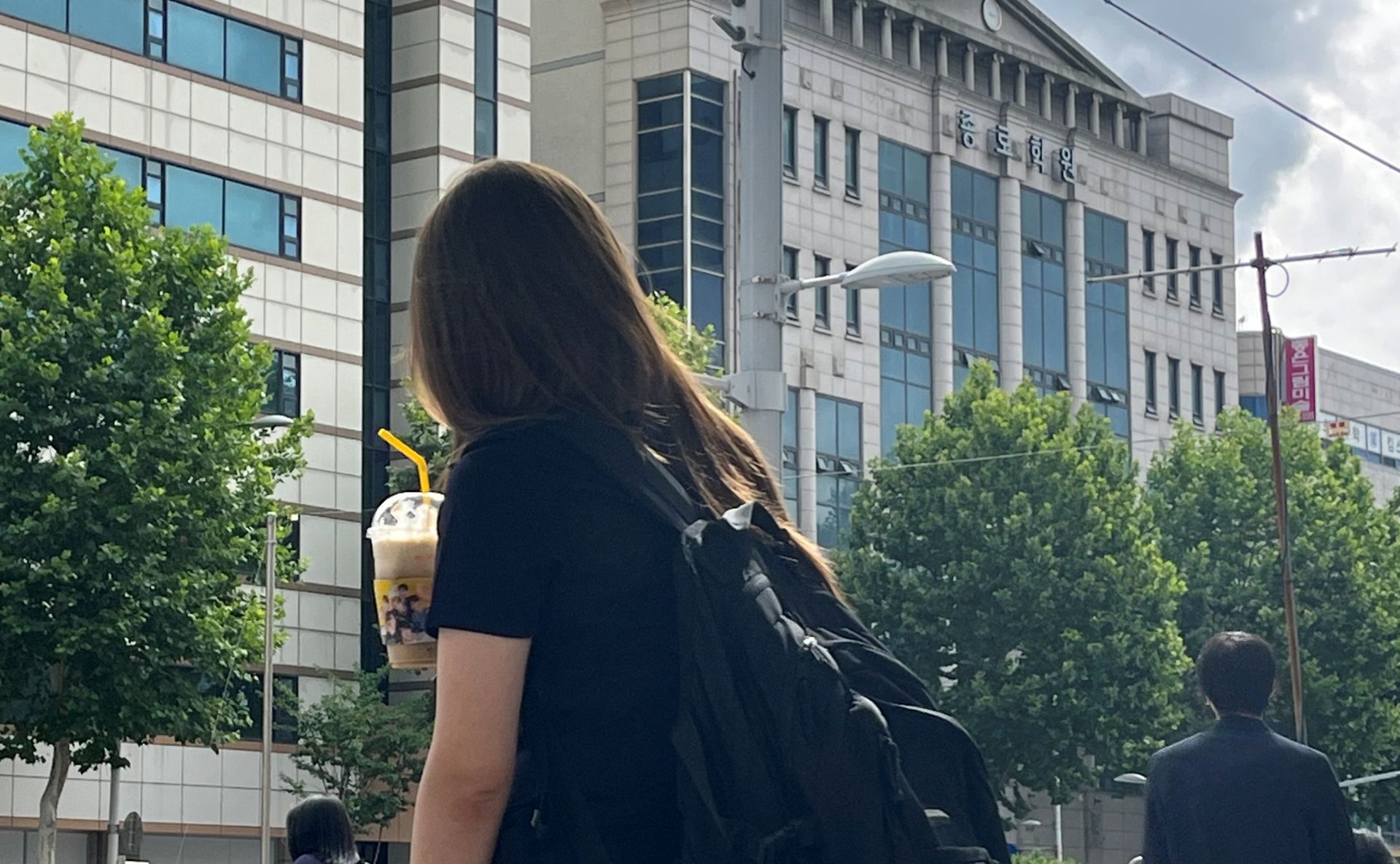
If transportation has absorbed private education, it is also possible to achieve dispersion through "reverse design." Experts pointed out that, unlike in the past when transportation systems were designed around areas with concentrated capital and population, future efforts should focus on "transportation dispersion" and "balance" to address disparities.

The "Special Act on the Management of Metropolitan Area Transportation in Major Cities," revised in April 2025, is cited as a representative attempt to address transportation disparities. Enacted in 2007, this law included provisions such as national funding support for metropolitan transportation facilities to resolve transportation issues centered on special and metropolitan cities. However, the definition of "major city" included only areas within the same transportation sphere as special and metropolitan cities, excluding Jeonbuk and Gangwon. Jeonbuk Province had been calling for an amendment to the law, citing its annual road traffic congestion costs (about 1.9 trillion won), which are higher than those of Daejeon and Ulsan. As a result, the Jeonju area in Jeonbuk has now been included as a major metropolitan area, and it is expected that the convenience of daily movement?such as commuting, education, medical care, and cultural facility use?will be greatly improved as the transportation network expands in the future.

Students are moving to academies after finishing school classes in the Hagwonga area of Mokdong, Yangcheon-gu, Seoul. Photo by Kang Jinhyung
원본보기 아이콘Lee Deoknan, advisor to the Korean Society of Educational Law, said, "Regional disparities in transportation create a variety of gaps throughout daily life, and the gap in educational opportunities is one of them." He added, "The solution can also be found in transportation. If resolving transportation disparities leads to population inflow to local areas, corporate attraction, and revitalization of small businesses, education will also be able to take root within the region."
There are also cases where the conventional idea that transportation absorbs surrounding infrastructure has been overturned through successful reverse utilization. The No. 200 seat bus newly established by Gwangmyeong City in Gyeonggi Province is one such example. To improve access to school districts, Gwangmyeong City has been operating the No. 200 general seat bus, which directly connects KTX Gwangmyeong Station to the Mokdong academy district in Seoul, since 2023. Although apartment complexes have been rapidly built in the area, an academy district had not formed, so people would travel to outer areas such as Mokdong. Gwangmyeong City established the No. 200 bus route after discussions with the Seoul Metropolitan Government and the Metropolitan Transport Commission of the Ministry of Land, Infrastructure and Transport. At the same time, Gwangmyeong City prominently displayed the phrase, "Going to Jongno Academy in Mokdong 7 Complex." This was to emphasize that, with improved transportation, there is no need to move to Mokdong to share the school district.

At the time of planning, it was estimated that about 15,000 people would use the No. 200 bus each month, but the actual number of users has far exceeded this. Song Jieun, an official in the Urban Transportation Division of Gwangmyeong City, said, "The average monthly number of users increased from 18,000 in January last year to 26,000 in May this year," adding, "Most of the demand appears to be for academy attendance, and we are considering increasing the number of runs in the future to reduce the interval between buses."
-
Reporter Oh Jooyean moon170@asiae.co.kr
-
Edit Kim Inwook kiminuki@asiae.co.kr
© The Asia Business Daily(www.asiae.co.kr). All rights reserved.
!["Please Help Us": How Much Do Those Bowing 90 Degrees These Days Actually Earn? [Data Pick]](https://cwcontent.asiae.co.kr/asiaresize/323/2026052010120870131_1779239528.png)