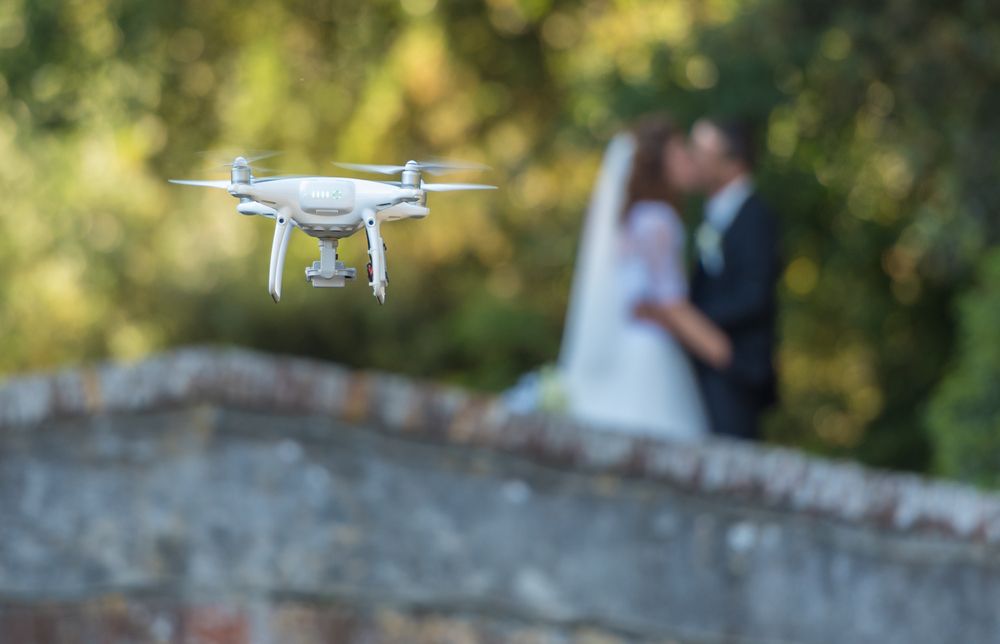
The Ukrainian military has deployed so-called "Wedding Drones"?unmanned aerial vehicles originally used for wedding photography?on a large scale along the front lines. As the war drags on, inexpensive civilian drones are being massively converted into lethal weapons. In Ukraine, the number of drones deployed to the front as essential operational equipment now exceeds the number of soldiers. Some experts point out that the mass production and unlimited deployment of drones are contributing to the stalemate at the front.
'Wedding Drones' Cover the Ukrainian Front... Millions Produced Annually
Civilian drones for wedding photography modified into suicide weapons with grenades attached Ukraine produces 4.5 million drones this year alone... ahead of Russia Number of drones exceeds soldiers... deployed for real-time surveillance and bombing
According to the Wall Street Journal (WSJ), Ukraine's production of first-person view (FPV) drones this year reached 4.5 million units, double last year's 2.2 million. Since 2023, when Ukraine produced 800,000 drones, the country's drone output has more than doubled each year. This figure is also far higher than the 2.5 million drones set as Russia's production target for this year.
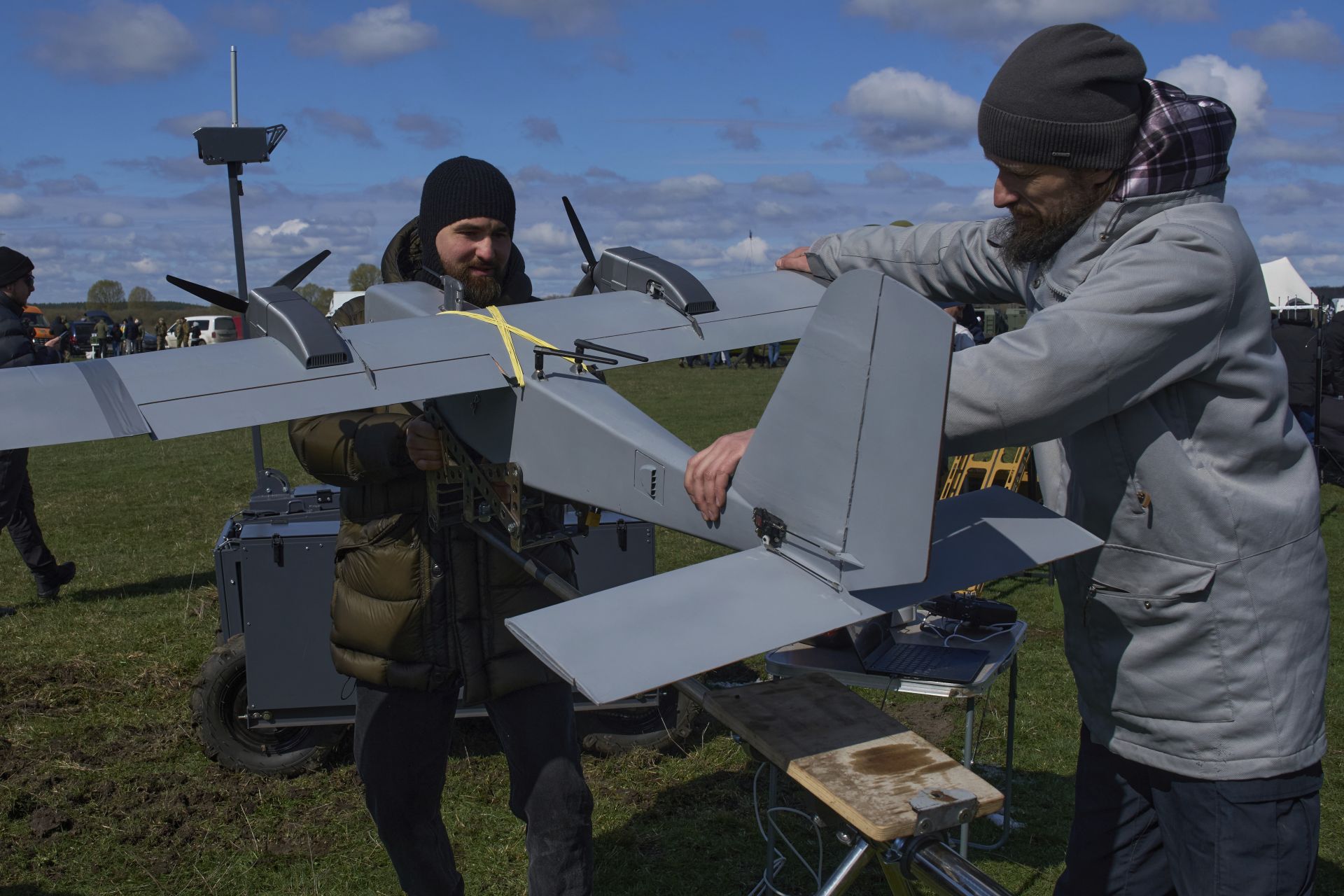
Since the outbreak of war, the Ukrainian military has used Western military aid and various overseas funds to establish drone factories across the country. These factories produce a wide range of drones, including models for reconnaissance, bombing, and suicide missions. Last year, it was reported that about 1.3 million drones?more than the number of soldiers?were deployed to the front. The Ukrainian military rotates a total force of 1 million soldiers, including 900,000 conscripted since the start of the war, to the front lines.
The majority of Ukrainian drones are modified wedding drones, which are sold overseas for civilian use at around $2,000 (about 2.75 million won) each. For comparison, the U.S. military's MQ-9 Reaper, used for reconnaissance and bombing, costs $30 million (about 4.13 billion won), making the Ukrainian drones dramatically cheaper. The Ukrainian military uses most of these inexpensive drones for bombing or suicide missions.
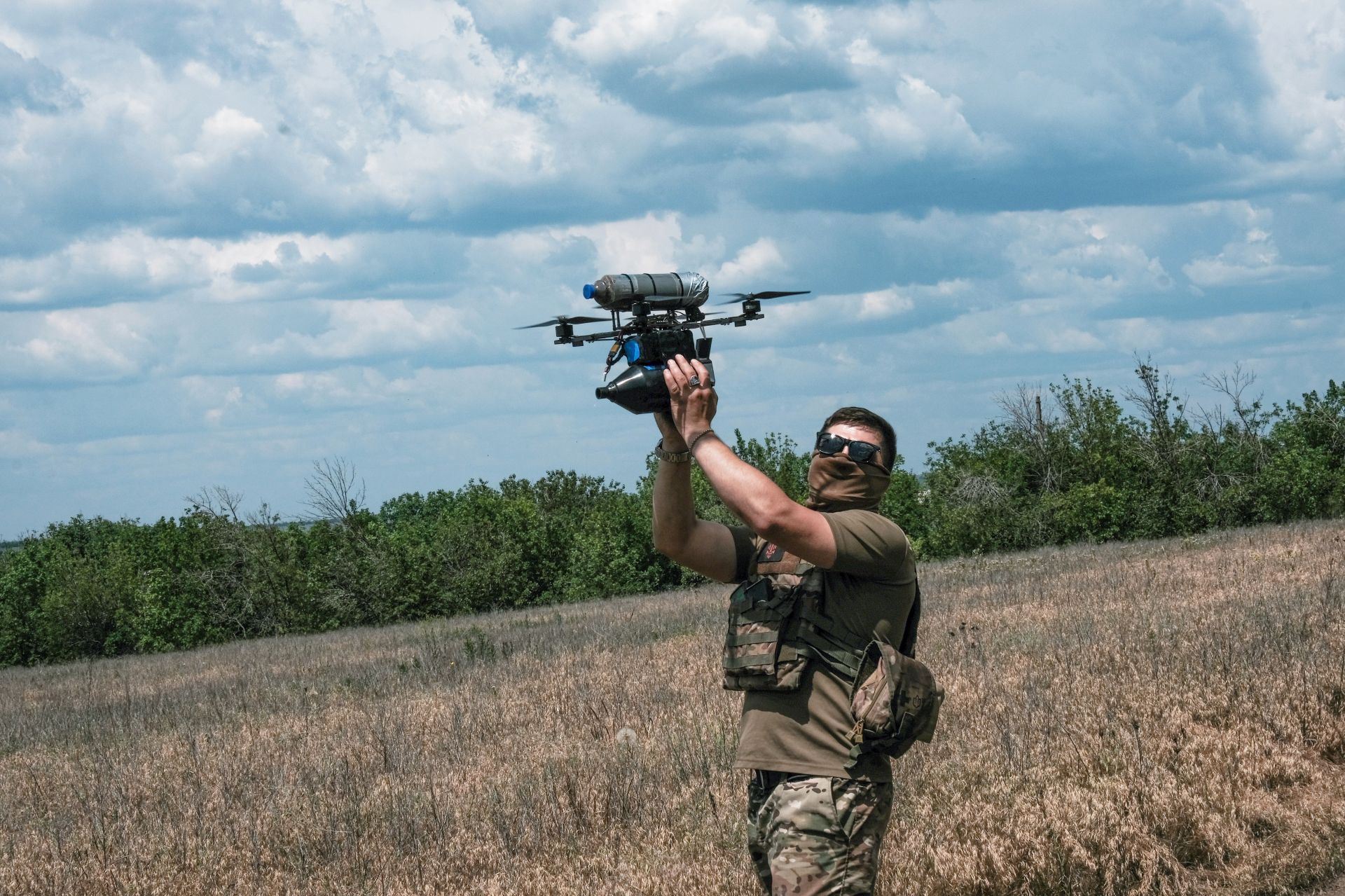
Originally civilian drones are now fitted with grenades or bombs on their upper and lower frames, and their aerial photography lenses are used to spot enemy targets from a distance. According to the WSJ, pressing the button originally used for flash photography now releases a grenade.
Leaving the Trenches Means Immediate Drone Bombardment... "Main Cause of Frontline Stalemate"
Diversification of use from night vision drones to mass-produced ground drones Frontline troops unable to leave trenches... advancement speed limited to 165 meters per day "The slowest war in modern warfare history"... concerns over prolonged stalemate
Some experts argue that the deployment of millions of drones for surveillance and rapid bombing operations is causing the front lines to become entrenched for extended periods. The Russian military, Ukraine’s adversary, is also deploying drones on a massive scale, leading to a situation where neither side can leave their trenches.
The WSJ, citing a Ukrainian drone operator, reported, "Drone operators stationed behind the front lines monitor the battlefield with cameras, constantly surveilling the enemy. The Russians do the same. Any tank, armored vehicle, or soldier within 19 kilometers of the front can become a target. It is nearly impossible for a single soldier on either side to advance without being detected by a drone."
Supplying isolated soldiers on the front lines with provisions via drones has also made it more difficult to capture key defensive positions. Since 2024, the Ukrainian military has deployed so-called "Vampire Drones" equipped with night vision, capable of delivering up to 9 kilograms of supplies such as ammunition and food to friendly forces. Recently, in addition to aerial drones, vehicle-type ground drones have been widely used for transporting supplies and evacuating wounded soldiers.
As the drone war intensifies, the rate of advance along major front lines has slowed dramatically. The Center for Strategic and International Studies (CSIS), a U.S. think tank, stated in a recent report, "In the war in Ukraine, Russian forces are advancing an average of only 165 meters per day," and added, "This is even slower than the rate recorded by British and French troops during trench warfare in World War I."
Seth Jones, a senior fellow at CSIS, noted, "This has become one of the slowest wars in the history of modern warfare," and pointed out, "Despite nearly one million casualties on both sides, there has been little tangible progress. The stalemate is resulting in even greater losses among soldiers."