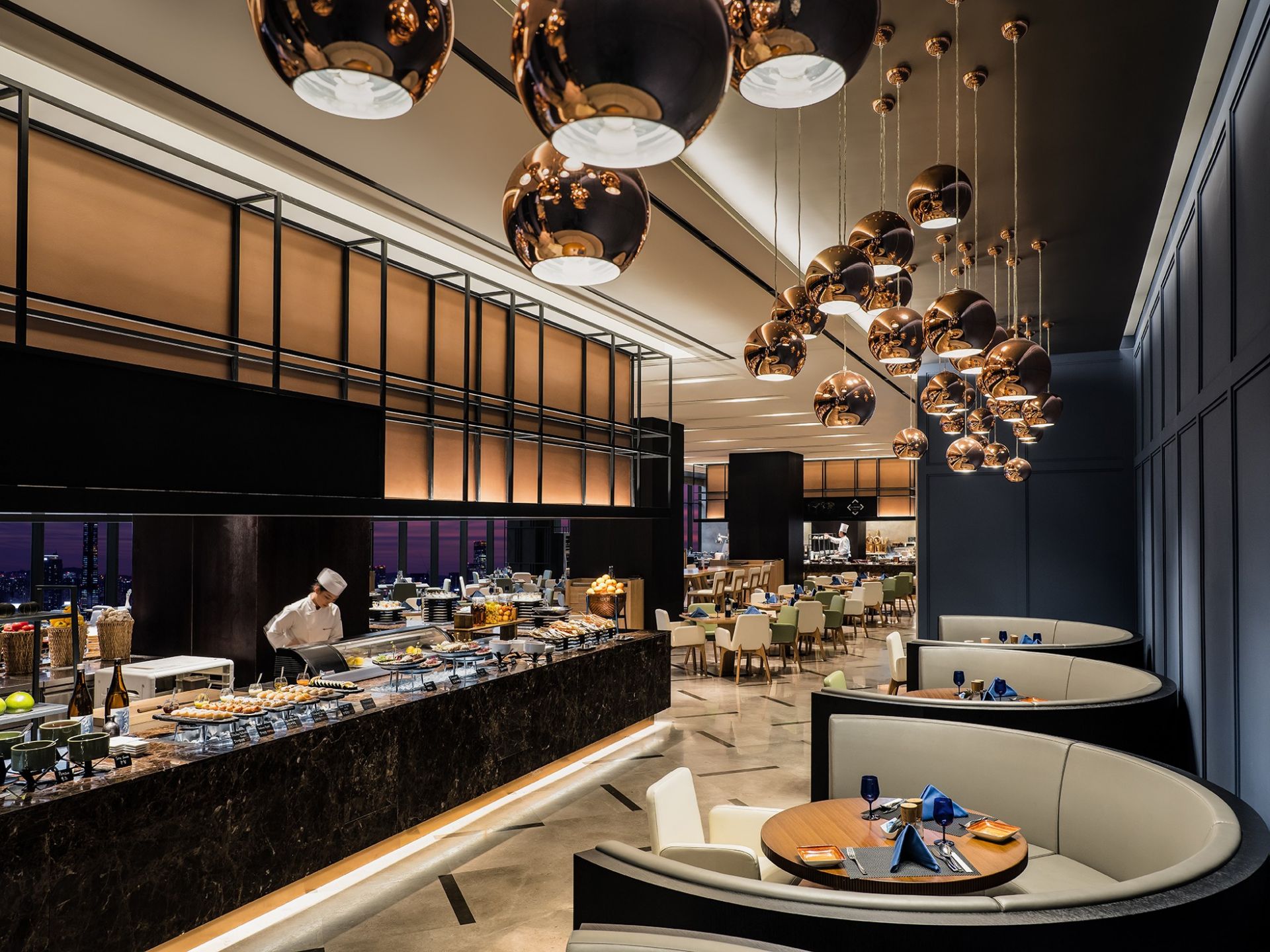
As usual, I filled my salad plate with the types of salads I wanted, then from the second plate onward, I focused on finding combinations with beautiful plating. To create a Japanese dish using sashimi, I quickly made a bowl of 'hoedeopbap' by placing tuna, flatfish, sea bream, and spot shrimp on chirashi sushi. At the grill corner, I chose a thick sirloin steak and added a lobster tail to the plate, then topped it with grilled asparagus and mashed potatoes to complete my own steak plate.
[Tasting Review] Seoul Dragon City Food Exchange
Concept Designed for Modisumers
Although hotel buffet prices have recently risen to nearly 200,000 won per person, consumer interest remains high. This is due to the growing trend of seeking gourmet experiences that go beyond a simple meal. Recently, more people are sharing their own 'buffet best combinations'?dishes customized to their tastes and preferences?on social networking services (SNS). This is a way to find new enjoyment by creating new menu items.
Seoul Dragon City’s 'Food Exchange' in Yongsan-gu, Seoul, which I recently visited, was also operating under a concept that allows 'modisumers' (Modify+Consumer) to create their own customized plates. Even on a weekday evening, the 180-seat venue was filled with a diverse range of customers, from solo foreign visitors to families of six.
Located in the Novotel, Food Exchange recently revamped its menu to allow customers to combine buffet items themselves. As the spectrum of gourmet experiences broadens and the quality of domestic fine dining rises, the buffet has undergone a dramatic transformation to meet evolving consumer demand.
Whenever I visit a hotel buffet, I usually enjoy four plates in order: salad, cold dishes, hot dishes, and finally dessert and fruit, but I always feel my limits. This time, however, I found it interesting that I could use the buffet menu to create my own dishes, allowing me to enjoy the buffet in a new way.
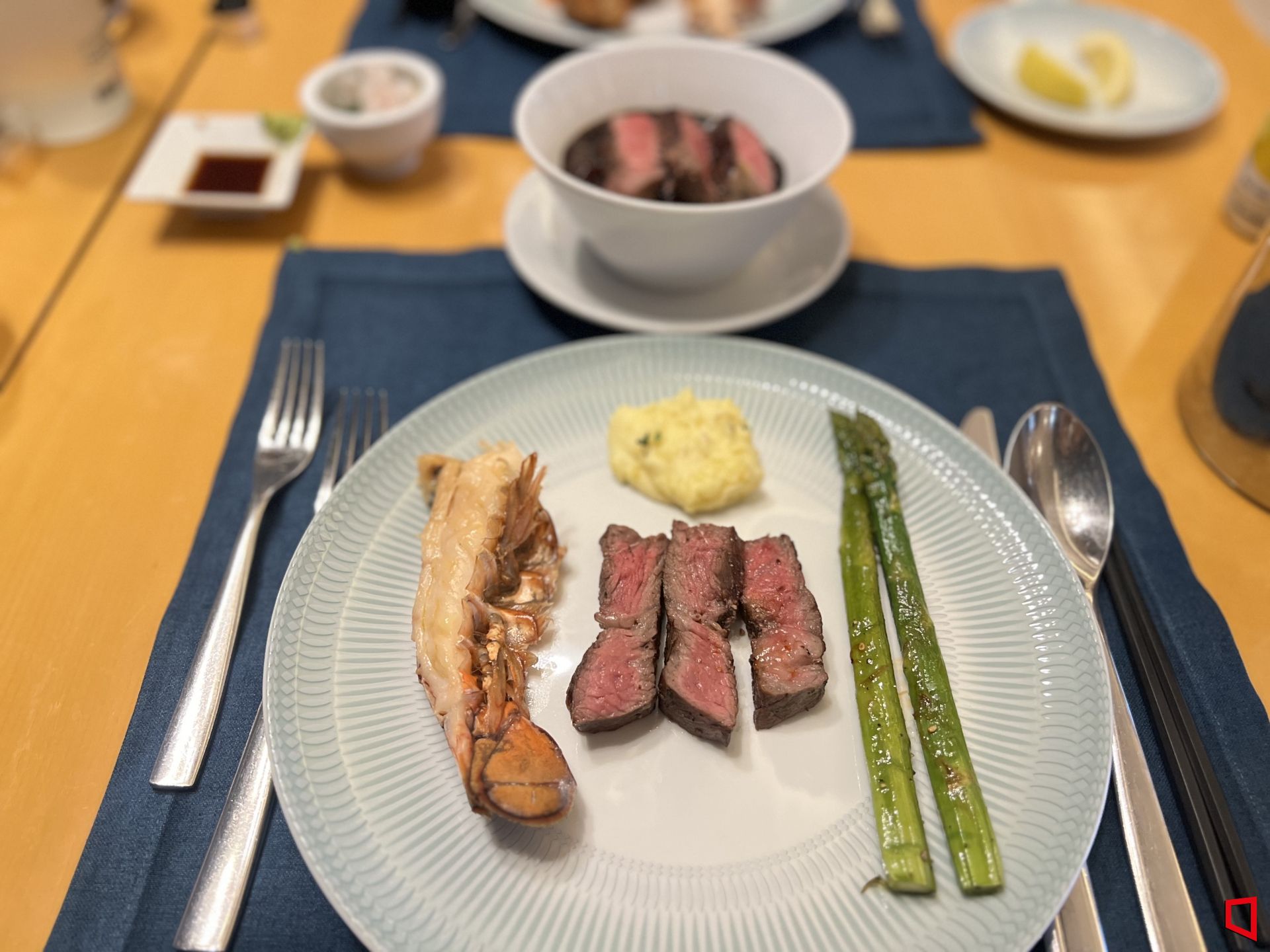
I refreshed my palate with jjamppong. At Food Exchange, chefs prepare jajangmyeon and jjamppong on the spot with the ingredients you choose. I enjoyed the 'Premium Special Seafood Jjamppong' by having the chef add my choice of vegetables to the jjamppong, then topping it generously with grilled shrimp, snow crab, and lobster meat. I also created 'Sirloin Jajangmyeon' by topping jajangmyeon with sirloin steak.
With the recent upgrades to the grill corner and salad section, and the addition of 23 new menu items, there were plenty of options. Seasonal health-boosting dishes such as eel soup, nakji tangtangi (chopped octopus), and chogye salad (cold chicken salad) were also newly introduced for summer, making it a good choice to prepare a nourishing meal for seniors.


You can also enjoy signature dishes from popular restaurants within the hotel. During my visit, authentic Chinese dishes such as 'Peking Duck,' 'Beef Broccolini in Yu Xiang Sauce,' and 'Yilian Gam Hongyu Mingha' were available through a collaboration with FEI, the Chinese restaurant at Dragon City. Peking duck, in particular, is typically a dish that requires a long wait and a high price at Chinese restaurants, but at Food Exchange, you can enjoy as much as you want in real time?an appealing feature.
The bakery also offers items from 'A La Maison Deli' on the first floor of the hotel, available in slice or mini sizes, catering to the recent preference for diverse experiences among consumers.
Customer participation events are also held. From July 4 to August 31, Seoul Dragon City will run a 'DIY Plating Contest' on its official Instagram account to strengthen communication with customers. Participants can post photos of either the chef's recommended combinations or their own creative plating on their personal public accounts.


A Seoul Dragon City representative explained, "Since it is impossible to try every dish at the buffet, we wanted to add unique elements rather than operate a typical buffet," adding, "We also plan to increase engagement with customers through events that have not been held at five-star buffets before."
Meanwhile, as of May 1, Seoul Dragon City’s Food Exchange raised its prices by an average of 4.6%. The weekday lunch and dinner buffet prices are now 120,000 won and 140,000 won per adult, respectively, while on weekends, both lunch and dinner are 159,000 won per adult.
-

Reporter Han Yeju dpwngks@asiae.co.kr
-
Edit Kim Hyunhee faith100@asiae.co.kr
© The Asia Business Daily(www.asiae.co.kr). All rights reserved.
!["Please Help Us": How Much Do Those Bowing 90 Degrees These Days Actually Earn? [Data Pick]](https://cwcontent.asiae.co.kr/asiaresize/323/2026052010120870131_1779239528.png)