Chelsea's coach Maresca said,
FIFA World Cup Considers Rescheduling Matches Due to Heatwave
There are claims that the final match of the 2026 North and Central America World Cup could be held as early as 9 a.m.
Why is the weather such an important factor in football matches?
The answer is clear: climate change and 'heatwaves'.
A Summer Hotter Than the Matches
Right now, the United States is literally boiling.
In June, temperatures in New York soared to 39 degrees Celsius, setting the highest June temperature on record.
Across the eastern United States, many people were hospitalized due to heat-related illnesses.
The problem is that this situation could easily repeat itself during next year's World Cup.
Even during the ongoing FIFA Club World Cup 2025, players are already battling extreme heat.
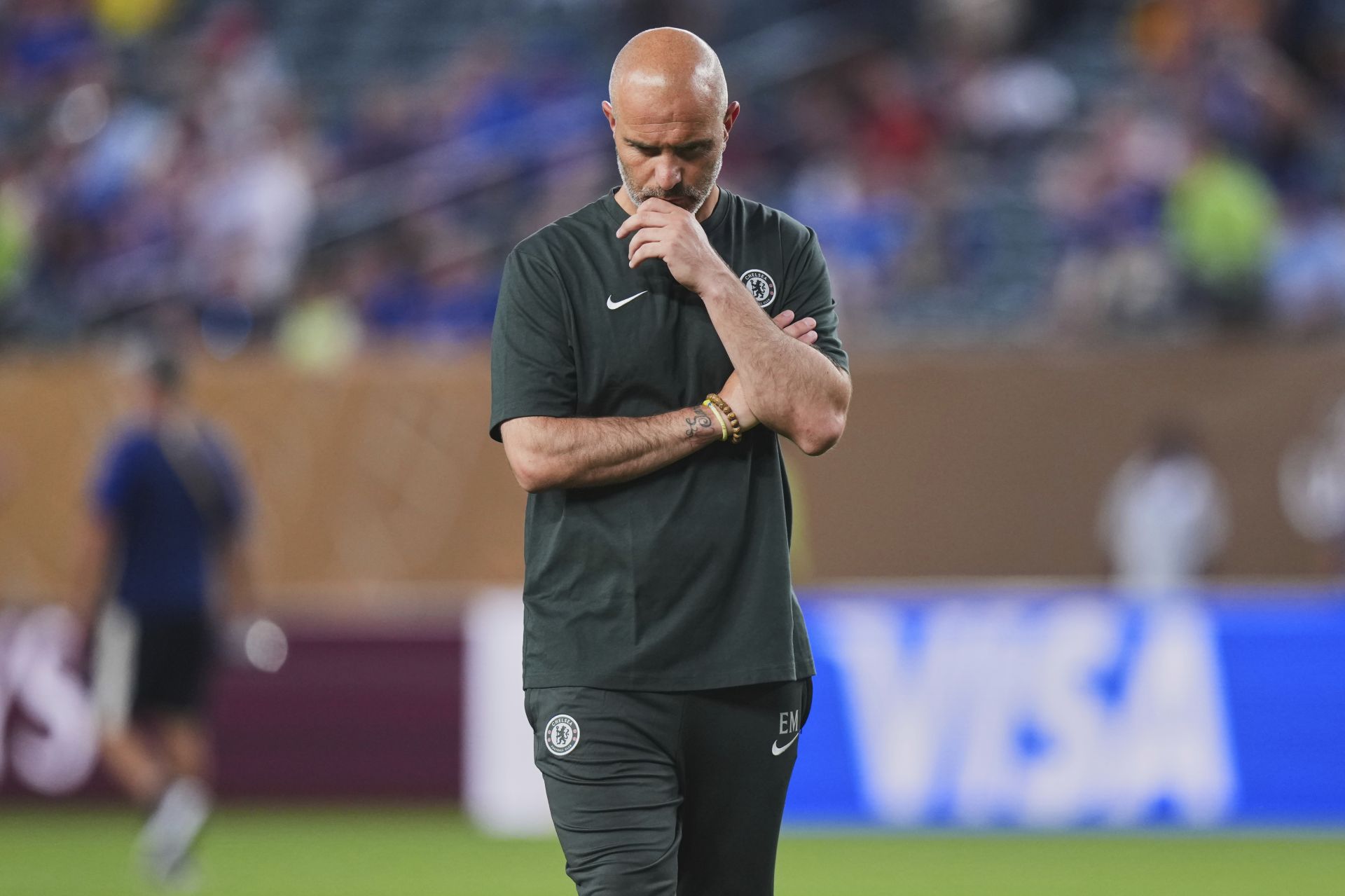

"Afternoon training is completely impossible,"
and revealed that training will start early in the morning.
Dortmund's coach Kobach said,
"It feels like playing football in a sauna."
"A 9 a.m. Final? If We Truly Care About Safety"
In this context, Professor Mike Tipton of the University of Portsmouth in the UK has made a suggestion.
"There is only one solution: start matches as early as possible."

His argument is straightforward.
Currently, the most likely match times in Eastern Standard Time are noon, 3 p.m., 6 p.m., and 9 p.m.
However, considering the extreme heat, a time slot like 9 a.m. would be much safer.
Professor Tipton is an expert in thermal physiology who has focused his research on the effects of high temperatures on the human body.
He emphasized that "this is not just an issue for players, but also concerns the safety of referees and spectators."
Is Changing the Match Time Enough?
There are heated discussions on other measures besides match times.
For example, there has been a proposal to extend halftime to 20 minutes.
Additionally, there are growing calls to introduce cooling breaks or match postponement criteria based on the Wet Bulb Globe Temperature (WBGT).


FIFPRO (the International Federation of Professional Footballers) has set the following standards:
If WBGT exceeds 28 degrees Celsius, additional rest breaks are mandatory.
If it exceeds 32 degrees Celsius, match postponement should be considered.
They state firmly, "Player safety takes priority over commercial interests."
Will the World Cup Become the Hottest Stage?
In its coverage, the BBC highlighted both the historical context of World Cup heatwave risks and the threat of climate change.
1994 United States World Cup: Many matches in Texas and Florida exceeded 38 degrees Celsius
2023 Monterrey, Mexico: WBGT approached 50 degrees Celsius
Miami: WBGT 44 degrees Celsius
As of 2024: Some areas in New York felt like over 50 degrees Celsius
Given these trends, there is a strong possibility that the 2026 North and Central America World Cup could become the "hottest World Cup ever".


So What Should Be Done?
If the Qatar World Cup was the first to be held in 'winter,'
the North and Central America World Cup could become the first to operate on a 'heatwave schedule.'
This goes beyond the question of "Can we watch football in the morning?"
It is a question of how climate change is transforming the timing, methods, and systems of sports.
The key issue now is whether FIFA and the host countries are truly willing to put safety at the center when rescheduling matches.
In a warming world, fair play cannot be achieved only in the shade.