According to a recent survey by the Korea Disease Control and Prevention Agency,
"Coffee in the morning, coffee milk at lunch, energy drinks in the evening."
Caffeine is no longer just a habit for adults.
Adolescents are also regulating the rhythm of their day with caffeine.
However, this trend is becoming increasingly concerning and can no longer be dismissed as a simple matter of taste preference.

23.5% of adolescents nationwide from first-year middle school to third-year high school reported drinking high-caffeine beverages three or more times a week.
This represents nearly a sevenfold increase compared to 3.3% in 2015, 8.0% in 2017, and 12.2% in 2019.
High-caffeine beverages refer to drinks with high caffeine content, such as coffee, coffee drinks, and energy drinks.
Previous surveys mainly focused on energy drinks, but as coffee and coffee drink consumption has increased among adolescents, the scope of surveys was expanded in 2022.
A representative from the Korea Disease Control and Prevention Agency explained, "Coffee also contains a significant amount of caffeine, and actual consumption is increasing, so existing statistics may underestimate adolescents' caffeine intake."
The problem is that this growing consumption of high-caffeine beverages goes beyond simply enjoying a preferred food or drink and is directly and indirectly affecting the physical and mental health of adolescents.
"Two cups of coffee a day during exam periods is the norm"
Twenty cafes in academy alleys, and temptation everywhere
"We've heard that caffeine is bad for growth" or "It causes insomnia," but
many adolescents still cannot quit coffee and energy drinks.
Especially during exam periods, and even before afternoon classes or academy sessions when fatigue builds up, caffeinated drinks have become a part of daily life.


Accessibility is also a problem.
In one alley of the Mokdong academy district in Seoul, about 20 cafes are clustered together, offering a wide range of choices from budget brands to premium cafes.
Nearby convenience stores and unmanned vending machines also make it easy to purchase coffee and energy drinks, with most prices ranging from 1,000 to 4,000 won, making them affordable.
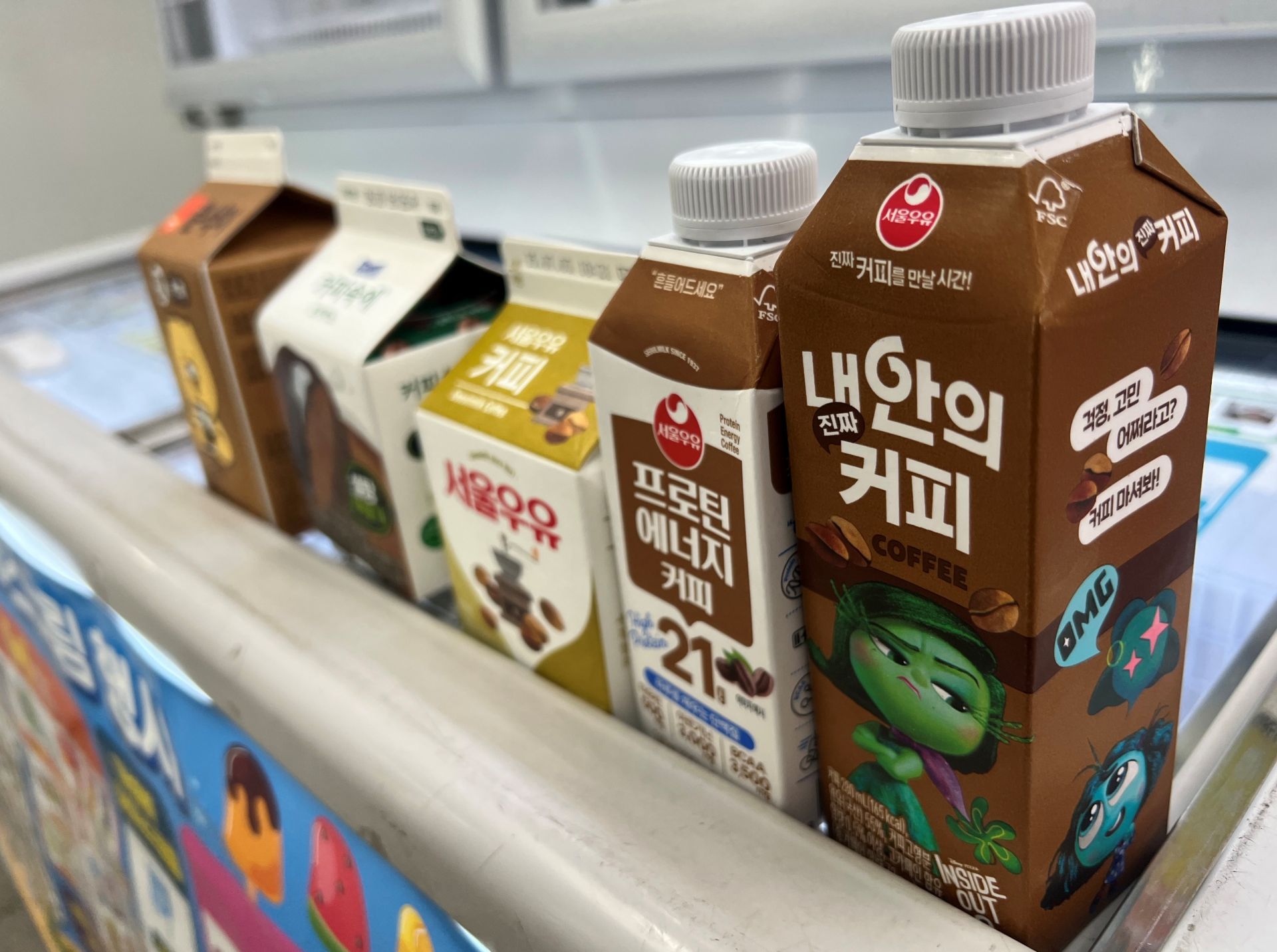

The problem is that these drinks contain a considerably high amount of caffeine.
A 500ml bottle of coffee milk commonly found in convenience stores contains 240mg,
A single cup (946ml) of low-cost large-volume coffee contains as much as 290.8mg of caffeine.
This amount far exceeds the recommended daily intake for adolescents (150mg).
Furthermore, recently there has been a rise in high-caffeine foods that use 'guarana' instead of coffee.
Guarana is a fruit that grows in the Amazon rainforest, and its seeds contain a large amount of caffeine.

Jelly, gum, and chewy candies made with guarana are being marketed with phrases like "for exam takers" and "improves concentration."
Each of these products contains about 75 to 100mg of caffeine. Eating just two provides more than two-thirds of the recommended daily intake.
A sleepless brain, a body that doesn't grow
Caffeine is fundamentally a substance that stimulates the brain and suppresses drowsiness.
However, this effect can also result in side effects such as reduced sleep quality.
Especially when caffeinated drinks are consumed in the evening or at night, it can become difficult to fall asleep, and this effect often carries over into the next day.
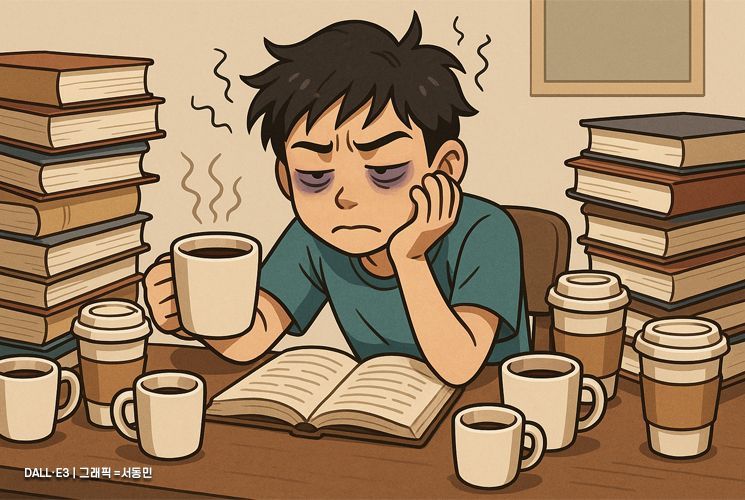
The problem is that sleep deprivation during adolescence does not end with simple fatigue.
Impaired growth of bones and muscles, decreased secretion of growth hormones
Decline in memory and concentration
Abnormal appetite regulation and increased risk of obesity, etc.
It can lead to various physical and cognitive problems.
Caffeine itself also affects growth.
It can hinder the absorption of calcium and iron, thereby impeding physical growth,
and it can also cause psychological changes such as anxiety, restlessness, and mood swings.
The problem is that if all these effects are repeated continuously, it can lead to addiction.
"Beyond addiction, negative impact on brain health"
Professor Yoo Byungwook of Soonchunhyang University Seoul Hospital warns about excessive caffeine consumption in adolescents as follows.
"Unlike adults, the brains of adolescents have not yet fully developed the receptors for neurotransmitter circuits.
If high doses of caffeine are consumed repeatedly during this period, these circuits can become overly activated,
which means there is a possibility of negative effects on overall brain health, going beyond simple caffeine addiction."
In other words, if a brain that is not yet fully developed is excessively stimulated, it can lead to serious neurological aftereffects that go far beyond the short-term effect of suppressing drowsiness.
A cup of coffee, a single jelly... The risk is closer than you think
Caffeine can be a burden even for adults.
For adolescents, whose bodies and emotions are not yet fully stable, this stimulation can become a poison that harms health rather than a tool for academic achievement.
However, the problem is that caffeine consumption among adolescents is not recognized as a "serious issue."
The recommended daily intake is not widely known,
caffeine content is written in tiny print on the back of beverage containers,
and the market encourages stimulation with marketing phrases like "drowsiness killer."
A cup of coffee can be a comfort to a student exhausted from studying.
But if that comfort is repeated every day, and if the consumer is a middle or high school student...
What kind of message is our society sending right now?
It's time to move beyond saying "it's not a big deal" about adolescent caffeine consumption,
and start talking about "how we can reduce it."
-
Edit Maeng Jiae mjiae@asiae.co.kr
-

Reporter Bang Jeil zeilism@asiae.co.kr
© The Asia Business Daily(www.asiae.co.kr). All rights reserved.
!["Please Help Us": How Much Do Those Bowing 90 Degrees These Days Actually Earn? [Data Pick]](https://cwcontent.asiae.co.kr/asiaresize/323/2026052010120870131_1779239528.png)