Articles reporting on the nuisance caused by cafe workers have surged since 2018 and peaked in 2023.
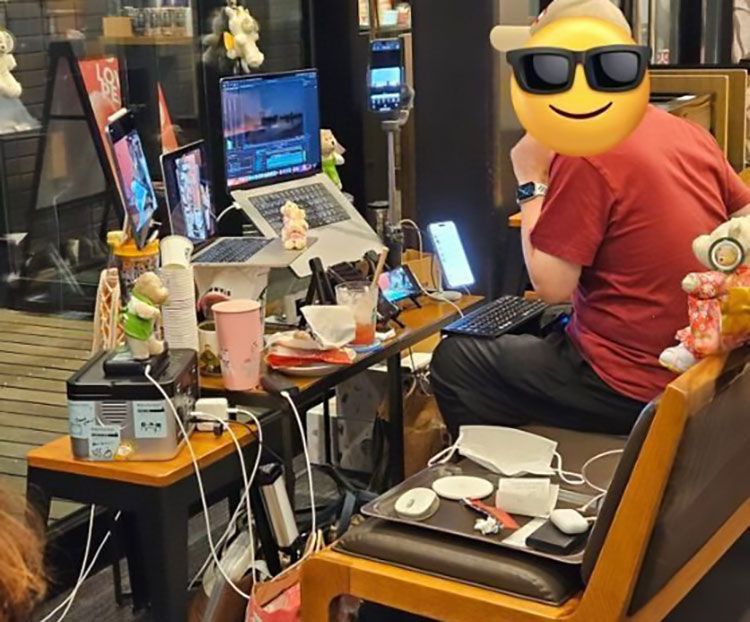
Cases of so-called "cafe villains," who set up not only laptops but also monitors and partitions in cafes to create their own private spaces, have become increasingly common. Amid this trend, cafe owners' complaints have grown louder due to the economic downturn. In particular, the need for regulation of Kagongjok has resurfaced after a recent incident at a coffee shop, where a customer left various equipment spread out on a table for an extended period while being absent, and this scene spread through online communities.

Since 2018, articles reporting nuisance cases caused by Kagongjok mentioned on social networking services (SNS) and online communities have surged. Pixabay
원본보기 아이콘On June 30, Yonhap News conducted a fact check regarding the punishment of Kagongjok, who have become a social phenomenon but are often criticized by society. According to Yonhap News, based on an analysis using the news big data service "BigKinds" and Naver News search, the term "Kagongjok" first appeared in the media on April 21, 2015, in an article titled "Does a noisy cafe increase concentration?" This article introduced the trend of high school students in Mokdong, Yangcheon-gu, Seoul, studying in cafes, and reported that Kagongjok were increasing, especially around areas with many private academies.
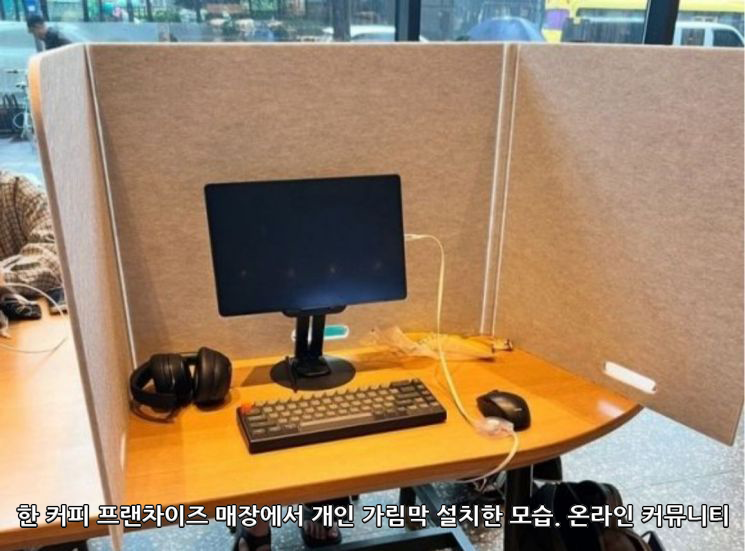
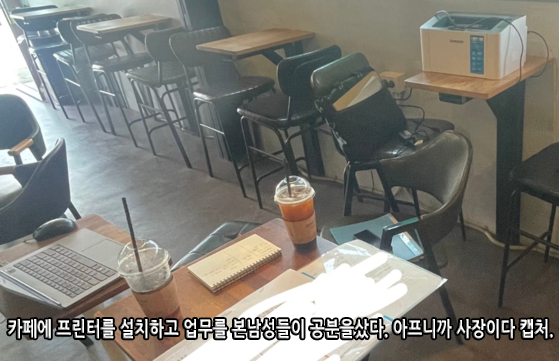
Bringing a power strip to charge tablets and mobile phones has become standard, and some even bring separate monitors for their laptops to work.
There were even customers charging electric scooters, leading to complaints like 'At this rate, they might even charge electric cars.'
Then, can Kagongjok be punished for obstruction of business?

First, the crime of obstruction of business is established when someone spreads false information or disrupts another person's business through deception or force. However, occupying a seat for a long time does not involve spreading false information or deceiving others, nor does it constitute an act of force, which typically refers to "any power capable of suppressing or confusing a person's free will," such as violence, threats, or pressure based on status or authority.
Some point to a 2009 Supreme Court precedent, which stated that "acts that make free action impossible or significantly difficult can also be considered obstruction of business," as a possible basis for punishing Kagongjok. However, the ruling adds the condition that there must be "a certain material situation sufficient to suppress a person's free will." Legal experts believe that simply sitting in a seat for a long time, as Kagongjok do, does not constitute such a "material situation."
It Hurts to Be the Owner... With More Kagongjok, Should Cafe Owners Just Stand By?
In the end, Kagongjok can only be controlled through the autonomous regulations of cafe owners. Owners have the constitutionally guaranteed freedom to conduct business as they wish. In addition, since the store is a private business space, private autonomy is possible. For example, if a rule is established stating that customers must place an additional order if they stay in the store for more than a certain number of hours, and this rule is communicated to customers in advance, such a rule can be effective.

If a cafe owner establishes a rule stating that customers must place an additional order if they stay in the store for more than a certain number of hours and informs customers of this rule in advance, such a rule can be effective. Online community
원본보기 아이콘This means that if a customer is aware of this rule, orders a drink, and then stays beyond the time limit without placing an additional order, the owner can ask the customer to leave. If the customer refuses to comply, they may be subject to punishment under the Criminal Act for refusal to leave. In fact, in 2023, there was a case where a coffee franchise posted a notice stating, "If you use the store for more than three hours, an additional order is required."
Indirect methods of creating an uncomfortable physical environment for Kagongjok can also be considered. For example, reducing the number of power outlets or setting time limits on Wi-Fi. Owners can also install chairs that are uncomfortable for long periods of sitting or bring in low tables that are unsuitable for laptop work. Playing lively or loud music to create an environment that is not conducive to studying is another option. In conclusion, there is no legal way to sanction Kagongjok solely for occupying seats for a long time. However, owners can regulate them by establishing their own operating policies, and only customers who do not comply with these policies can be held liable for refusal to leave or obstruction of business.

A notice saying "Laptops are not allowed to be used inside" is posted at a cafe in Gwanak-gu, Seoul.
원본보기 아이콘Meanwhile, the appearance of Kagongjok nuisance cases in the media is closely related to the rapid increase in coffee shops at the time. According to the National Statistical Office's nationwide business survey, the number of "non-alcoholic beverage shops," which includes coffee shops, nearly doubled in five years, from 30,801 in 2010 to 59,656 in 2015. As more cafes opened nearby, the number of people studying in cafes naturally increased, and Kagongjok became a social phenomenon.
-

Reporter Bang Jeil zeilism@asiae.co.kr
-
Edit Bae Byoungmin wuhaha@asiae.co.kr
© The Asia Business Daily(www.asiae.co.kr). All rights reserved.
!['WHO Declares International Public Health Emergency' Why the Untreatable 'Variant Ebola' Is More Deadly Than COVID-19 [Reading Science]](https://cwcontent.asiae.co.kr/asiaresize/323/2026052110164072055_1779326201.png)
!["Please Help Us": How Much Do Those Bowing 90 Degrees These Days Actually Earn? [Data Pick]](https://cwcontent.asiae.co.kr/asiaresize/323/2026052010120870131_1779239528.png)