MFDS Verifies Efficacy of 89 Hangover Relief Products Through Human Trials
80 Products Proven Effective for Hangover Relief
9 Products Not Proven Effective
Out of 89 hangover relief products currently sold on the market, 80 have been found to be effective in alleviating hangover symptoms. The remaining 9 products will not be allowed to label or advertise themselves as "hangover relief" products if they fail to prove their efficacy.
The Ministry of Food and Drug Safety (MFDS) announced on the 19th that, after reviewing human trial data for 89 products from 46 companies that use phrases such as "sobering up" or "the day after drinking"?which could mislead consumers into believing the products help alleviate symptoms or conditions caused by alcohol consumption?80 products from 39 companies were confirmed to be effective for hangover relief.
Following a four-year grace period, a new system was implemented this year requiring foods labeled or advertised with hangover relief claims to be supported by human trial data and to comply with the review results of a self-regulatory body (Korea Food Industry Association). In March, the MFDS collected human trial and other supporting data from manufacturers that produce or plan to sell such products.
The MFDS evaluated the 89 submitted products for compliance with objective procedures and methods in human trial design, survey results on hangover severity, blood alcohol decomposition levels, and significant improvement in blood acetaldehyde decomposition. The agency explained that experts in clinical trials, preventive medicine, and food nutrition assessed the objectivity and validity of the supporting data.
Based on the "Guidelines for Human Trials on Hangover Relief Labeling and Advertising," the MFDS recognizes the objectivity and validity of data if the human trial design follows objective procedures and methods, and if significant improvement (p<0.05) is observed in survey responses on hangover severity and in blood alcohol and acetaldehyde levels. Significant improvement means that, when comparing those who consumed the test food with those who did not, improvement can be expected in 95 out of 100 people.
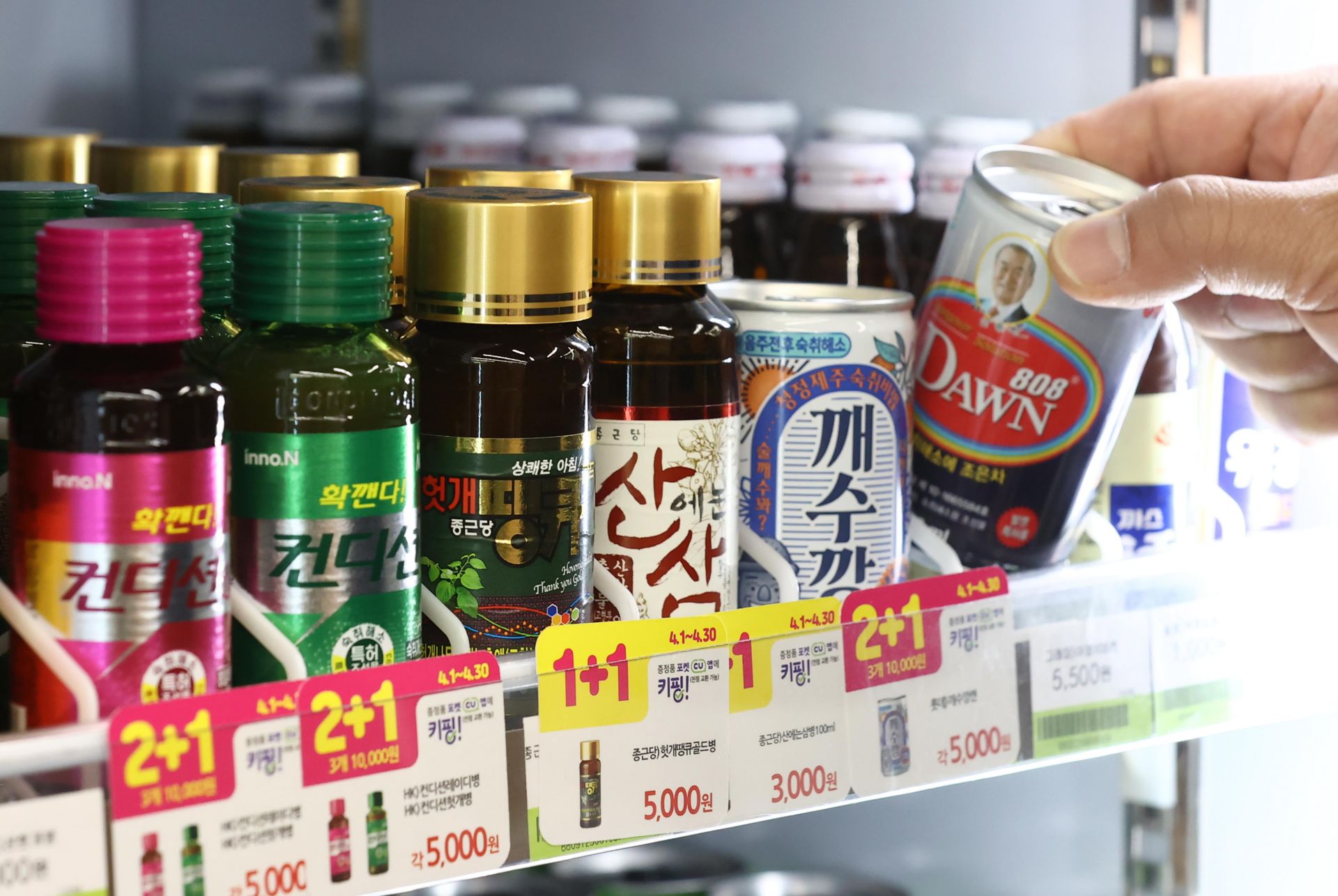
Products confirmed to have hangover relief effects this time include HK Innoen's "Condition Hovenia," Samyangsa's "Sangkwaehwan," Dong-A Pharmaceutical's "Morningcare PRESSON G," Kwangdong Pharmaceutical's "Kwangdong The Jinhan Hovenia Tea Gold Label," Handok's "ReadyQ Drink Original," and Lotte Chilsung Beverage's "Kkaesugang," among others.


The MFDS has requested additional supporting data for some products where the objectivity and validity of the evidence were insufficient. For products that fail to meet objectivity and validity requirements by the end of October, the agency will prohibit hangover relief labeling and advertising.
The MFDS also plans to strengthen verification of functional claims and monitoring of false advertising in order to protect consumers from indiscriminate functional labeling and advertising of foods and to establish proper distribution practices.
!["Please Help Us": How Much Do Those Bowing 90 Degrees These Days Actually Earn? [Data Pick]](https://cwcontent.asiae.co.kr/asiaresize/323/2026052010120870131_1779239528.png)