On the 17th, Yonhap News cited a report from the National Pension Research Institute titled "The Impact of Health Insurance and Pension Income Taxation on the National Pension," stating that "there is a possibility that pension recipients who were previously registered as dependents under their children's workplace health insurance will largely be converted to regional subscribers."
Concerns have been raised that seniors receiving National Pension benefits may see their actual pension income fall significantly below expectations, as they face a double burden of health insurance premiums and income tax due to their pension income.
In particular, since the reform of the health insurance premium system implemented in September 2022, there has been an increase in cases where people lose their dependent status for health insurance due to pension income and are converted to regional subscribers, forcing them to pay hundreds of thousands of KRW in new health insurance premiums each month. This has sounded an alarm for retirement planning.
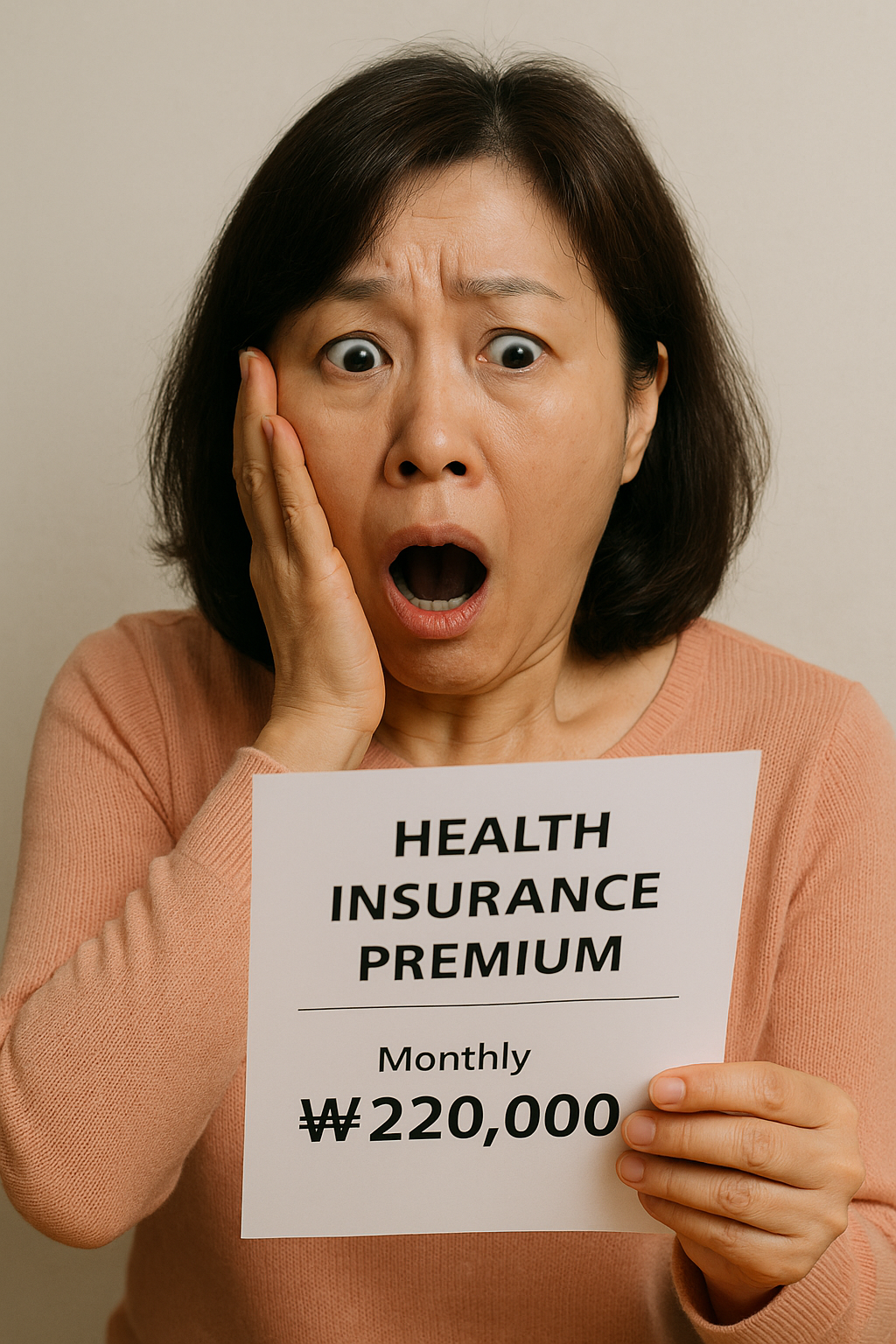
This is because the income criteria for maintaining dependent status under the two-stage reform of the health insurance premium system was strengthened from 34 million KRW to 20 million KRW annually.
The report estimated that 7.2% of households with dependents aged 60 or older, approximately 249,000 households, will be converted to regional subscribers due to this change.
The additional health insurance premiums they will have to bear amount to an average of 2.64 million KRW annually, or about 220,000 KRW monthly.
The problem does not end there. Even when receiving the same amount of pension, there is a so-called "equity trap," where the health insurance premium burden differs depending on the type of pension.
Under the current system, health insurance premiums are imposed on income from public pensions such as the National Pension, but not on income from the Basic Pension or private pensions such as retirement pensions and individual pensions.
For example, if Person A receives a monthly pension income of 2 million KRW entirely from the National Pension, the full 2 million KRW is considered subject to health insurance premiums (with 50% of the income reflected). In contrast, Person B, who receives 1 million KRW from the National Pension and 1 million KRW from a retirement pension, pays health insurance premiums only on the 1 million KRW from the National Pension.
This structure has been criticized as unfair, as recipients who rely solely on the National Pension end up paying more in health insurance premiums, even though their total income is the same.

The tax issue is similar.
The Basic Pension is entirely non-taxable, so there is no tax burden, whereas the National Pension old-age pension is subject to taxation.
As a result, recipients who receive both the National Pension and the Basic Pension end up with a higher actual disposable income than those who receive only the National Pension.
This burden has also been shown to influence the behavior of those about to receive pension benefits.
The report suggested that, in order to avoid the health insurance premium burden, future recipients with relatively higher pension amounts may choose the "early old-age pension," accepting a reduced benefit instead of the normal old-age pension.
The early old-age pension system allows recipients to start receiving their pension 1 to 5 years earlier than the statutory age. For each year the pension is taken early, the amount is reduced by 6% per year (0.5% per month), so taking it 5 years early results in a maximum lifelong reduction of 30%.
In other words, taking the pension 5 years early results in receiving 70% of the original amount; 4 years early, 76%; 3 years early, 82%; 2 years early, 88%; and 1 year early, 94%.
Because receiving the National Pension early results in a reduced benefit, it is referred to as a "loss pension."

Therefore, experts emphasize that when discussing the actual security provided by the National Pension, it is necessary to approach it from the perspective of "net pension income," which excludes health insurance premiums and taxes, rather than simply considering the nominal pension amount.
Through its policy recommendations, the report stressed the need to: deduct the Basic Pension amount from National Pension income when calculating health insurance premiums; include reverse mortgage loans in the deduction for housing pension; and provide detailed information about these taxes and insurance premiums to future recipients.
-
Reporter Seo Jiyeong zo2zo2zo2@asiae.co.kr
-
Edit Kim Inwook kiminuki@asiae.co.kr
© The Asia Business Daily(www.asiae.co.kr). All rights reserved.
!["Please Help Us": How Much Do Those Bowing 90 Degrees These Days Actually Earn? [Data Pick]](https://cwcontent.asiae.co.kr/asiaresize/323/2026052010120870131_1779239528.png)