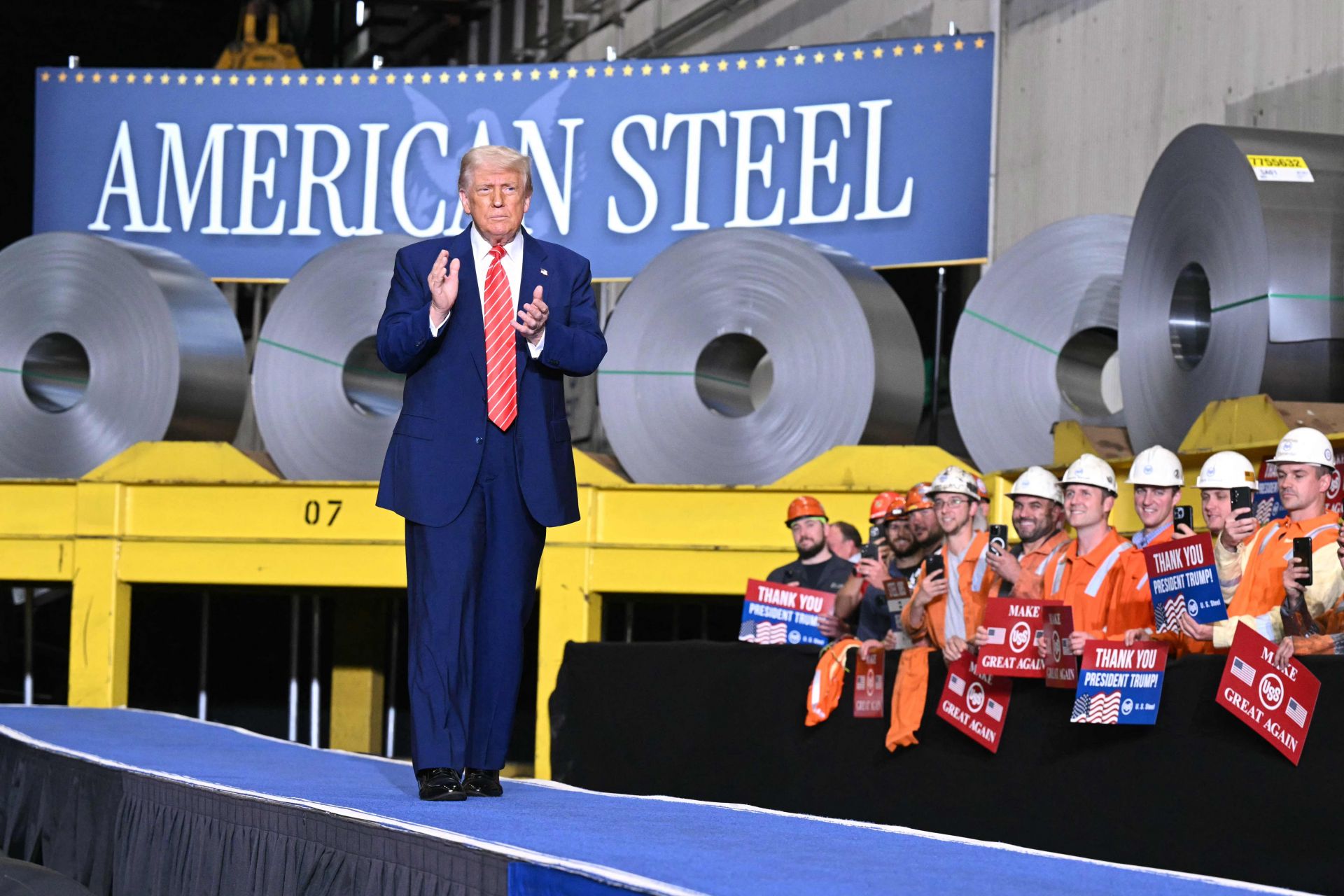
President Donald Trump announced in a speech over the weekend that, starting from the 4th, the United States will impose tariffs of up to 50% on imported steel and aluminum, putting the Korean steel industry on high alert. The Ministry of Trade, Industry and Energy held an emergency meeting with key trade officials from major domestic steel companies to begin developing countermeasures.
Trump Doubles Tariffs from 25% in March... Steel Industry on High Alert
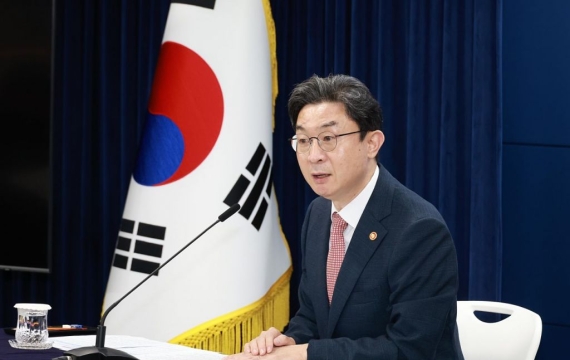
According to industry sources on the 2nd, the Ministry of Trade, Industry and Energy convened an emergency inspection meeting with the steel and non-ferrous metal industries at the Korea Iron & Steel Association in Songpa-gu, Seoul, to assess the impact of the U.S. steel tariff hike on major exporting companies and to explore future responses. It is reported that representatives from POSCO, Hyundai Steel, Dongkuk Steel, and SeAH Steel, among others, attended the meeting and shared their views.
President Trump, in a speech at the US Steel plant in Pittsburgh, Pennsylvania, on the 30th of last month (local time), announced that tariffs on steel and aluminum products would be raised from 25% to 50%. Since March 12, a 25% tariff has been imposed on foreign steel products under Section 232 of the Trade Expansion Act, and the increase now doubles that rate.

Steel products are piled up at Pyeongtaek Port in Gyeonggi Province on the 1st. Photo by Yonhap News
원본보기 아이콘As of 2024, Korea exported $2.9 billion (about 3.99 trillion won) worth of steel to the United States, ranking fourth in steel exports to the U.S. About 13% of Korea's total steel exports are concentrated in the U.S. market. In particular, companies specializing in steel pipes, such as SeAH Steel, Husteel, and Nexteel, have a high proportion of exports to the U.S., making them especially vulnerable to the new tariffs. A SeAH Steel official stated, "We export a significant amount of steel pipe products for use in the energy sector to the U.S. Given how quickly this situation has developed, we are closely monitoring it through internal response meetings."
Direct Hit to Pipe Manufacturers Makes 'Domino Effect' Unavoidable... Government Holds Countermeasure Meeting
While POSCO and Hyundai Steel do not have a large share of exports to the U.S. for high-grade automotive steel sheets, they believe that prolonged U.S. regulatory tightening could prompt global automakers to change their supply strategies. In particular, if there are changes to Hyundai Motor Group's North American strategy, Hyundai Steel's exports of high-grade steel sheets could also be affected. An industry official said, "If U.S. import regulations are expanded, foreign products from countries like China and Vietnam may be rerouted to Southeast Asia and Europe, worsening global oversupply. This structure could even put downward pressure on domestic steel prices."

Since the 25% tariff was imposed in March, Korea's steel exports have shown a clear downward trend. According to the Ministry of Trade, Industry and Energy and the Korea International Trade Association, Korea's total steel exports last month amounted to $2.56 billion, a 12.4% decrease compared to the same month last year. In particular, steel exports to the U.S. during the same period fell sharply to $220 million, a 20.6% drop. Cumulative exports to the U.S. from January to April this year also fell 10.2% year-on-year, totaling $1.384 billion. Given that the 25% tariff imposed since March has already had a visible impact on exports, there is a prevailing view that a further increase to 50% will inevitably result in short-term damage.
Countermeasures Urgently Needed Amid Possibility of Tariffs as a Negotiation Card
Tariffs by product category are being used as a key negotiation card by the Trump administration. By imposing high tariffs on major export items, the U.S. can use partial relief or exemptions as bargaining chips in trade negotiations with other countries. As Korea relies heavily on U.S. imports for many products, it is expected that not only steel but also automobiles (49.1%), auto parts (36.5%), and semiconductors (7.5%) could become targets for further pressure.
-

Reporter Oh Jieun joy@asiae.co.kr
-
Edit Lee Kijae happylee17@asiae.co.kr
© The Asia Business Daily(www.asiae.co.kr). All rights reserved.