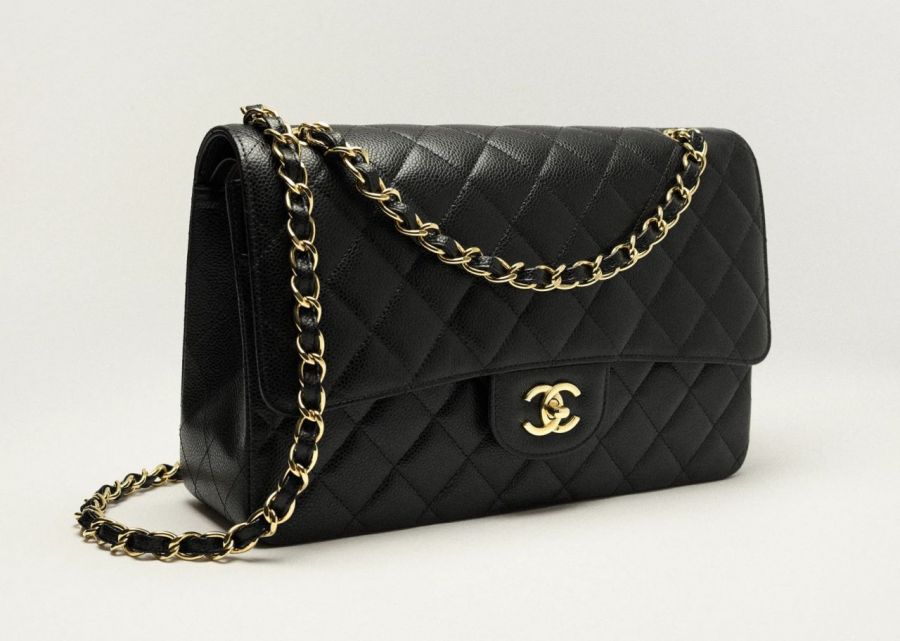
After prosecutors raided Chanel Korea, it was revealed that the aide to Kim Keonhee had a purchase history for a Chanel bag, drawing attention to how luxury brands collect and manage customer information. Previously, prosecutors confirmed that Kim's aide received a Chanel bag from Jeon Seongbae, known as 'Geonjinbeopsa,' and then exchanged it twice for different models. It was found that Kim's aide received a 'flip bag with handle decoration (8.02 million KRW)' and a 'classic large flap bag (12.71 million KRW),' paid an additional 850,000 KRW and 8 million KRW respectively, and exchanged them for other bags. Prosecutors tracked the distribution history of these bags through their serial numbers.

Most high-end luxury brands such as Chanel, Hermes, and Rolex assign unique identification numbers (serial numbers) to their products and record information on when, where, and who made the purchase through customer registration. This is done to manage VIP (Very Important Person) customers and to prevent reselling (secondhand trading) and the distribution of counterfeit goods. However, as the collected information is managed together with customers' personal data, concerns are growing over recent data leaks at luxury brands.
Half of Luxury Sales Come from VIP Customers
According to the luxury industry on June 1, more than half of the sales at major luxury brands come from the top 5% to 10% of VIP customers. For this reason, brands analyze customers’ purchase histories, preferred products, body types, styles, and social status to provide 'tailored service.'

Using the collected information, luxury brands offer personalized services such as sending customized gifts for birthdays or anniversaries. When products that match a VIP's preferences and size arrive, VIPs are notified in advance and given purchase priority. Brands also provide invitations to private collections (exclusive previews of new products) or exhibitions. These services are designed to increase VIP satisfaction beyond the products they purchase. Through these efforts, brands aim to prevent customer churn and increase loyalty.
Customer data is used not only for marketing but also for counterfeit detection and managing the secondhand market. By attaching serial numbers, stickers, or chips, brands can roughly track whether a product has appeared on the secondhand market and even who is currently using it. High-end luxury brands such as Hermes and Chanel attach stickers or stamps with unique serial numbers to their bags. By entering the serial number, it is possible to check at which store, by whom, for how much, and how the product was purchased.

Watch and jewelry brands such as Rolex and Cartier manage serial numbers even more strictly. Since some watches are worth up to several hundred million KRW and are vulnerable to theft, matching serial numbers to buyers helps protect the products. However, in the case of sophisticated counterfeits, even the chips are sometimes perfectly replicated, making it difficult to distinguish genuine products.
Dior and Tiffany Data Breach: "Customers Informed After Several Months"
However, the fact that such collected information enables personalized service also means that any leak can result in significant damage, which is a growing concern. Even though luxury brands collect data as part of a premium service strategy, they also bear greater responsibility for information protection.
Actual data breaches have occurred at luxury brands. Recently, customer information was massively leaked from Dior and Tiffany, both under the LVMH (Louis Vuitton Moet Hennessy) group.

A security guard is protecting luxury items at a Dior store in New York, USA. Photo by Reuters-Yonhap News
원본보기 아이콘Recently, Dior and Tiffany experienced customer information leaks. On May 7, Dior notified customers that a third party had accessed customer data on January 26 this year. The leaked data reportedly included names, mobile phone numbers, emails, addresses, honorifics (social status), purchased products, and preferred products. Dior explained that no financial information was leaked, but the brand was heavily criticized for informing customers several months after the breach occurred.
Tiffany also belatedly notified customers that unique numbers, which could be used to check purchase histories, repair requests, and inquiry details, were leaked together with personal information. Currently, neither Dior nor Tiffany has provided a clear explanation of who was behind the hacking or how it occurred. An industry insider commented, "Although customer management is said to be securely handled by group headquarters, since only a small number of staff are present in Korea, they are likely to be vulnerable to information security attacks."
-

Reporter ming@asiae.co.kr
-
Edit Kim Inwook kiminuki@asiae.co.kr
© The Asia Business Daily(www.asiae.co.kr). All rights reserved.
!["Please Help Us": How Much Do Those Bowing 90 Degrees These Days Actually Earn? [Data Pick]](https://cwcontent.asiae.co.kr/asiaresize/323/2026052010120870131_1779239528.png)