
Dan Rayfield, Oregon Attorney General, stated, "This ruling reaffirms the legal principle that the president should not make trade decisions arbitrarily."
A U.S. federal court has ruled that President Donald Trump's imposition of reciprocal tariffs based on the International Emergency Economic Powers Act (IEEPA) exceeded the authority of the executive branch. In response to this decision, the White House strongly objected, calling it an "out-of-control judicial coup," and announced plans to appeal. As the Trump administration immediately appealed the court's ruling blocking the reciprocal tariffs, a prolonged legal battle between the executive and judicial branches is expected.
U.S. Federal Court: "Authority to Regulate Trade Belongs to Congress... The President Cannot Make Arbitrary Decisions"
According to Bloomberg and other sources on May 28 (local time), the U.S. Court of International Trade (CIT) in New York issued a ruling last month on the 2nd, blocking the implementation of reciprocal tariffs announced by President Trump during the "Liberation Day" event.
The court stated, "According to the U.S. Constitution, the exclusive authority to regulate trade with other countries belongs to Congress, and the president's emergency powers invoked to protect the U.S. economy do not supersede congressional authority." The court further clarified, "The court does not interpret the International Emergency Economic Powers Act as granting unlimited authority to the government." This made it clear that the Trump administration's unilateral imposition of a 10% tariff on all imports is not legally permissible.
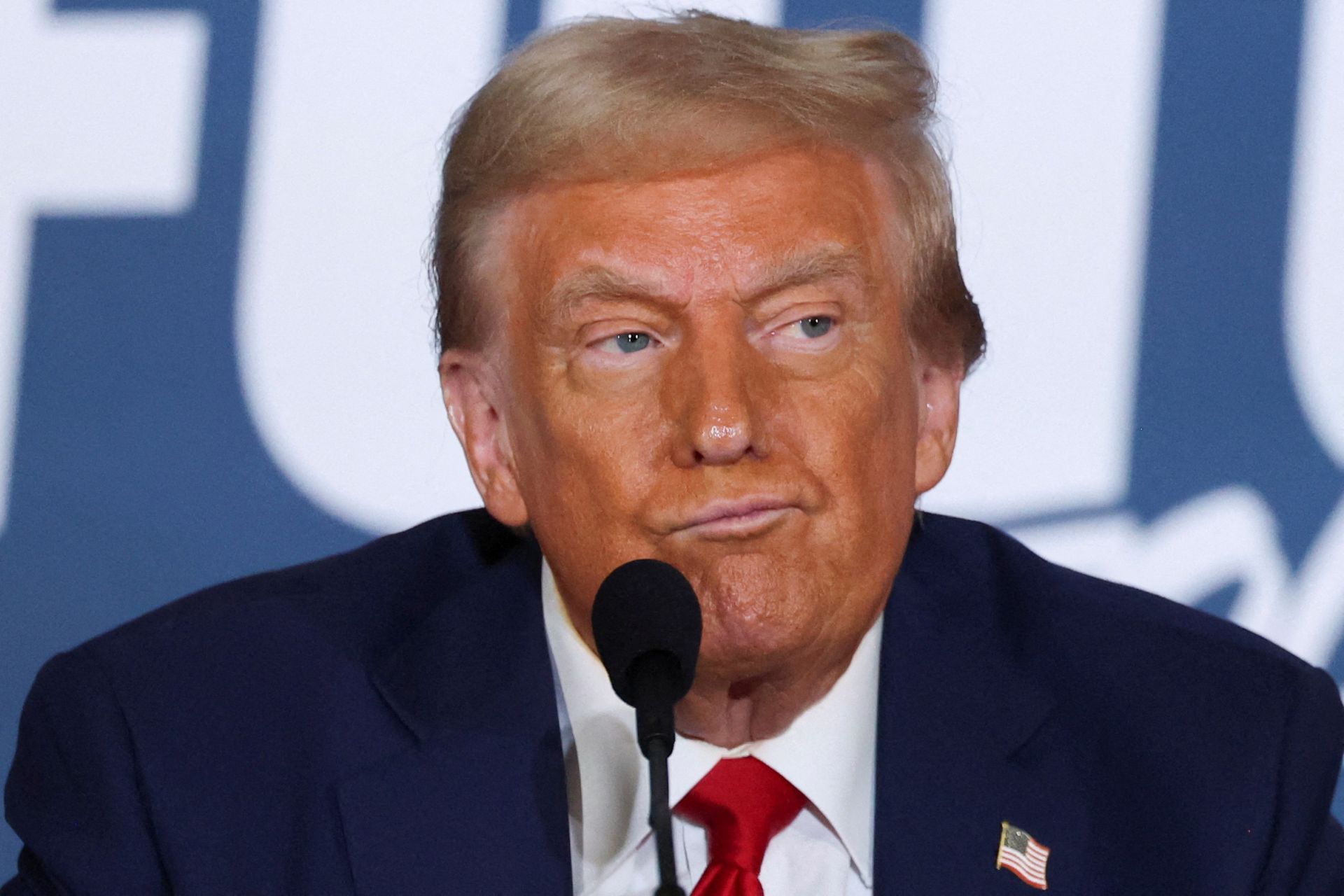
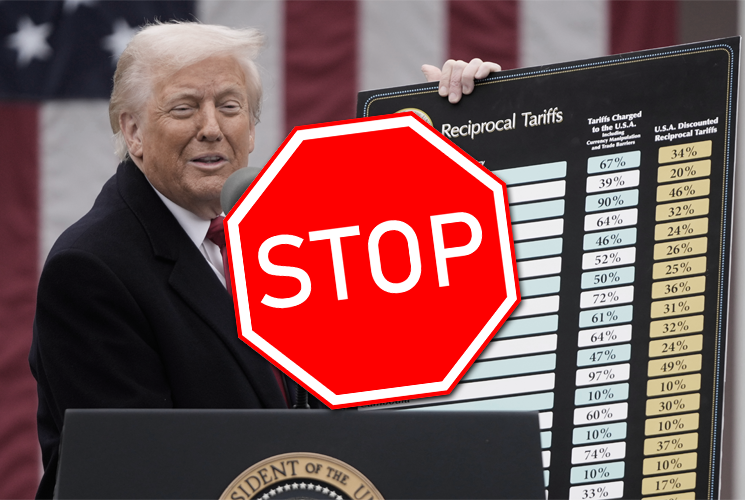
Donald Trump, President of the United States Reuters Yonhap News
The International Emergency Economic Powers Act, enacted in 1977, was introduced to address "unusual and extraordinary threats" related to national security, diplomacy, or the economy. This provision serves as the basis for the president to take measures such as export and import controls and asset freezes, not only in wartime but also in other circumstances. Previously, President Trump invoked the IEEPA, claiming that the U.S. trade deficit constituted a "national emergency."
White House Pushes Back, Calling It an "Out-of-Control Judicial Coup"... Immediate Appeal Announced
The White House immediately announced its intention to appeal. Stephen Miller, a policy adviser to Trump, strongly objected, saying, "The judicial coup is out of control." White House spokesperson Kush Desai stated in a press release, "Unfair trade relationships have devastated American communities, neglected workers, and weakened the defense industry," adding, "These are facts that the court did not dispute." He continued, "It is not the role of unelected judges to decide how to respond to a national emergency," and emphasized, "The administration will use every tool of executive authority to respond to this crisis."
This case began last month when the Liberty Justice Center, a coalition of five small U.S. businesses, filed a lawsuit against the Trump administration. These companies argued that President Trump bypassed the proper procedures of Congress, which holds the authority to set tariffs, and unlawfully implemented tariff policies. They also claimed that President Trump arbitrarily interpreted the IEEPA and imposed tariffs without proper authority.
Canada, China, Europe... Engaged in Tariff Wars with Countries Around the World


Will Ongoing Negotiations with South Korea and Others Be Completely Halted?

Including New York, a total of 12 states filed lawsuits last month in the same court demanding a halt to the Trump administration's tariff policies. Among the plaintiffs were states such as Nevada and Vermont, where the governors are Republicans. According to AP, "At least seven lawsuits have been filed so far regarding the reciprocal tariffs."
As a result of this ruling, the United States is also facing setbacks in ongoing negotiations with countries subject to reciprocal tariffs. Previously, Politico reported that if the Court of International Trade ruled the tariffs illegal, all ongoing U.S. trade negotiations would be completely halted.
-

Reporter Kim Minyoung argus@asiae.co.kr
-
Edit Kim Yumi ymkim91@asiae.co.kr
© The Asia Business Daily(www.asiae.co.kr). All rights reserved.
!['WHO Declares International Public Health Emergency' Why the Untreatable 'Variant Ebola' Is More Deadly Than COVID-19 [Reading Science]](https://cwcontent.asiae.co.kr/asiaresize/323/2026052110164072055_1779326201.png)
!["Please Help Us": How Much Do Those Bowing 90 Degrees These Days Actually Earn? [Data Pick]](https://cwcontent.asiae.co.kr/asiaresize/323/2026052010120870131_1779239528.png)