Tiebo Master stated, "We focus on creating a silky smooth texture that naturally pairs well with any food anytime and anywhere," and confidently said, "If you are looking for champagne that goes well with gourmet food, Bessera de Belpont can be the answer."
Interview with Cedric Thiebault, Cellar Master of Besserat de Bellefon
A high-end champagne house established in 1843
Optimized for gastronomy through low-pressure bubbling
The official champagne of the French Elysee Palace
"We deliver greater sensory pleasure through visually more beautiful and gustatorily softer bubbles."
Cedric Thiebault, cellar master of the French champagne house Besserat de Bellefon, introduced his champagne in this way during an interview with Asia Economy on May 23, 2025. He explained that by lowering the pressure, the fine and light bubbles pair well with any food.
Softness crafted through low pressure and long aging... Taking the gastronomic experience to the extreme
Besserat de Bellefon (Maison Besserat de Bellefon) is a high-end champagne house established in 1843 by Edmond Besserat in Epernay, Champagne, producing only Grand Cru and Premier Cru. It is currently served at 170 Michelin restaurants in France and 40 overseas, as well as at the Louvre and Orsay Museums in Paris, the Saint-Tropez sailing regatta, and as the official champagne of the Elysee Palace.
Besserat de Bellefon is particularly renowned as a 'Gastronomic Champagne,' meaning a champagne optimized for pairing with gourmet cuisine. This reputation stems from the fact that Besserat de Bellefon was created from the outset with food pairing in mind. In 1930, Edmond's grandson Victor Besserat received a request from the famous Parisian restaurant La Samaritaine de Luxe to craft a champagne that could be paired with any meal.
Master Thiebault said, "Although it was a demanding request, Victor created 'Cuvee des Moines,' which retained its fresh aroma by skipping malolactic fermentation and featured a surface adorned with fine, gentle bubbles the moment it was poured into a flute glass." He explained, "This marked the beginning of the house's signature soft texture, a style that has continued for nearly 100 years."


He summarized the house style in three words: elegance, finesse, and freshness. Among these, the most important feature is the delicate bubbles at 4.5 atmospheres of pressure, about 30% lower than the typical 6 atmospheres of regular champagne. He explained, "By applying low-pressure bubbling, the bubbles become fine and dense, creating a creamy texture in the mouth. The light, enveloping bubbles maximize harmony with food, which has satisfied gourmets and earned the house its reputation."
Another distinguishing feature is that malolactic fermentation is not performed, in order to express the fresh and distinct characteristics of the grapes themselves. This preserves a clean and fresh taste and aroma, while the lower acidity from carbonation is balanced. He added, "Skipping malolactic fermentation brings freshness, but if not managed properly, it can taste sharp. To compensate, we practice long-term aging. While typical champagnes are bottle-aged for about 15 months, we age ours for at least three years to maintain a balance of flavor and texture."
The house's flagship product is 'Besserat de Bellefon Bleu Brut,' which accounts for about half of total sales. This champagne is a blend of 45% Pinot Meunier, 30% Chardonnay, and 25% Pinot Noir. Despite being an entry-level wine, more than 30% of the blend consists of reserve wines aged over 20 years. Master Thiebault noted, "With more than 14 vintages blended, you can experience waves that break finely in the mouth."

The synergy of man and nature crafted by a Champagne native
Master Thiebault is a native of Champagne, born and raised in the region. For him, vineyards and champagne were a natural and obvious part of life in Cote des Blancs, Champagne. He said, "Because champagne was so common in my environment, I didn't think much of it as a child, but as I grew older, I realized our region was making something special. I developed a sense of gratitude and pride for that fact."
He did not dream of becoming a winemaker from the beginning. He explained, "With curiosity, respect, and awe for agriculture, I came to believe that growing grapes and making wine could create a synergy with nature, and that led me down this path."
He completed his studies in oenology at a university in Reims and first entered the industry in 1999 at Besserat de Bellefon. He joined as a quality control researcher, became cellar master in 2006, and has been overseeing wine production at Besserat de Bellefon for 20 years. He said, "The role of the cellar master, or 'Chef de Cave,' is to maintain and manage the house's unique style and characteristics. This includes not only winemaking and blending based on research for quality improvement, but also overseeing vineyard management."
Master Thiebault defines champagne as 'L'Art de Vivre'?the Art of Living. He explained that the attitude of the French toward life and their way of living are embodied in champagne through the craft of winemaking.
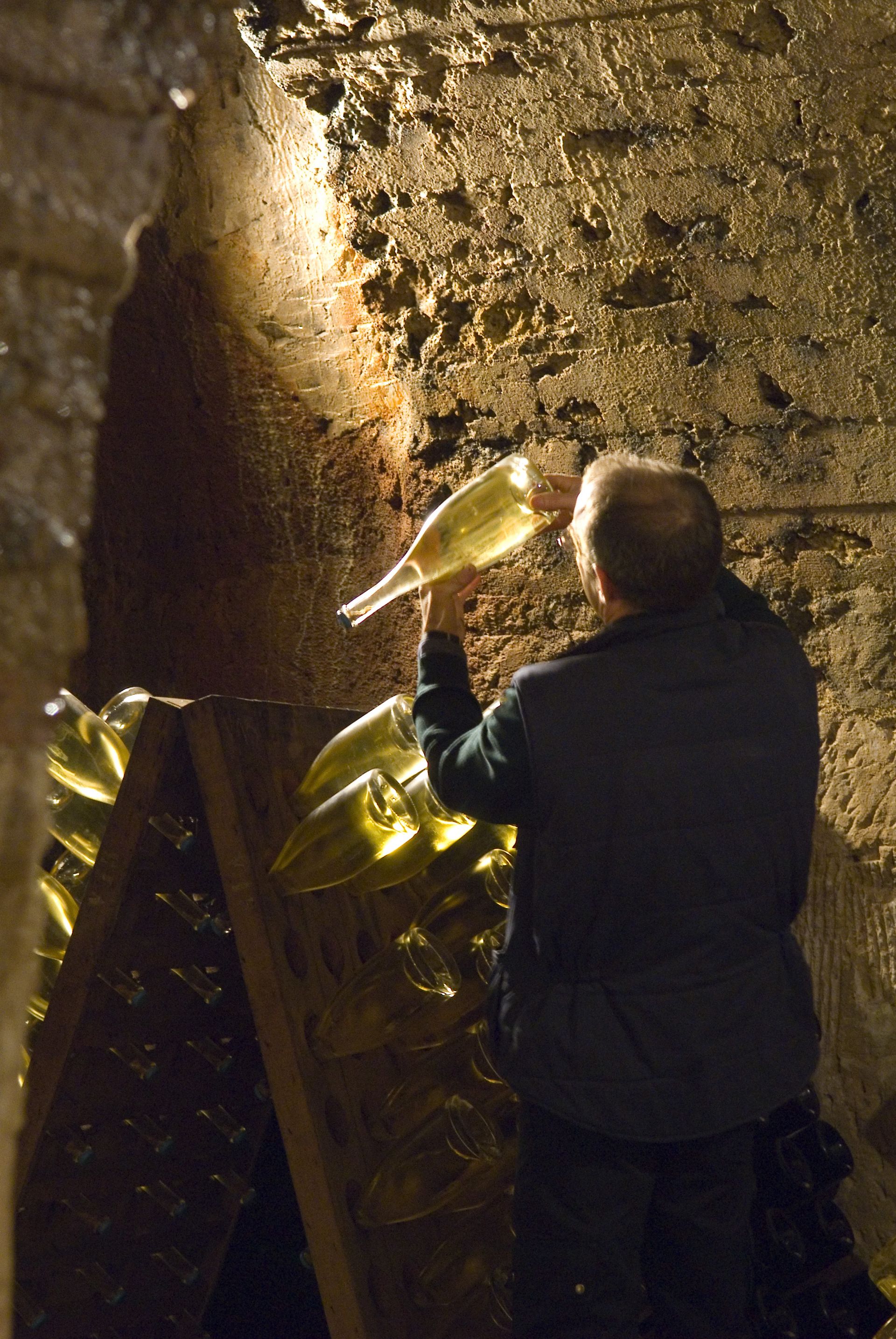
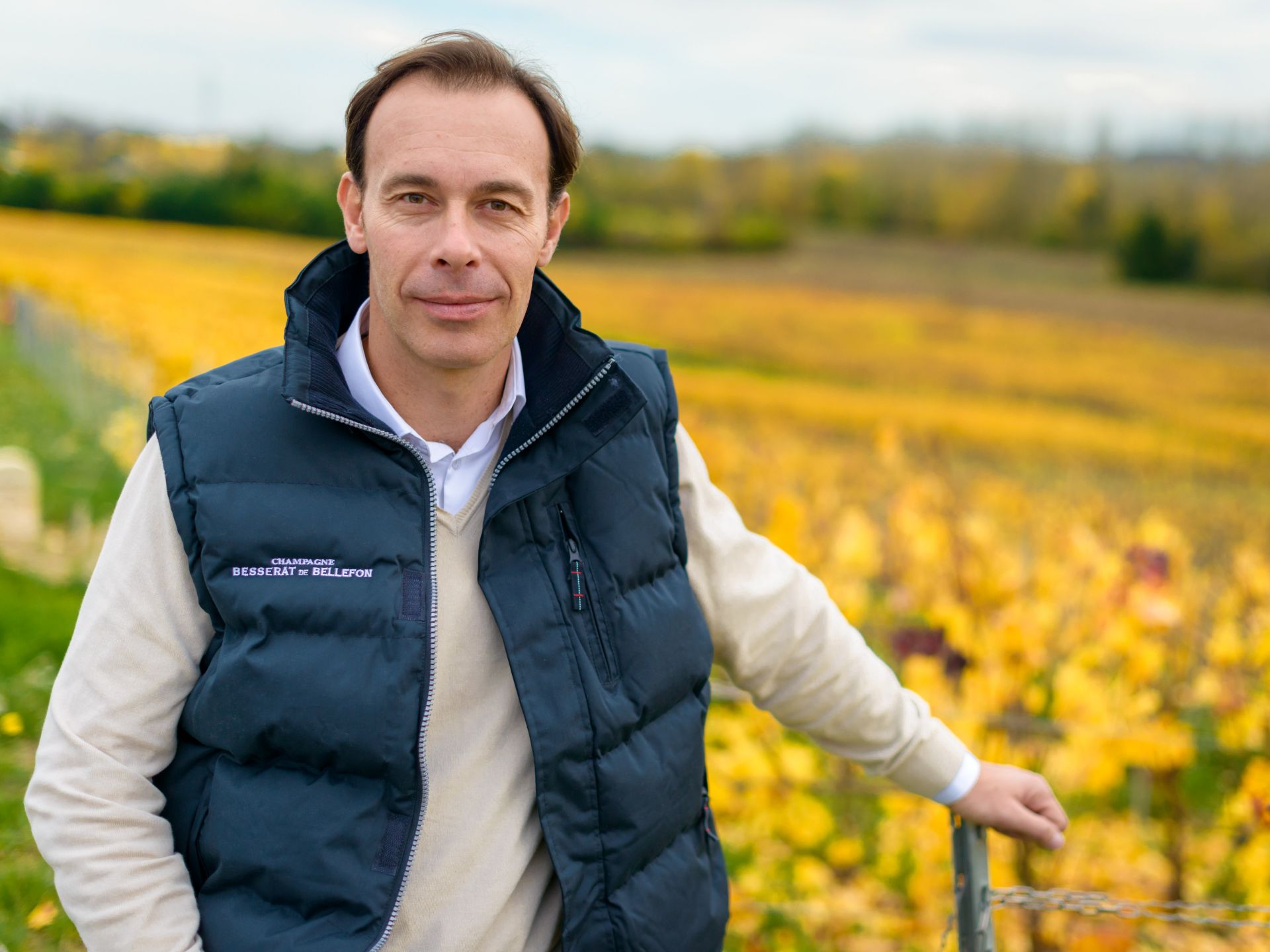
Champagne is a sparkling wine made with the utmost care and labor. The process begins with making base wines from different grape varieties, followed by assemblage, where these base wines are blended in various ways. The blended wine is then bottled, and a mixture of yeast and sugar is added for tirage, initiating a second fermentation. Afterward, the complex processes of remuage (rotating bottles to collect sediment), degorgement (removing sediment), and dosage (topping up) are carried out to complete the wine.
Although sparkling wines are produced worldwide, only wines made in the Champagne region of France using the Methode Champenoise can be called champagne. He emphasized, "The motto of 'the art of living' is fully embodied in the unique production process of the Methode Champenoise."
-
Reporter gooeunmo@asiae.co.kr
-
Edit Kim Hyunhee faith100@asiae.co.kr
© The Asia Business Daily(www.asiae.co.kr). All rights reserved.
!["Please Help Us": How Much Do Those Bowing 90 Degrees These Days Actually Earn? [Data Pick]](https://cwcontent.asiae.co.kr/asiaresize/323/2026052010120870131_1779239528.png)