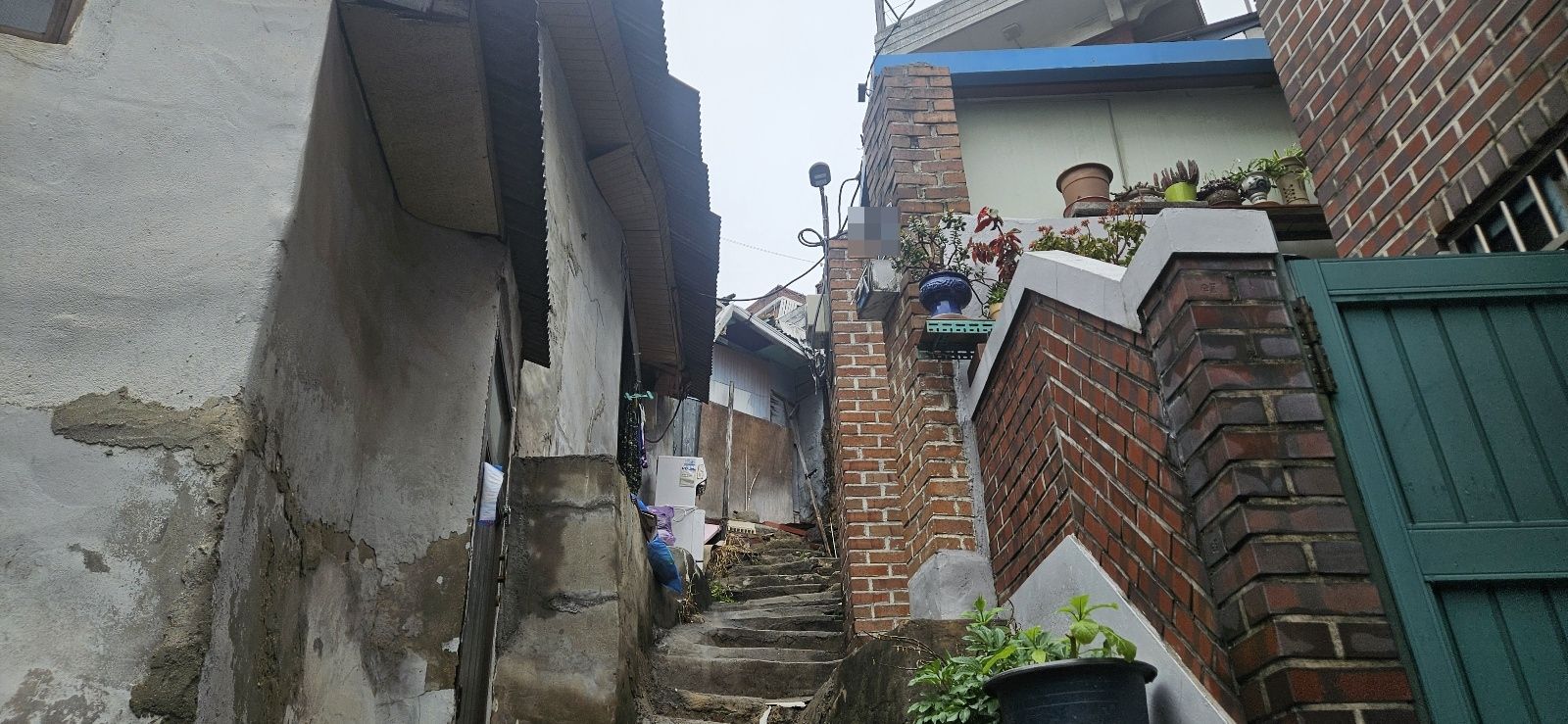

The spread of vacant homes in urban areas stems from the indiscriminate designation and cancellation of redevelopment zones. This is different from the "socially vacant homes" found in rural areas, which arise due to changes in population structure such as aging and population decline. These urban vacant homes are the result of people leaving after redevelopment projects are delayed or canceled. As projects stall, conflicts between original residents and newcomers deepen, and it becomes increasingly difficult to launch new redevelopment projects. Just as cracks continue to form in broken windows, vacant homes continue to spread. Experts suggest that the most important solution is to strengthen the authority of local governments so they can dispose of vacant homes.

Scars of the New Town Boom... Surge of Vacant Homes After Redevelopment Zone Cancellations
Choi Eunyoung, head of the Korea Urban Research Institute, pointed out on the 22nd, "The process of indiscriminately designating and then canceling New Town projects has inflicted a serious illness on neighborhoods," adding, "Once a neighborhood is designated as a redevelopment zone, people leave, management is suspended, and homes deteriorate rapidly."

Since 2012, the Seoul Metropolitan Government has implemented a "New Town and Redevelopment Project Exit Strategy," canceling 393 out of 683 redevelopment zones in Seoul at the time. Of these, 279 were canceled based on residents' decisions, while 114 were canceled by the city government. This decision was made after the New Town project, aggressively promoted by then-Mayor Lee Myungbak, caused conflicts among residents and sparked speculative frenzy. In 2012, there were a total of 1,300 sites designated for New Town and redevelopment projects in Seoul, of which 305 sites (across 35 districts) were designated during Lee's tenure as mayor.
The cost of the New Town exit strategy was severe. According to a survey by the Seoul Institute, a field investigation of 103 redevelopment zones canceled in Seoul as of 2019 found that 226 vacant homes had emerged. There were 38 zones where at least one vacant home existed. Notably, 55.3% of all vacant homes (125 out of 226) were concentrated in four zones (Ogin 1 District and Chungsin 1 District in Jongno-gu, Sajik 2 District in Jongno-gu, and Seongbuk 4 District in Seongbuk-gu).

Improving Residential Environments vs. Restarting Redevelopment... Resident Conflicts Make Solving Vacant Homes Difficult
As vacant homes spread and neighborhoods began to deteriorate, the city re-designated these areas as "Residential Environment Improvement Promotion Districts." This approach involves the public sector directly upgrading infrastructure to improve the basic facilities of aging residential areas. As of the first quarter of this year, a total of 60 locations have been designated as residential environment improvement zones.
This is an effort to at least improve basic infrastructure. However, local residents remain cold to these measures. Many homes are adjacent to narrow alleys or lack city gas, so many residents are unaware that any infrastructure improvements have been made. In the case of Chungsin 1 District, the upper and lower neighborhoods were designated as environment improvement zones in 2019 and 2016, respectively, and stairways were renovated. However, residents still complain about issues such as abandoned vacant homes and the inability of fire trucks to access the area.
To address these problems, new redevelopment projects are sometimes proposed. However, it is now even harder to accelerate these projects than before. The main reason is that prolonged delays have deepened conflicts among residents. In Chungsin 1 District, a redevelopment committee was established in 2021, but later split into two separate committees, making it impossible to reach a consensus. A committee official lamented, "Jongno-gu District Office says it will proactively review the redevelopment project if residents unify the committees and gather consent forms, but the situation remains chaotic due to disagreements among residents."
Kim Jinyu, professor of Urban Transportation Engineering at Kyonggi University, diagnosed, "The biggest reason redevelopment projects fail is the lack of consensus among residents," and added, "There are limits to the resources and manpower the public sector can provide for zones with low business feasibility and high levels of conflict."
For Existing Vacant Homes, Local Governments Must Take Focused Demolition and Emergency Action
Experts emphasize that conflicts among stakeholders in the redevelopment process are likely to be prolonged, so preemptive measures are needed to prevent slumification. Professor Kim stated, "According to the broken windows theory, if a single vacant home is left unattended, abandoned houses will spread in the surrounding area," and added, "Local governments must be empowered to actively demolish vacant homes."
One proposed alternative is to designate areas with concentrations of vacant homes as priority redevelopment zones and have local governments carry out focused demolitions. Each local government has a legal basis for issuing demolition orders to owners under the "Special Act on the Maintenance of Vacant Homes and Small-Scale Housing." If the order is not carried out, a compliance fine can be imposed, or demolition can be conducted directly by the authorities.

However, there have been no cases of direct demolition by the city government. For example, the Seoul Metropolitan Government designated three areas in Yongsan-gu as vacant home concentration zones but took no separate management actions. According to Asia Economy's investigation, not a single one of Seoul's 25 district offices has directly demolished a vacant home in the seven years since 2018. As for compliance fines, Seongdong-gu imposed only two cases last year, totaling 890,000 won.
Local governments are concerned about ambiguous laws and potential legal disputes with property owners. A city official explained, "The law stipulates that compliance fines can only be imposed on vacant homes that pose safety concerns, but the standards are vague, so each district may interpret them differently," and added, "It is also difficult to proceed with demolition without the owner's consent."
Kangrae Ma, professor of Urban Planning and Real Estate at Chung-Ang University, emphasized, "The biggest reason local governments cannot proceed with demolition is the potential for legal disputes with property owners," and added, "There needs to be a system where, while demolition decisions by local governments are made binding, the state protects public officials if they become involved in lawsuits."
-

Reporter Lee Jieun jelee0429@asiae.co.kr
-
Edit Yang Hyejin adoretj@asiae.co.kr
© The Asia Business Daily(www.asiae.co.kr). All rights reserved.
!["Please Help Us": How Much Do Those Bowing 90 Degrees These Days Actually Earn? [Data Pick]](https://cwcontent.asiae.co.kr/asiaresize/323/2026052010120870131_1779239528.png)