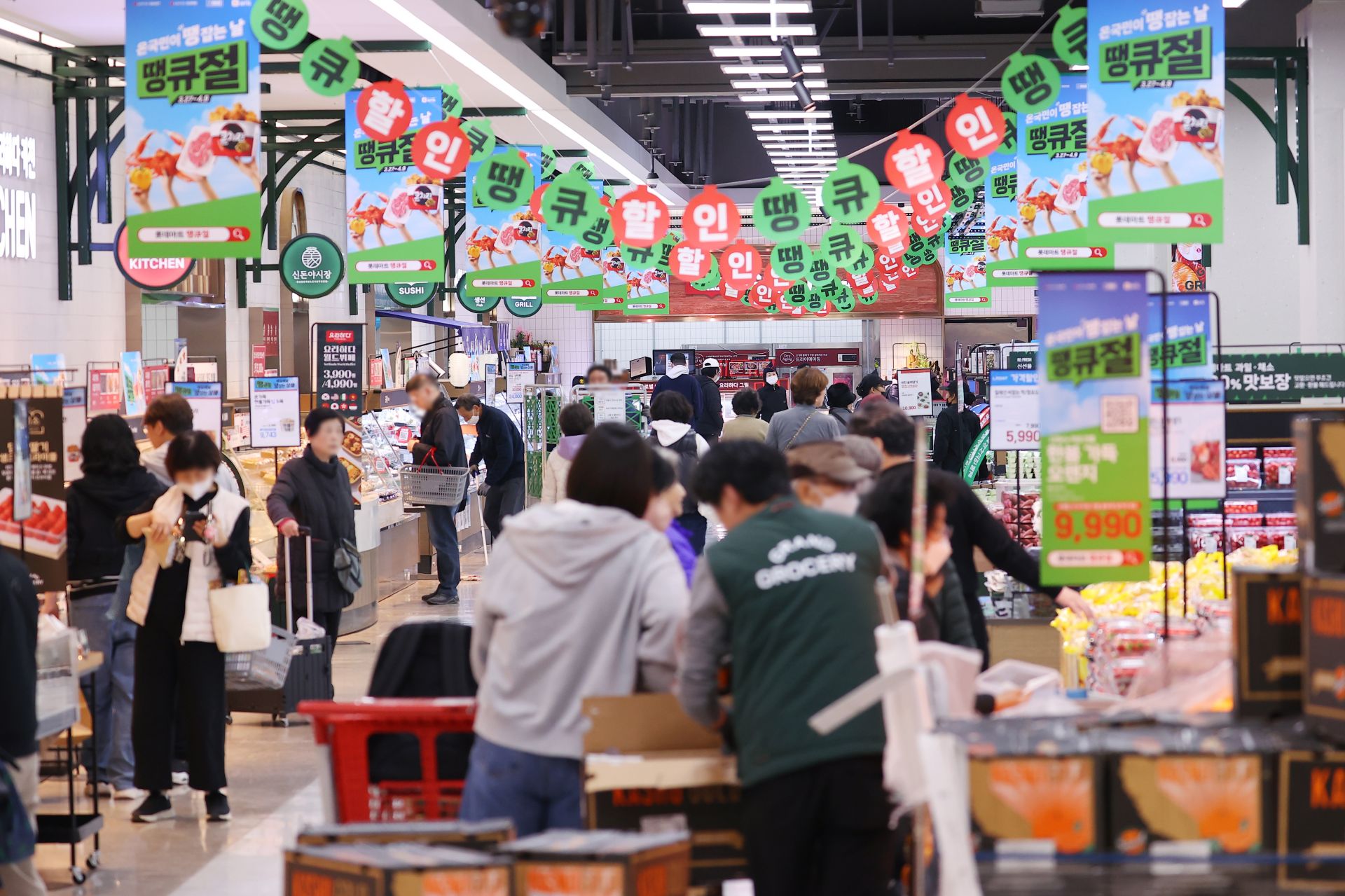


In the case of Emart, the consolidated operating profit for the first quarter increased by 238.2% compared to the same period last year, reaching 159.3 billion KRW, marking the best performance in the first quarter in eight years since 2017. This is analyzed as a result of focusing on improving profitability relative to sales through the benefits of strengthened discount events and cost reduction. In fact, sales by detailed business units showed that discount store sales rose only 0.3% to 816.2 billion KRW compared to the same period last year. The warehouse discount store Traders, which opened its Magok branch in Gangseo-gu, Seoul, last February, recorded sales of 190.6 billion KRW, an increase of 9.9%. The operating profit (42.3 billion KRW) growth rate was much higher at 36.9%, but this is interpreted as a result of cost efficiency efforts since last year by establishing an integrated purchasing system between Emart and Traders. An industry insider said, "Integrated purchasing can simplify distribution procedures and maximize profits by reducing various costs through price negotiation power with production areas," adding, "It has a significant impact on improving the performance of distribution companies."
[Domestic Market Shock] ① The Retail Industry Hit by the Worst Consumption Slump
Major Department Stores See Negative Sales Growth in Q1
Fashion and Supermarkets Also Struggle to Cut Losses
Editor's NoteA 'domestic consumption recession tsunami' has swept over the retail industry. As consumers close their wallets and refrain from purchasing goods essential for daily life, such as clothing, food, and beverages, the first quarter business results announced by retail companies clearly reveal the impact of the domestic market downturn. Since the end of last year, consumer sentiment has frozen due to the impeachment crisis, and even seasonal consumption has vanished due to erratic weather conditions.
Major retail companies are expanding discount events targeting consumers whose purchasing power has been weakened by high inflation, cutting costs, and seeking breakthroughs in overseas markets. However, amid fierce competition from online platforms and the additional blow of weak domestic demand, profitability has sharply declined. Experts interpret the 'earnings shock' experienced by major retail companies in the first quarter of this year not as a temporary economic downturn, but as a sign of a structural recession in the domestic market.
Major retail companies are expanding discount events targeting consumers whose purchasing power has been weakened by high inflation, cutting costs, and seeking breakthroughs in overseas markets. However, amid fierce competition from online platforms and the additional blow of weak domestic demand, profitability has sharply declined. Experts interpret the 'earnings shock' experienced by major retail companies in the first quarter of this year not as a temporary economic downturn, but as a sign of a structural recession in the domestic market.
According to the industry on May 16, the three major department store chains in Korea all saw negative sales growth in the first quarter of this year. Lotte Department Store's Q1 sales reached 806.3 billion KRW, down 1.1% year-on-year. While overseas department store sales, including Lotte Mall Westlake Hanoi, which opened in Vietnam in September 2023, rose by 6.2%, domestic department store sales fell by 1.4%. During the same period, domestic department stores' operating profit increased by 39% to 127.9 billion KRW, but this was the result of tightening the belt by reducing selling and administrative expenses through operational efficiency.
Weak Fashion Sales... All Three Major Department Stores Report Negative Growth
Shinsegae Department Store posted Q1 sales of 659 billion KRW and an operating profit of 107.9 billion KRW, down 0.8% and 5.1%, respectively, from the previous year. The company explained that sales remained at a similar level to last year's record high for a single quarter, indicating a relatively good performance despite the severe consumption slump. The decline in operating profit was attributed to increased depreciation expenses resulting from expanded investments in Gangnam branch's Sweet Park, House of Shinsegae, Shinsegae Market, and the main branch's The Estate.
Hyundai Department Store also saw double-digit increases in Q1 sales and operating profit compared to the previous year, thanks to a rebound in subsidiaries such as Zinus, which operates in the mattress business, and duty-free shops. However, its core department store business experienced a decline, with sales falling by 0.8% to 589 billion KRW and operating profit dropping by 5.7% to 97.2 billion KRW, reflecting the impact of the economic downturn.
An industry insider said, "Results in January were not bad due to the Lunar New Year holiday effect, but conditions worsened in February, when spring/summer (SS) new product marketing usually ramps up, as the cold weather persisted, leading to sluggish fashion sales." The insider added, "Compared to last year, which was a leap year, there was also one less business day, which contributed to the decrease in Q1 sales."
In reality, fashion companies saw a sharp drop in demand for mid-season clothing due to abnormal weather, resulting in not only a decline in top-line growth but also a significant deterioration in profitability in the first quarter of this year. Fashion companies with a high reliance on domestic demand were hit particularly hard. Hyundai Department Store Group affiliate Handsome recorded an operating profit of 21.8 billion KRW in Q1, down 32.9% year-on-year, and sales fell by 3.4% to 380.3 billion KRW. During the same period, Samsung C&T's fashion division saw operating profit drop by 37% to 34 billion KRW, and sales decrease by 2.5% to 504 billion KRW.
Shinsegae International's operating profit fell by 59% to 4.6 billion KRW, and sales declined by 1% to 304.2 billion KRW. F&F's operating profit dropped by 5.1% to 123.6 billion KRW, with sales also falling by 0.3% to 505.6 billion KRW. Kolon FnC posted an operating loss of 700 million KRW, turning to a deficit, and sales dropped by 4.1% to 262.9 billion KRW. These companies all cited weakened consumer sentiment and weather conditions as the main reasons for their deteriorating performance.
According to the Bank of Korea, the Consumer Composite Sentiment Index (CCSI) stayed below 100 for five consecutive months from December last year through last month. The index plummeted to 88.2 in December last year due to the aftermath of martial law and has remained in the 90s. A reading below 100 indicates a pessimistic outlook for the economy.
Large Supermarkets Survive on Discount Events
The situation was no different for large supermarket chains. Supermarkets, which handle food and daily necessities, tried to defend their performance with large-scale discount events from the beginning of this year. However, the consensus is that profitability has deteriorated to the point of crisis, as evidenced by the second-largest player, Homeplus, entering corporate rehabilitation proceedings in the first quarter of this year.
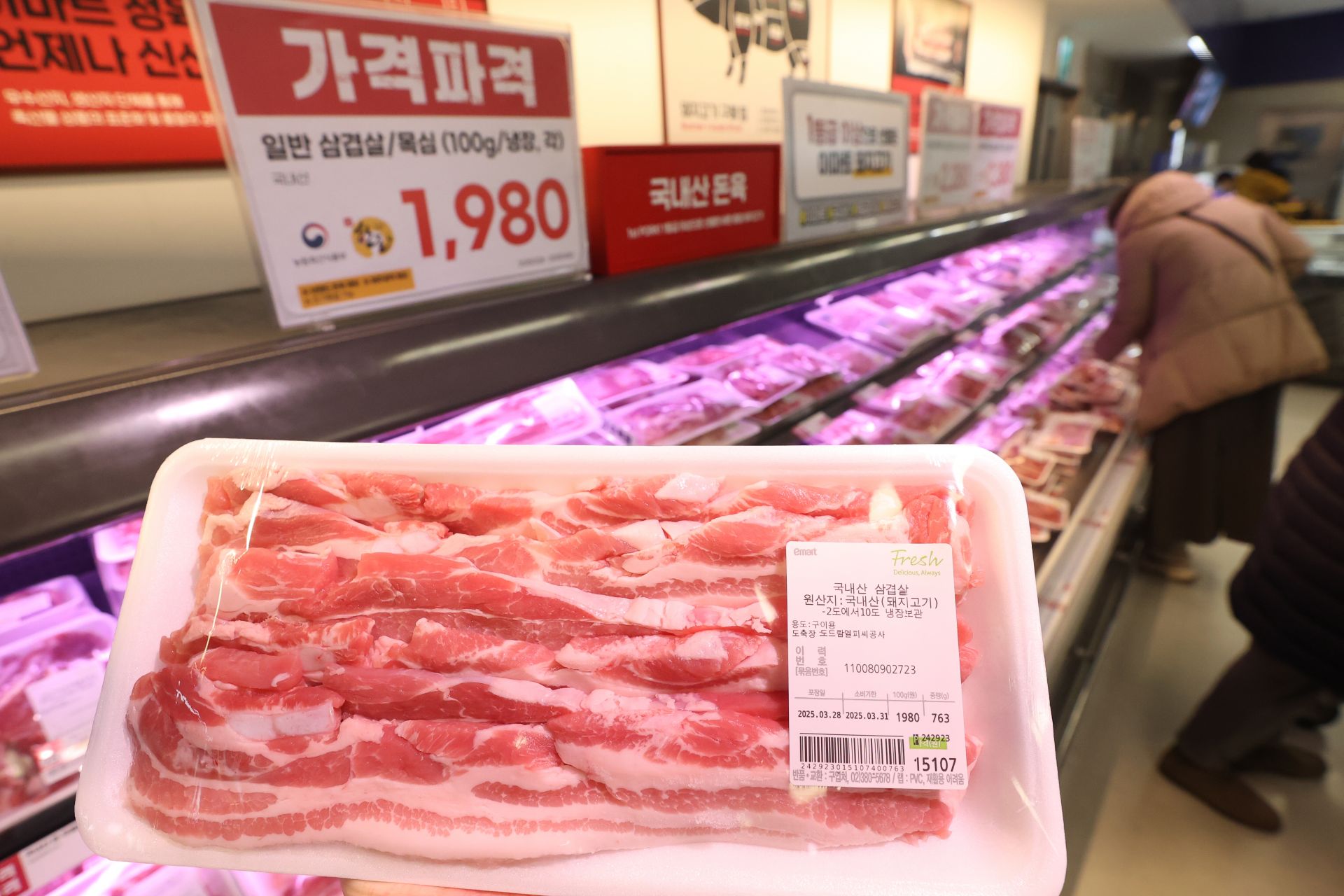
The third-largest player, Lotte Mart and Lotte Super, were even more severely affected by the consumption slump. Lotte Mart's sales rose by 0.3% year-on-year to 1.4873 trillion KRW, but operating profit fell by 34.8% to 28.1 billion KRW. Lotte Super's sales dropped by 7.2% to 305.2 billion KRW, and operating profit plunged by 73.3% to 3.2 billion KRW. In particular, domestic market supermarket sales dropped by 3.4% to 1.0184 trillion KRW, and operating profit fell by 73.5% to just 6.7 billion KRW. This includes a loss of 10.9 billion KRW due to the transfer of the 'e-grocery' (online grocery business) from the e-commerce division to the supermarket division in October last year, as well as costs related to ordinary wages. For Lotte Mart, the cost-offset effect of the integrated purchasing system, which was already completed in 2023, was also limited.
Homeplus filed for sudden corporate rehabilitation proceedings in early March, citing concerns over a liquidity crisis following a credit rating downgrade. Since then, the company has continued to hold weekly discount events, stating that it will use cash generated from normal business activities to pay suppliers and partner companies. An industry insider commented, "Homeplus filed for rehabilitation proceedings in March, and by boosting sales through large-scale discount events, the immediate impact on Q1 results was likely limited." However, the insider added, "It will be difficult to maintain this sales strategy indefinitely, so Homeplus may soon reach its limits."
Related News
![Price Hikes Backfire... Consumers Close Their Wallets [Domestic Market Shock] ②](https://cwcontent.asiae.co.kr/asiaresize/251/2021080311125561675_1627956775.jpg)
!["Signs of Structural Downturn... Time to Reorganize Low-Growth Strategies" [Domestic Demand Shock] ③](https://cwcontent.asiae.co.kr/asiaresize/251/2024122610141666128_1735175656.jpg)
-

Reporter Kim Heungsoon sport@asiae.co.kr
-

Reporter ming@asiae.co.kr
-
Edit Kim Hyunhee faith100@asiae.co.kr
© The Asia Business Daily(www.asiae.co.kr). All rights reserved.
!["Please Help Us": How Much Do Those Bowing 90 Degrees These Days Actually Earn? [Data Pick]](https://cwcontent.asiae.co.kr/asiaresize/323/2026052010120870131_1779239528.png)