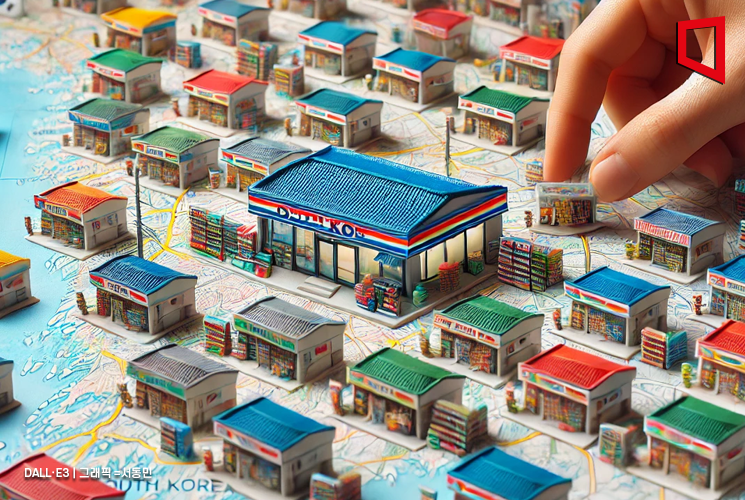
According to industry sources on the 22nd, based on data from the Ministry of Trade, Industry and Energy, the estimated number of convenience store outlets in South Korea internally calculated by the four convenience store chains CU, GS25, 7-Eleven, and Emart24 was 54,852 as of the end of last year, down by more than 20 from 54,875 the previous year. This marks the first decline in store growth rate since the outbreak of COVID-19, after annual increases of over 1,000 stores, and is the first decrease in 36 years since 7-Eleven opened its first store, the Olympic branch, in 1988.
Profitability Worsens Due to 'Market Saturation,' Number of Stores Declines for the First Time... Four Major Convenience Store Chains Including CU and GS25 See Over 20 Fewer Stores Compared to Previous Year
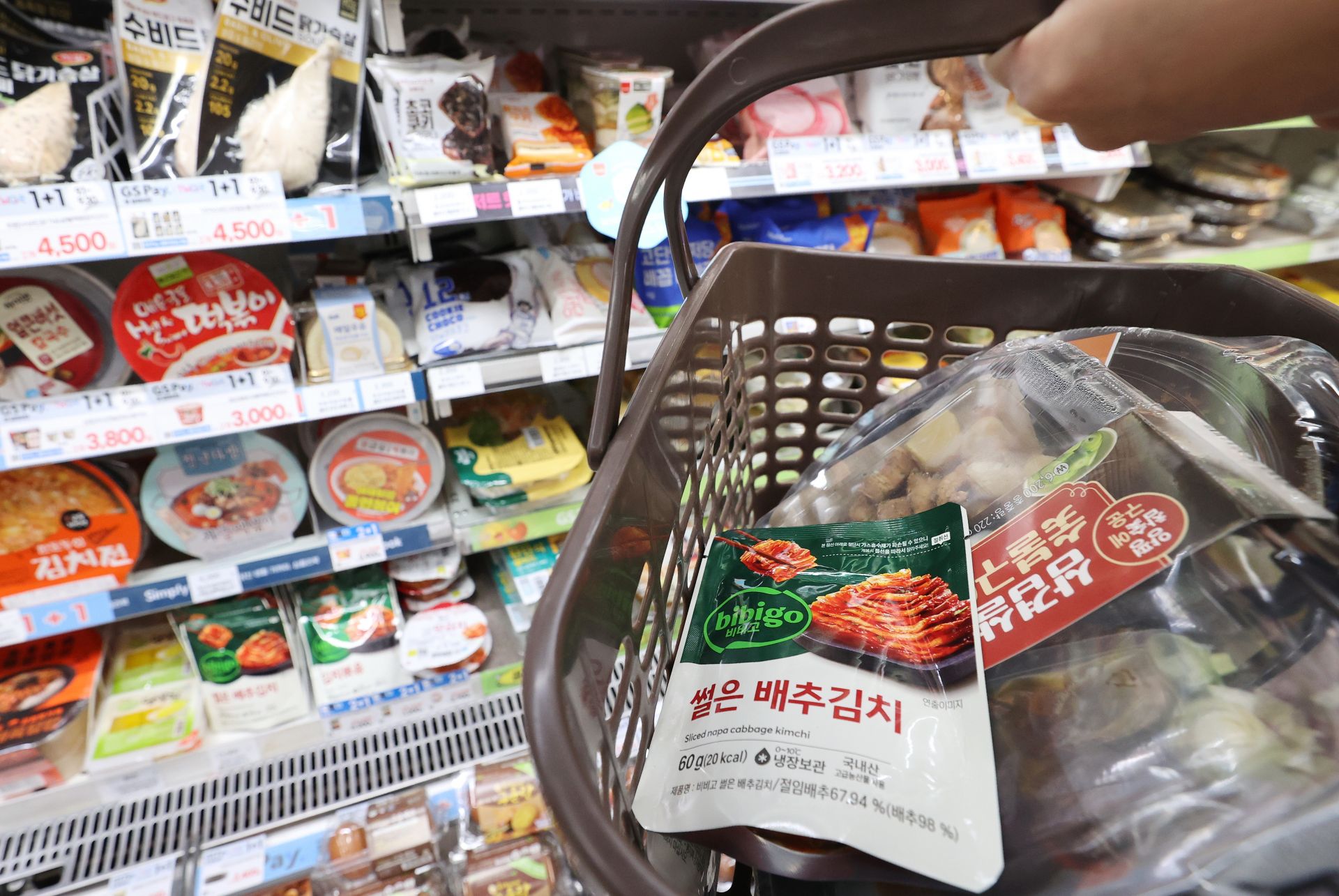
The number of convenience store outlets in South Korea declined for the first time last year. After rapidly expanding their offline presence by opening new stores and leveraging accessibility as a key strength, the chains have now shifted to downsizing as profitability has deteriorated due to market saturation.
According to industry sources on the 22nd, based on data from the Ministry of Trade, Industry and Energy, the four major convenience store chains?CU, GS25, 7-Eleven, and Emart24?internally estimated that there were 54,852 convenience store outlets in South Korea as of the end of last year. This represents a decrease of more than 20 stores from 54,875 the previous year. This is the first time the number of stores has declined since the outbreak of COVID-19, after years of annual increases of over 1,000 stores. It is also the first decrease in 36 years since 7-Eleven opened its first store, the Olympic branch, in 1988.

CU, operated by BGF Retail, and GS25, run by GS Retail, which are the two leading convenience store brands, continued their fierce competition for the top spot and increased their store counts, but the pace of expansion slowed. CU added only 696 stores last year, bringing its total to 18,458, while GS25 increased by 722 stores year-on-year to reach 18,112. Both chains had previously increased their store counts by nearly 1,000 each year, but last year, their store growth rates slowed significantly.
7-Eleven, operated by Korea Seven, undertook restructuring to improve profitability by closing underperforming stores, resulting in a decrease of 978 stores to 12,152. Emart24 also saw a reduction, with its store count dropping by 468 to 6,130.
An industry insider explained, "Even the leading companies are focusing more on qualitative growth rather than simply increasing the number of stores. They are selectively opening new locations in areas with high business potential and are concentrating on strategies such as acquiring profitable stores from competitors when their contracts expire. For this reason, since last year, the focus has shifted to profitability, leading to a decrease in the total number of stores."
Last year, the convenience store market size was 33.5672 trillion won, growing only 2.3% compared to the previous year. The sales growth rate halved from 9.8% in 2022 to 4.7% the following year and further slowed down.
Last year, the convenience store market size was 33.5672 trillion won, growing only 2.3% compared to the previous year. The sales growth rate halved from 9.8% in 2022 to 4.7% the following year and further slowed down.
The convenience store industry benefited from the social distancing measures implemented during the COVID-19 pandemic. As restrictions limited outdoor activities, demand surged for purchasing necessities near residential areas. In 2021, for the first time on an annual basis, convenience stores surpassed large discount stores to become the second-largest offline retail channel by sales share. During this period, the industry expanded its store network and, by leveraging cost-effectiveness amid high inflation, overtook department stores for four consecutive months in the second half of last year to claim the top spot in offline retail sales share.

However, the momentum has recently slowed. According to the Ministry of Trade, Industry and Energy, convenience store sales in February this year decreased by 4.6% compared to the same period last year, marking the first decline in about five years since February?March 2020. Sales fell across all categories, with food down 5.4% and non-food down 3.6%. Even during the Lunar New Year holiday in January, while department stores and large discount stores posted double-digit sales growth, convenience stores managed only a 1.7% increase.
Profitability has also deteriorated. Last year, operating profit at CU and GS25 fell by 4.6% and 10.9%, respectively, to 230.4 billion won and 194.6 billion won. 7-Eleven and Emart24 saw their operating losses widen to 84.4 billion won and 29.8 billion won, respectively. An industry insider commented, "In a saturated convenience store market, there are limits to opening new stores in so-called 'prime' locations. Rather than boosting sales by simply increasing the number of stores as in the past, companies are now focusing on differentiation through specialized stores and private brand (PB) products, as well as strengthening their core business."

Meanwhile, the gap in the number of convenience store outlets between South Korea and Japan, which had narrowed to fewer than 100 as of the first half of last year, has widened again. According to the Japan Franchise Association, there were 55,736 convenience stores across Japan as of the end of last year. During the same period, the combined number of stores operated by the five major convenience store chains in South Korea, including C-SPACE24, totaled 55,202?534 fewer than in Japan. The gap between the two countries had narrowed to just 61 stores as of May last year.
-

Reporter Kim Heungsoon sport@asiae.co.kr
-
Edit Kang Dongwon kangdw76@asiae.co.kr
© The Asia Business Daily(www.asiae.co.kr). All rights reserved.


![[Culture Interview] "Unifying the Fragmented Music Market... Super Fans Are the Next Competitive Edge"](https://cwcontent.asiae.co.kr/asiaresize/304/2026042817051344090_1777363513.jpg)