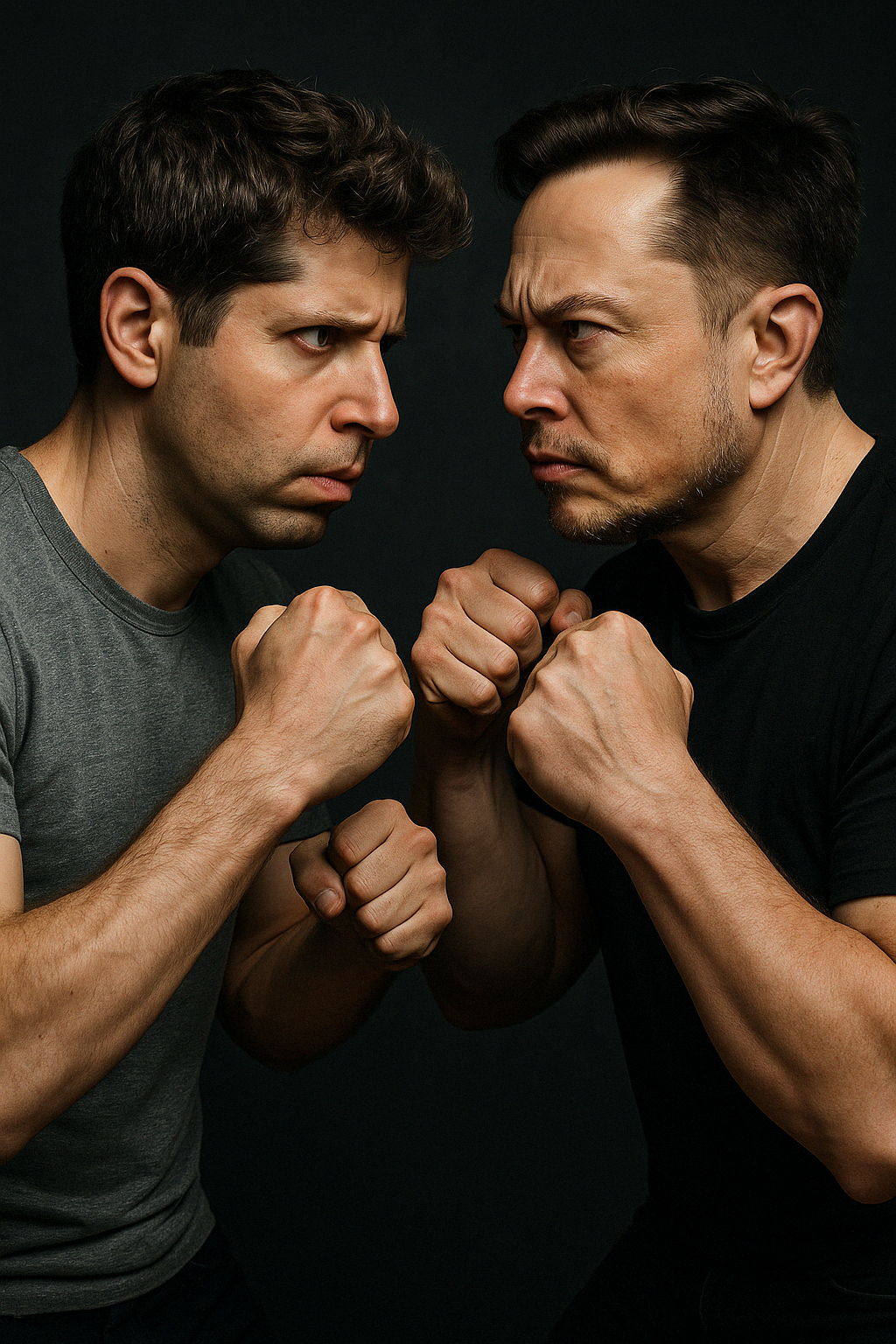

The turning point in the previously friendly relationship between the two was the power struggle within OpenAI that took place between 2017 and 2018. The WSJ reported, "CEO Musk wanted more control and aimed to become the de facto CEO of the company. People inside OpenAI hesitated about this, and CEO Altman actually persuaded other co-founders behind the scenes to support him becoming CEO. This was a power struggle among the early co-founders, and CEO Altman emerged victorious."
Altman vs. Musk: Intensifying Conflict Over AI Dominance... This Time, the Battle Moves to Social Media
Musk launches AI chatbot 'Grok 2' to catch up with OpenAI
Invests in AI supercomputers
Plans to expand scale by 10 times
Altman focuses on developing SNS platforms
Inevitable competition with Musk's X
WSJ: "This could become the highest-stakes battle yet"
Invests in AI supercomputers
Plans to expand scale by 10 times
Altman focuses on developing SNS platforms
Inevitable competition with Musk's X
WSJ: "This could become the highest-stakes battle yet"
"Back in 2015, Sam Altman and Elon Musk boasted a bromance, but now they are locked in a brawl. Who will seize the initiative in artificial intelligence (AI)? The two are at the center of the fiercest and most high-stakes battle in the history of the industry." (February 21, The Wall Street Journal (WSJ))
With OpenAI entering the development of a social networking service (SNS) similar to X (formerly Twitter), another round of conflict is expected to erupt between Sam Altman, CEO of OpenAI, and Elon Musk, CEO of Tesla. On April 16 (local time), the US tech media outlet The Verge reported, "OpenAI is developing an SNS platform similar to X, envisioning a platform where users can share and interact with images, centered around ChatGPT's image generation capabilities." The tech industry anticipates that CEO Altman's SNS venture will further amplify the conflict with CEO Musk.
The relationship between CEO Altman and CEO Musk dates back to the early 2010s. At that time, CEO Musk, having made a fortune by founding the online payment service PayPal, was laying the foundations for SpaceX and Tesla. CEO Altman admired Musk and visited the SpaceX factory multiple times to discuss his concerns. AI was a major topic of their conversations. In 2014, the two concluded that "it is impossible to stop AI from surpassing human capabilities." They also agreed, "If it can't be stopped, we should lead the way." Ultimately, in December 2015, OpenAI was founded as the result of their long-standing deliberations. To ensure OpenAI's success, CEO Musk invested $50 million and joined as an initial board member.
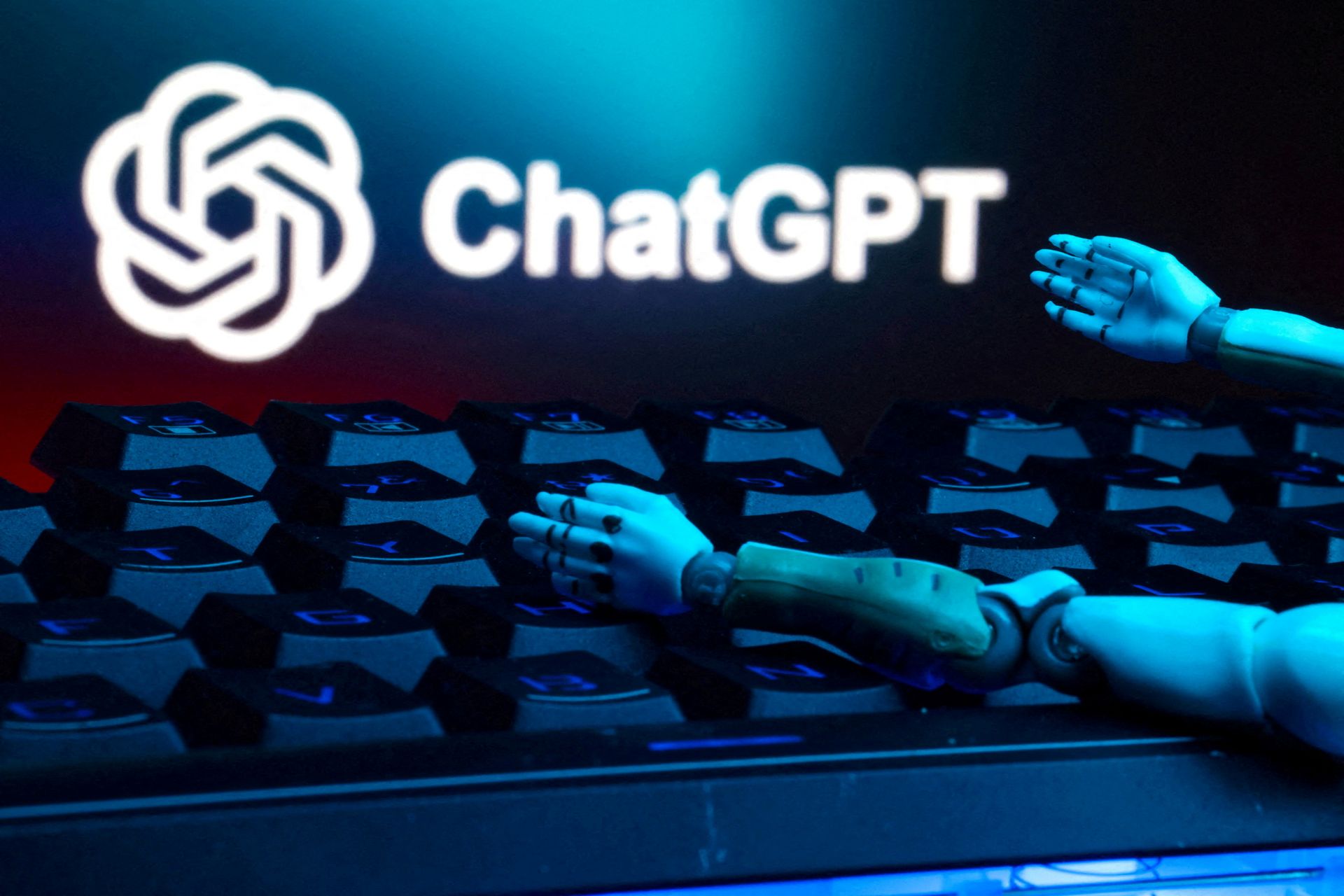
Since last year, the animosity between the two has escalated into a war of words. CEO Musk has attacked CEO Altman, calling him "Scam Sam" (November 16, last year) and saying he "has crazy eyes" (February 12). Musk has also expressed hostility toward OpenAI, describing it as "turned into the devil" (October 3, last year) and "a monster paralyzing the market" (November 14, last year). CEO Altman did not remain silent either. In November last year, he mocked CEO Musk by posting on X a scene where Grok, the chatbot service of Musk's xAI, answered that "Kamala Harris would make a better president than Donald Trump."
CEO Musk is making every effort to catch up with OpenAI. In August last year, xAI's AI chatbot 'Grok 2' surpassed the performance of OpenAI's 'ChatGPT-4 Turbo' and Google's 'Gemini Pro 1.5', which were considered the best at the time. CEO Musk has also declared his intention to invest astronomical sums. He announced plans to expand the scale of 'Colossus', the world's largest AI supercomputer used by xAI, by tenfold. This means increasing the number of NVIDIA high-performance graphics processing units (GPUs) 'H100' from 100,000 to 1 million.


On January 20 of this year, the day of President Trump's inauguration, CEO Altman made a decisive move that provoked CEO Musk by announcing the 'Stargate' project, a $500 billion AI development investment. CEO Altman led the announcement by contacting President Trump, with Masayoshi Son, Chairman of SoftBank, and Larry Ellison, Chairman of Oracle, at the forefront. CEO Musk was unaware that his rival was undertaking such an initiative. The WSJ reported, "Musk was furious, telling those around him, 'How could I not know about this? There's no way CEO Altman secured the necessary funding for this project.' True to form, Musk expressed his displeasure about the deal on X and publicly announced his first break with President Trump." Afterwards, CEO Musk publicly poured cold water on the project, stating, "They (OpenAI and other Stargate participants) don't actually have that much money."

The conflict between the two has now escalated into a legal battle. Last November, CEO Musk filed a lawsuit against OpenAI and CEO Altman, claiming that "OpenAI violated its promise to operate as a nonprofit organization and requesting to prevent its conversion into a for-profit corporation." In February of this year, through an investor consortium he leads, Musk made CEO Altman uncomfortable by announcing plans to acquire a controlling stake in OpenAI for $97.4 billion (139 trillion won). This amount is less than one-third of OpenAI's recently valued corporate worth of $300 billion. Ultimately, on the 9th of this month, OpenAI filed a counter-lawsuit requesting to stop Musk, stating that "CEO Musk is using all possible means to harm OpenAI."
The WSJ commented on the conflict between the two, stating, "Politically, the issue is who will set the AI agenda alongside President Trump." The analysis continued, "The national wealth fund being formed by President Trump and the US government budget represent enormous prizes, as these companies seek to raise tens of billions of dollars to build data centers nationwide. The political stakes are immense."
-
Reporter Jun Youngjoo ange@asiae.co.kr
-
Edit Choo Myeonghoon chox2mh@asiae.co.kr
© The Asia Business Daily(www.asiae.co.kr). All rights reserved.


![[Culture Interview] "Unifying the Fragmented Music Market... Super Fans Are the Next Competitive Edge"](https://cwcontent.asiae.co.kr/asiaresize/304/2026042817051344090_1777363513.jpg)