[A New History 66 Years After the Introduction of US Reactors]
Korean Nuclear Research Began with US Support
"Expected to be a Catalyst for K-Nuclear Power Plant Exports"
by Kim Jonghwa
by Paek Jongmin
by Kang Dongwon
Published 17 Apr.2025 15:28(KST)
Updated 17 Apr.2025 15:30(KST)
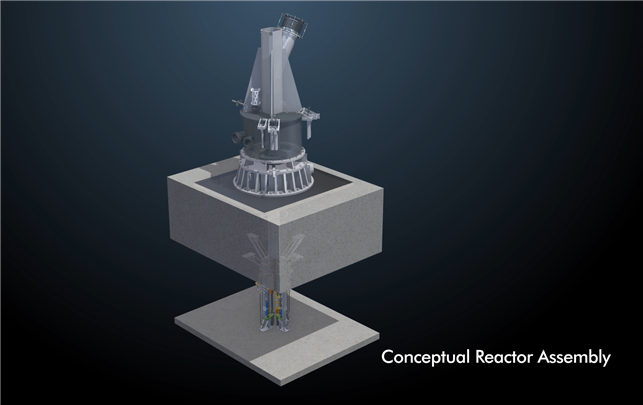
The Korea Atomic Energy Research Institute consortium has secured a contract to design the next-generation research reactor for the University of Missouri in the United States, making Korea a country that exports nuclear technology back to the US 66 years after first importing a research reactor from America. There are optimistic expectations that this will not only resolve sensitive issues with the US but also serve as a catalyst for further nuclear power exports.
![[A New History 66 Years After the Introduction of US Reactors]Korean Nuclear Research Began with US Support"Expected to be a Catalyst for K-Nuclear Power Plant Exports"](https://cphoto.asiae.co.kr/listimglink/9/2025041709272023234_1744849640.jpg)
[A New History 66 Years After the Introduction of US Reactors]
Korean Nuclear Research Began with US Support
"Expected to be a Catalyst for K-Nuclear Power Plant Exports"
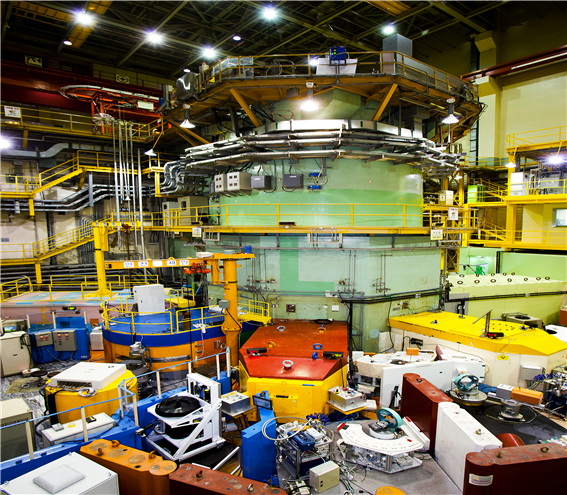
The government and the science and technology community attach great significance to this reverse export to the US. Korea began its nuclear research and development (R&D) in 1959 by introducing its first reactor, the 100 kW 'TRIGA Mark-2', from General Atomics in the United States. Since then, Korea has grown into a nuclear powerhouse, achieving milestones such as exporting nuclear power plants to the United Arab Emirates and being selected as the preferred bidder for a nuclear project in the Czech Republic.
Lee Changyun, First Vice Minister of Science and ICT, stated at a briefing on the 17th, "It is highly meaningful that Korean nuclear research, which began with US support, is now being exported back to the United States thanks to continuous investment and R&D."
This is being evaluated as a case that demonstrates the scientific and technological cooperation between Korea and the US. Vice Minister Lee said, "It is significant in terms of the Korea-US technology alliance," adding, "Designing a research reactor for nuclear nonproliferation purposes provides an opportunity to contribute to the peaceful use of nuclear energy and the international community."
There were concerns that the US Department of Energy's designation of Korea as a sensitive country would hinder cooperation in developing research reactor technology for export, but these concerns are now expected to be at least partially alleviated.
From an industrial and economic perspective, opportunities for nuclear power exports are expected to increase. In the field of research reactors, Korea first exported reactor design technology in 2009 to improve the performance of the 5 MW 'GRR-1' in Greece, following the design of the multipurpose research reactor 'HANARO' in 1985. Including the recent contract with the University of Missouri, Korea has achieved a total of seven technology exports in this field. There is an assessment within and outside the government that this export marks a golden opportunity for Korea to expand its research reactor business.
According to the International Atomic Energy Agency (IAEA), as of this month, there are 847 registered research reactors worldwide, with 227 operating in 54 countries. Although the construction cost per reactor ranges from $200 million to $1 billion, which is not particularly high, most existing research reactors are over 40 years old, making this a market with steady demand for replacement, improvement, and equipment expansion technologies.
The research reactor to be supplied to the University of Missouri will be used for cancer treatment, marking an important milestone in expanding Korean nuclear technology into the US medical infrastructure.
According to local media, the University of Missouri plans to install an additional 20 MW reactor, tripling its current production of radioactive isotopes by operating it alongside the existing 10 MW reactor. This will significantly increase the supply of radioactive isotopes such as Lutetium-177, which is essential for cancer treatment.
The University of Missouri reactor is the only facility in the US that produces Lutetium-177. Cho Minsu, Director of the National Radiation Emergency Medical Center at the Korea Institute of Radiological & Medical Sciences, explained, "Therapies using Lutetium-177 are highly anticipated in the field of neuroendocrine cancer." Currently, the global pharmaceutical company Novartis is reported to have developed a therapy using Lutetium-177.
Moon Choi, President of the University of Missouri, told local media, "460,000 Americans have had their lives saved thanks to discoveries at our university. With the expansion of the reactor, even more patients will be able to benefit."
The Korea Atomic Energy Research Institute consortium plans to pursue additional contracts following this export. Lim Incheol, Vice President of the Korea Atomic Energy Research Institute, attended the briefing and said, "We plan to proceed with basic design negotiations with the University of Missouri and will also pursue various other research projects in the global nuclear market."
The Ministry of Science and ICT plans to establish a 'Research Reactor Export Promotion Strategy' in June. In addition, starting this year and continuing through 2029, the ministry has launched the 'Overseas Demand-Based Research Reactor Core Technology Integration Platform Project,' investing 32 billion KRW to develop a high-performance multipurpose research reactor basic model.
Kim Jonghwa justin@asiae.co.kr
Paek Jongmin cinqange@asiae.co.kr
Kang Dongwon kangdw76@asiae.co.kr
© The Asia Business Daily(www.asiae.co.kr). All rights reserved.


![[Report] "A Culinary Destination with a View of Gyeongbokgung"... Kim Dong-sun's High-End Dining Takes Over Gwanghwamun](https://cwcontent.asiae.co.kr/asiaresize/304/2026042114562634571_1776750985.jpg)
![[Gallery Stroll] Red Robe, Black Lines... Danjong Returns with the Face of Wounds](https://cwcontent.asiae.co.kr/asiaresize/304/2026042014183532691_1776662315.jpg)

