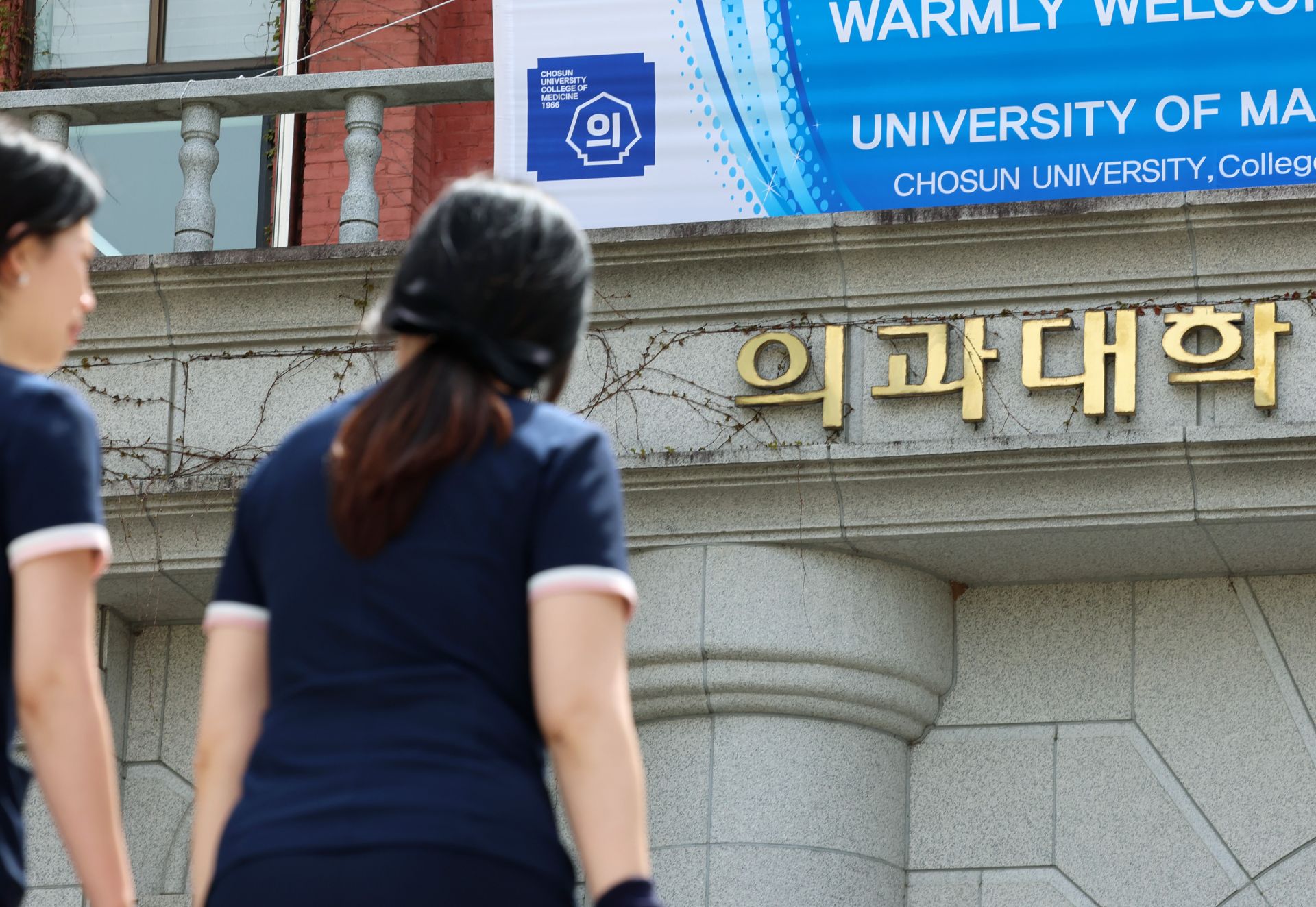
Medical students are still prepared to repeat a year if necessary.

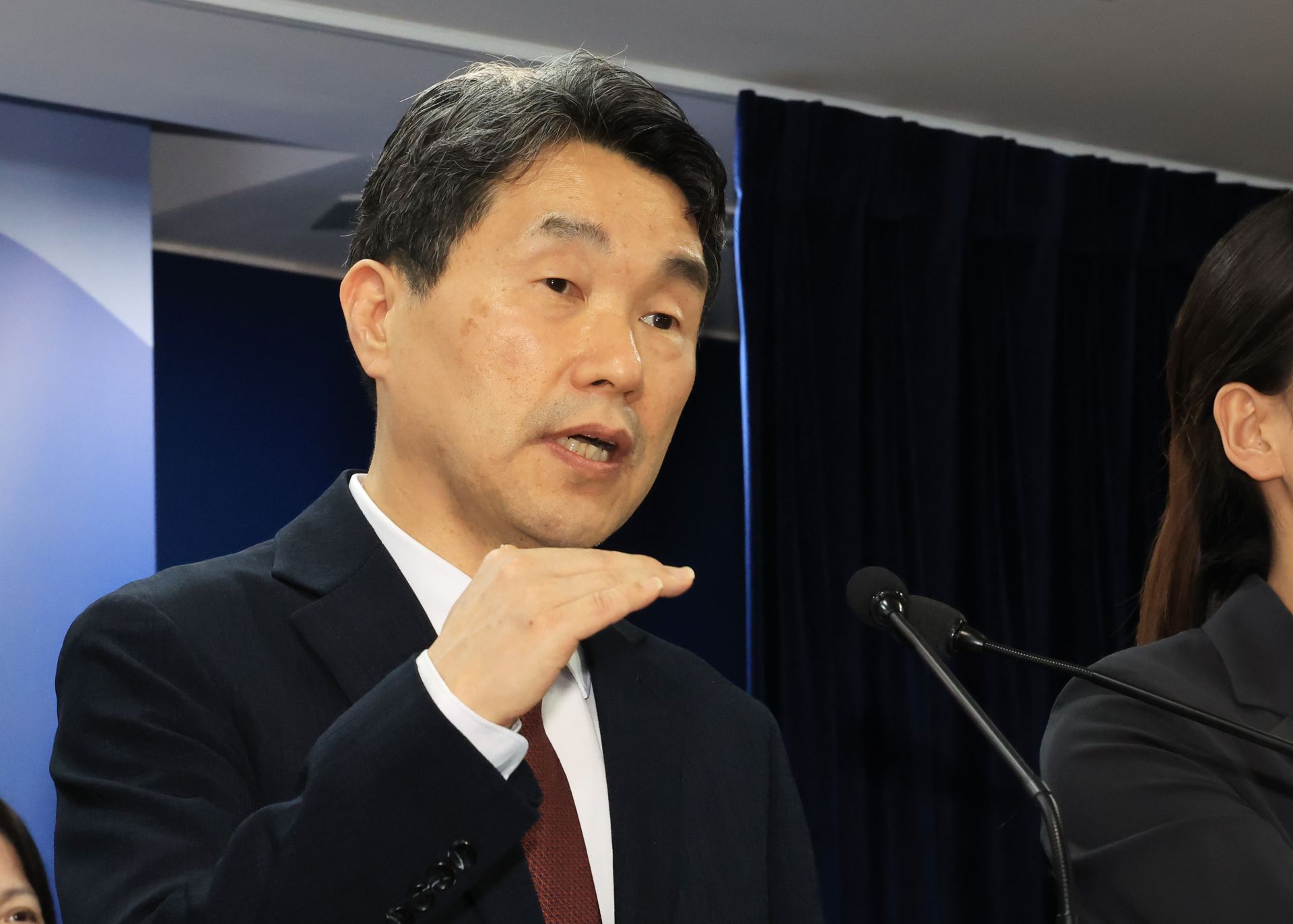
Lee Juho, Deputy Prime Minister for Social Affairs and Minister of Education, announced on the 17th at a briefing on the adjustment direction of medical school admission quotas for the 2026 academic year held at the Government Seoul Office in Jongno-gu, Seoul, that the medical school quota has been set at 3,058. Photo by Jo Yongjun
원본보기 아이콘Back to Square One After 14 Months... Likely to Recruit 3,058 Students Next Year
The "medical school quota increase," a core part of the Yoon Suk-yeol administration's medical reform, has returned to its starting point after 14 months of conflict between the government and the medical community.
On the 17th, Deputy Prime Minister for Social Affairs and Minister of Education Lee Joo-ho announced at the Seoul Government Complex that the government would revert the 2026 medical school admission quota to the pre-increase level of 3,058 students. This plan accepts the proposal from the presidents of the 40 universities with medical schools.
Previously, on the 16th, the university presidents held a Zoom meeting, agreed to adjust next year's medical school admission quota to 3,058, and conveyed this to the government.
The figure of 3,058 is the number the government and each university presented at the beginning of this year, stating, "If medical students return by the end of March, we will freeze the quota." The Ministry of Education considered full return, while the university presidents considered half return as a "return rate sufficient for normal classes." However, the actual average return rate for the 40 medical schools was found to be 25.9%.
Average Return Rate at 40 Medical Schools: 25.9%
Kim Hongsoon, Director of Medical Education Support at the Ministry of Education, stated at a pre-briefing held that day, "As of the 16th, the average class participation rate at the 40 medical schools is 22.2% for pre-med students and 29% for medical students, averaging 29.5%." Among all grades, fourth-year medical students had the highest participation rate at 35.7%, but this still falls far short of the expectations of the government and universities. According to the Ministry of Education, only four schools had a participation rate above 50%. At 26 out of 40 schools, the participation rate was below 30%. This is attributed to significant variation in participation rates among schools.
According to the office of lawmaker Kang Kyungsook of the Rebuilding Korea Party, at Chonnam National University, 99 third-year and 100 fourth-year students registered for clinical practice classes that began on the 7th, but none actually attended. At Jeju National University, not a single student registered for a class with a capacity of 36, which is mandatory for third- and fourth-year medical students. At Chungbuk National University, only two out of 45 required major courses for first- to fourth-year students were fully registered. At Pusan National University, three-quarters of students did not pay tuition. Except for 163 freshmen in the class of 2025, all other students failed to pay. The situation was similar at the remaining five regional flagship national universities, including Kangwon National University, Jeonbuk National University, and Chungnam National University.
Government: "Had No Choice but to Step Back for Normalization of Medical Education"

Students are moving at Yonsei University College of Medicine in Seodaemun-gu, Seoul. Photo by Kang Jinhyung
원본보기 아이콘The reason the government intends to set the medical school admission quota at 3,058 regardless of whether students return is to first send a signal to students boycotting classes that "there will be no increase" and then persuade them to return. The urgent concern that medical education will become impossible if students do not return this semester also played a part. This is why the government says, "We had no choice but to step back for the normalization of medical education."
A Ministry of Education official said, "According to discussions with medical school deans, about 30% of students are hardliners, 30% want to participate in classes, and the remaining 40% are hesitating between the two groups. Freezing the quota at 3,058 provides a justification and opportunity for students to return." The Ministry of Education believes that if class participation reaches around 40%, the rate could rapidly increase. The current participation rate has quadrupled, rising by about 18 percentage points from 7.8% on May 31.
Concerns Over Reinforcing the Attitude of "Just Hold Out"
Nevertheless, the government cannot avoid criticism that it has undermined its own principle of freezing the quota only if students returned to a level sufficient for normal classes by the end of March.
It is also uncertain whether the "freeze at 3,058" will actually lead to students returning to classes. Some point out that it may only reinforce the attitude that "just holding out" is enough.
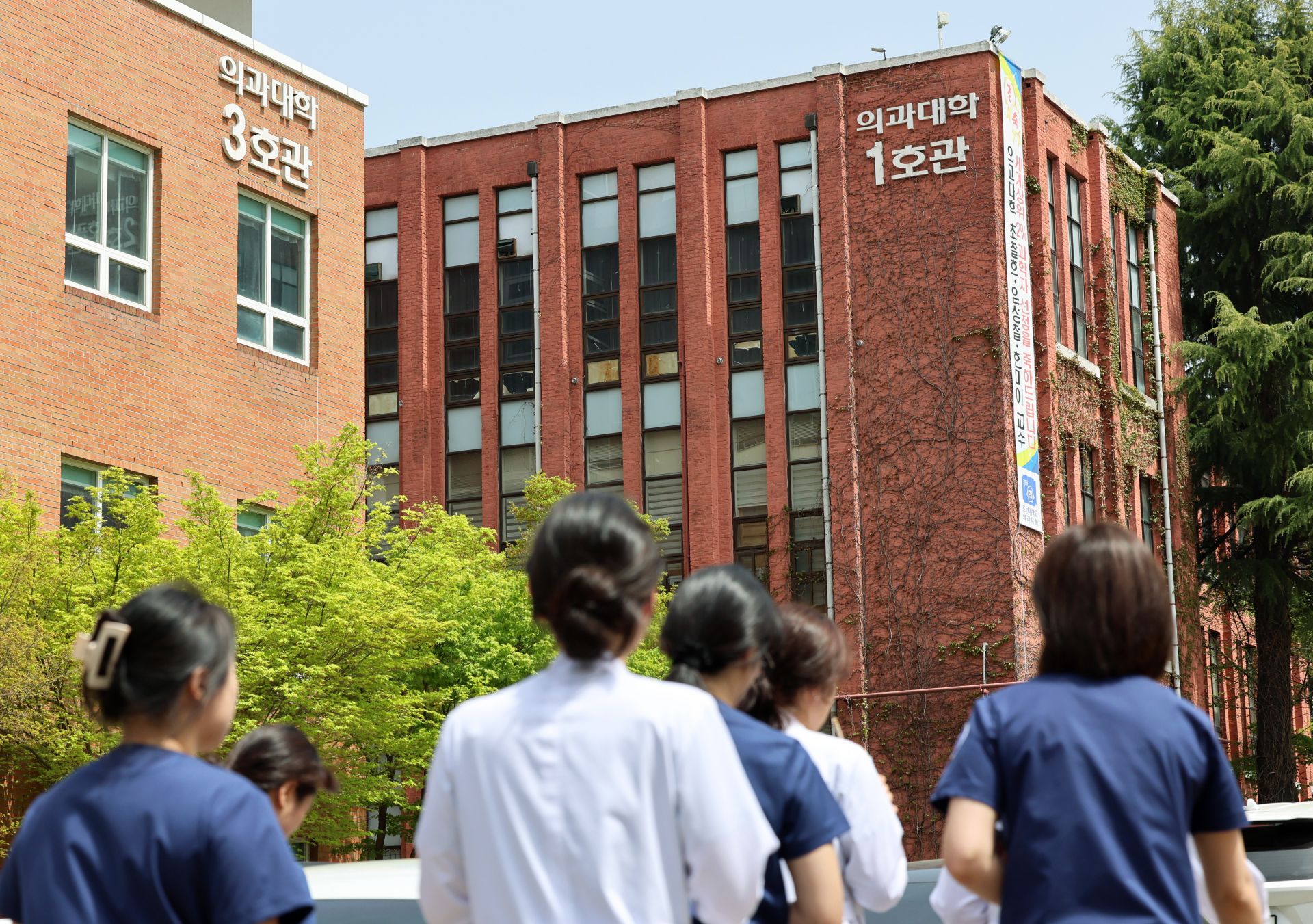
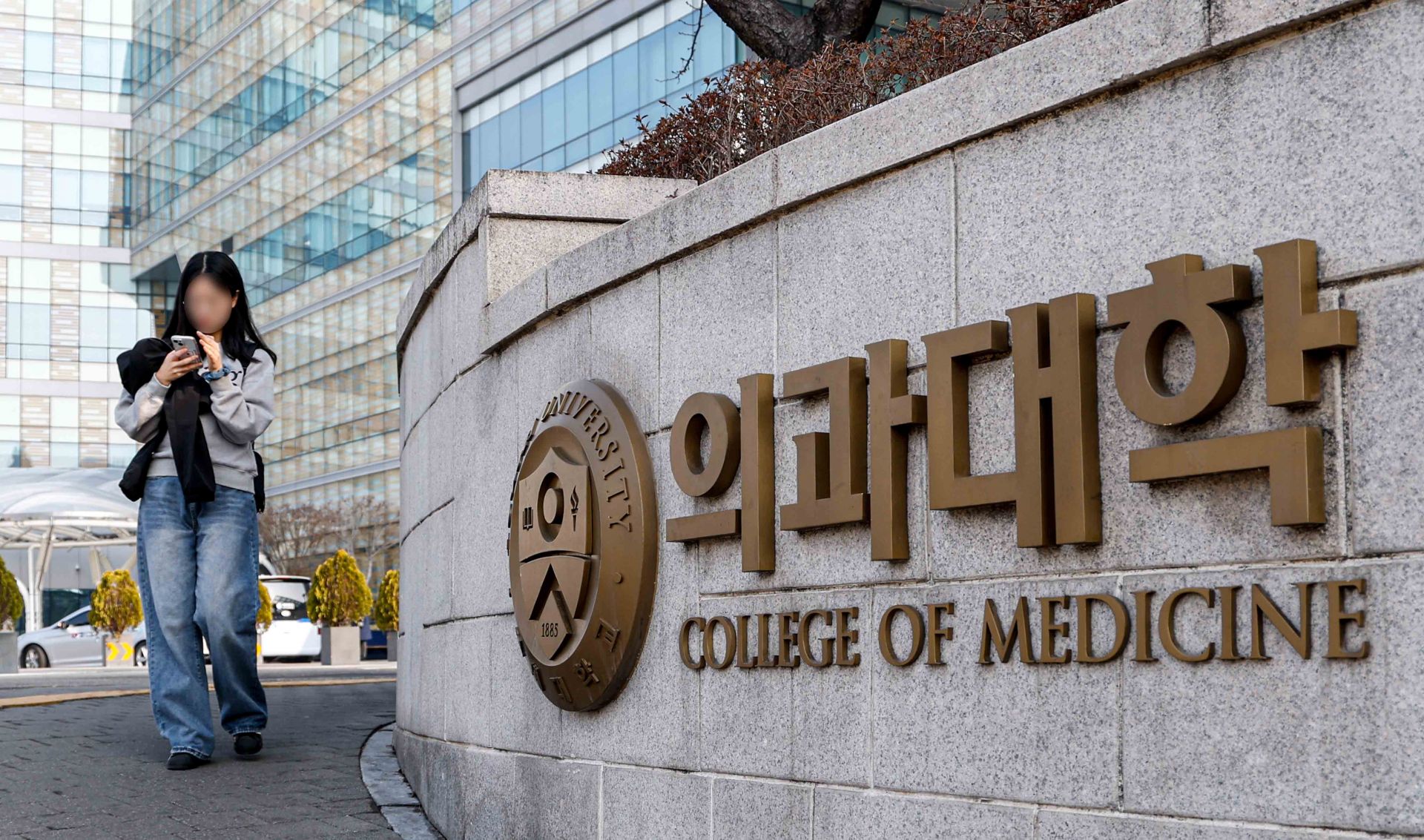
According to the Korea Association of Medical Colleges (KAMC), a gathering of medical school deans, as of the 16th, 14 medical schools including Korea University, Seoul National University, Yonsei University, and Ulsan University have confirmed repeating a year for fourth-year students.
Starting from this, a full-scale domino effect of collective year repetition will begin at the end of this month.
In this case, the government cannot avoid the tripling (simultaneous classes for the 2024, 2025, and 2026 cohorts).
The education sector believes that doubling (simultaneous classes for the 2024 and 2025 cohorts) can be resolved by redesigning the curriculum or through seasonal semesters,
but tripling is considered difficult to manage academically.
On the 16th, the Deputy Prime Minister also said during the National Assembly's government questioning, "If all students return, tripling will not occur,
and if they come back later, it could become a very difficult situation for education."



![[Report] "A Culinary Destination with a View of Gyeongbokgung"... Kim Dong-sun's High-End Dining Takes Over Gwanghwamun](https://cwcontent.asiae.co.kr/asiaresize/304/2026042114562634571_1776750985.jpg)
![[Gallery Stroll] Red Robe, Black Lines... Danjong Returns with the Face of Wounds](https://cwcontent.asiae.co.kr/asiaresize/304/2026042014183532691_1776662315.jpg)