Food ingredient marts, which have exploited loopholes in current laws to rapidly expand over the past few years, are drawing increasing complaints from small business owners. This is because the structure in which food ingredient marts dominate distribution channels with their relatively superior financial power has become entrenched. Experts point out that the size of food ingredient marts has already reached the level of large supermarkets, raising the need for regulation.
Dominating distribution channels with superior financial power Lowering consumer prices through bulk supply methods Price marketing such as loss leaders and monthly discounts
'Small business owners suffering from bait products'
According to the Financial Supervisory Service's electronic disclosure system on the 11th, the sales of the three major food ingredient marts (Foodist, Jangbogo Food Ingredient Mart, Segyero Mart) have jumped two to three times over the past 10 years. Jangbogo Food Ingredient Mart's sales last year reached 450.2 billion won, a 147.6% increase from 181.8 billion won in 2014. During the same period, Segyero Mart's sales grew from 74.2 billion won to 124.9 billion won, up 68.3%. This contrasts with the declining performance of large supermarkets and super supermarkets (SSM) amid the rise of online shopping and economic downturn.
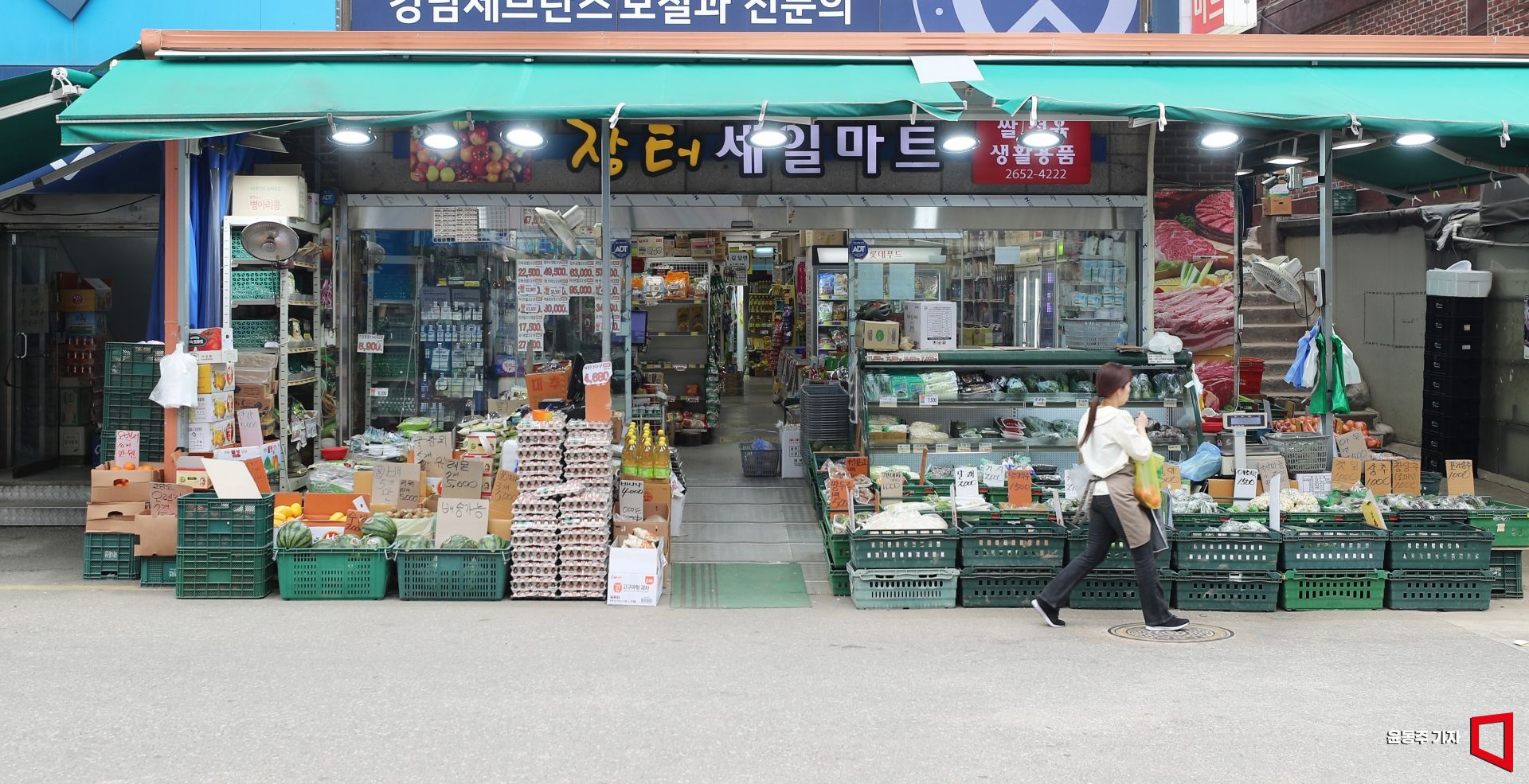
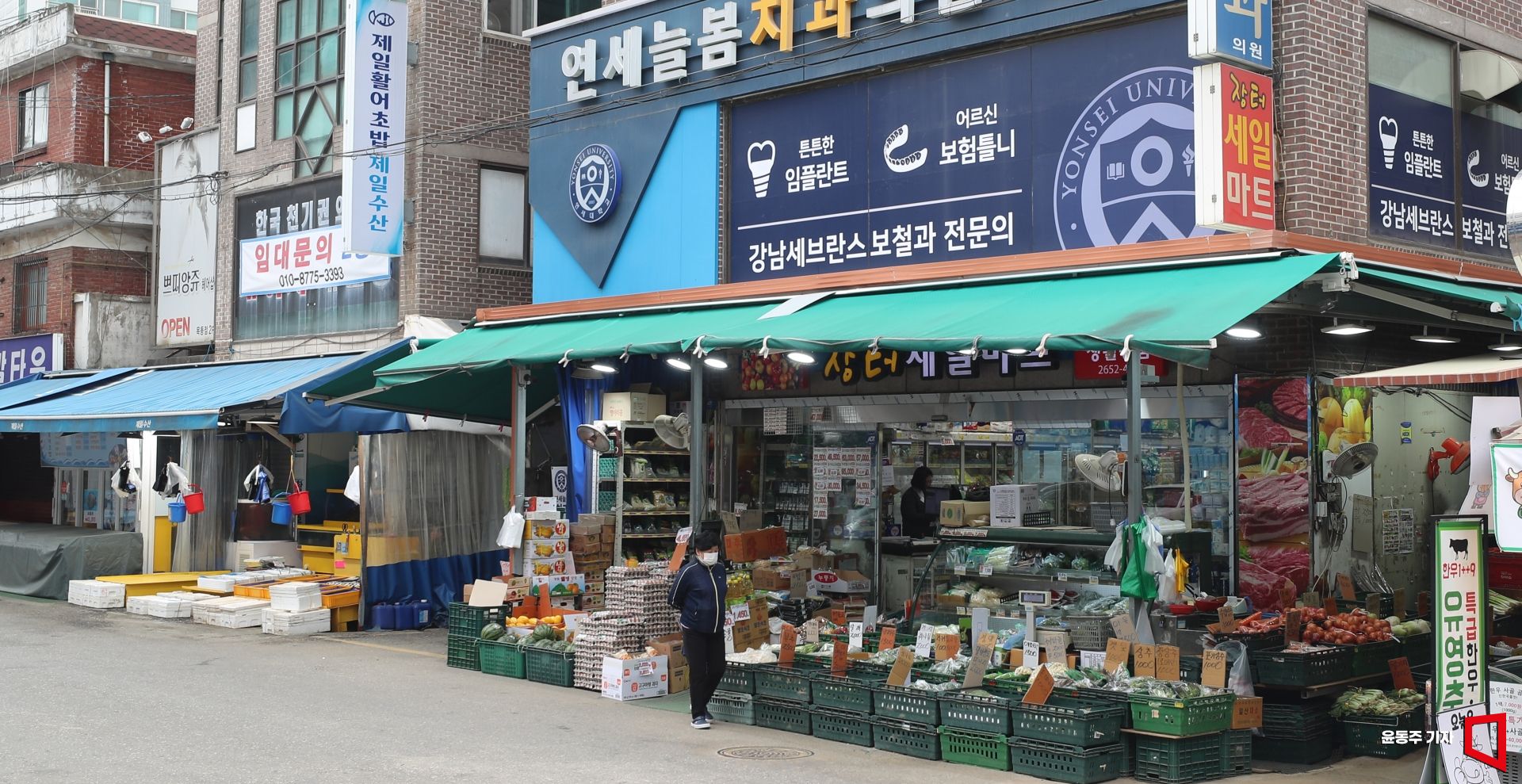
A food ingredient mart refers to a store that handles groceries and is between 1,000 square meters (302 pyeong) and less than 3,000 square meters (907 pyeong) in size. Originally, these were distribution stores aimed at supplying restaurant operators with ingredients at low prices, but by promoting direct delivery from producers and low prices, they have grown to the point where they now threaten large supermarkets. An industry insider said, "Operators have believed for at least five to six years that food ingredient marts have surpassed large supermarkets and SSMs in competitiveness," adding, "Currently, in terms of capital, store size, and parking facilities, they are virtually equivalent to large supermarkets."
The problem is that the rapid growth of food ingredient marts is increasingly harming not only nearby merchants but also small business owners in the distribution sector. Food ingredient marts lower consumer prices by contracting with regional small and medium-sized wholesalers, rather than large corporations, to purchase ingredients such as meat and seafood in bulk. Initially, this had the effect of promoting coexistence with small wholesalers and revitalizing the market, but the situation reversed as food ingredient marts began to aggressively market low prices to general customers. So-called 'bait products' (products stacked on display and sold at up to 20% lower than market prices) and 'monthly discounts' are typical examples.
Small business owners in the distribution sector complain that, in recent years, with the expansion of private brand (PB) products in large supermarkets and fewer supply channels, they have no choice but to comply with unreasonable supply price demands from food ingredient marts. Mr. Yeo (54), who runs an egg distribution business in Gimpo, Gyeonggi Province, said, "Even though egg exports to the US are increasing and domestic supply is limited, food ingredient marts are selling a tray of eggs for 2,890 won, which is lower than the farm price," adding, "Since eggs can't be stored for long and it's a bigger loss if I can't find a buyer, I have no choice but to supply them at unreasonably low prices."
Nearby merchants are equally concerned. Food ingredient marts are not subject to regulation under the current Distribution Industry Development Act and the Large-scale Retail Business Act because their store area is less than 3,000 square meters and their sales do not exceed 100 billion won. As a result, they can operate 24 hours a day, year-round, regardless of requirements such as two days off per month or bans on late-night operations, and are not obligated to draw up standard contracts with suppliers. Recently, food ingredient marts have also expanded their reach through early morning delivery, similar to Coupang and Kurly. Mr. Kim (65), who sells fruits and vegetables at a traditional market in Seongbuk-gu, Seoul, said, "Within a 5km radius of a food ingredient mart, nothing sells, whether it's fruit, vegetables, or eggs."
"In the end, consumer prices will normalize"
Small business owners have begun to collectively voice their demands for regulation of food ingredient marts. On the 9th, the Korea Federation of Micro Enterprises, together with the Democratic Party's National Small Business Committee, held a forum calling for legislative amendments to regulate food ingredient marts. Kang Jongseong, president of the Korea Egg Industry Association, claimed, "Food ingredient marts are forcing suppliers to deliver below cost by constantly running sales with bait products," adding, "They are making suppliers suffer with all kinds of unfair practices, such as demanding entry fees worth hundreds of millions of won, exclusive supply requirements, and requests for money from store personnel." Although 22 related bills were proposed in the 21st National Assembly and 15 in the 22nd, progress remains stalled.
Forced entry fees, exclusive supply demands, and all kinds of power abuse Open year-round regardless of twice-monthly holidays and midnight operation bans No regulations despite capital and sales power comparable to large supermarkets
Jung Se-eun, professor of economics at Chungnam National University, pointed out, "Food ingredient marts have already reached the level of large supermarkets in terms of capital and sales power, but there are no regulations," adding, "If these food ingredient marts, having grown so large, drive nearby merchants and distributors to the brink of closure and monopolize the market, consumer prices will eventually normalize, and later, consumers will have to bear the full burden of price increases."







![[Report] "A Culinary Destination with a View of Gyeongbokgung"... Kim Dong-sun's High-End Dining Takes Over Gwanghwamun](https://cwcontent.asiae.co.kr/asiaresize/304/2026042114562634571_1776750985.jpg)

![[Gallery Stroll] Red Robe, Black Lines... Danjong Returns with the Face of Wounds](https://cwcontent.asiae.co.kr/asiaresize/304/2026042014183532691_1776662315.jpg)