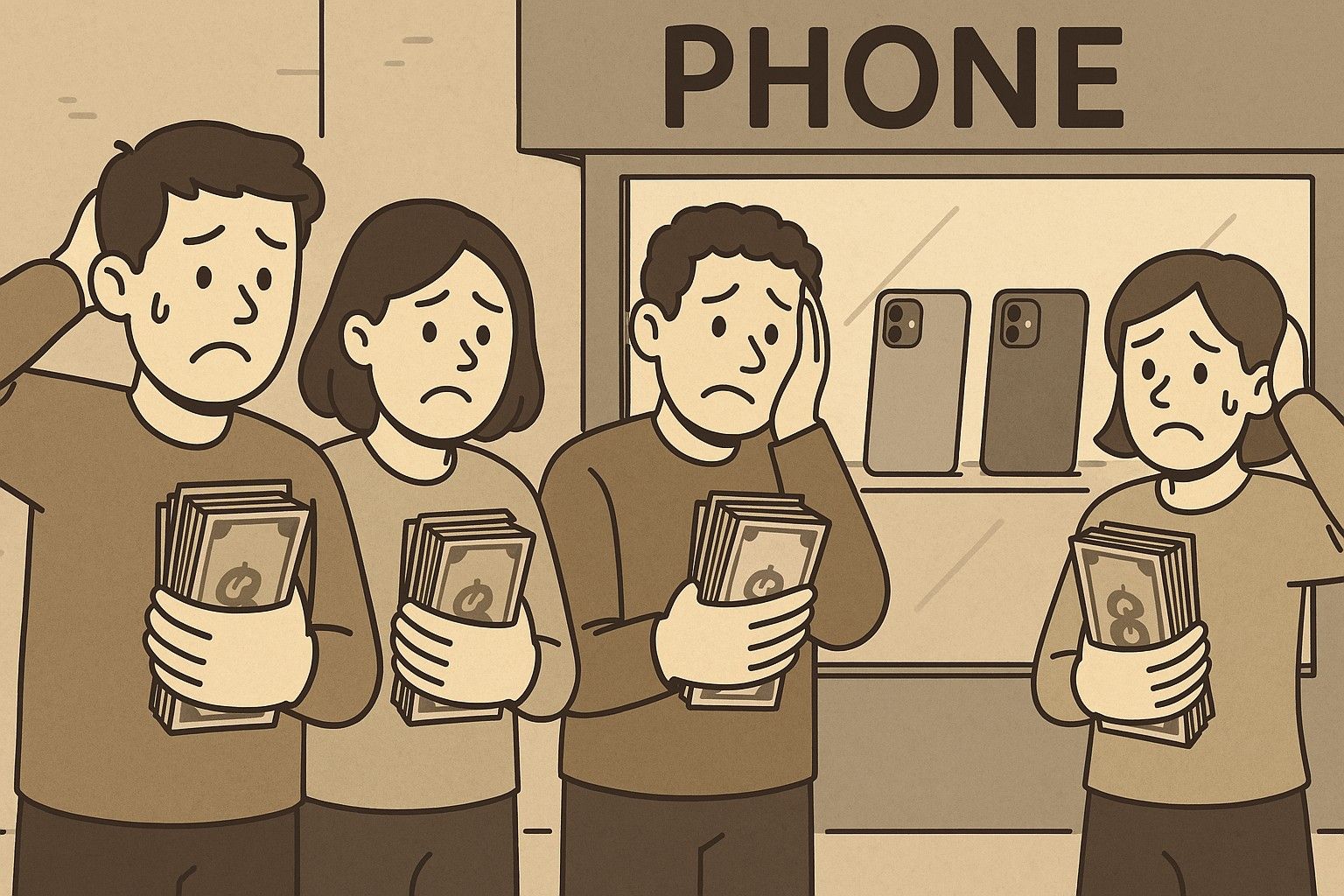
125% Tariff Imposed on China, Which Has High Apple Dependency
Wall Street analyst: "Fictional story...difficult to realize"
"Even if the supply chain remains, tariffs will raise prices"
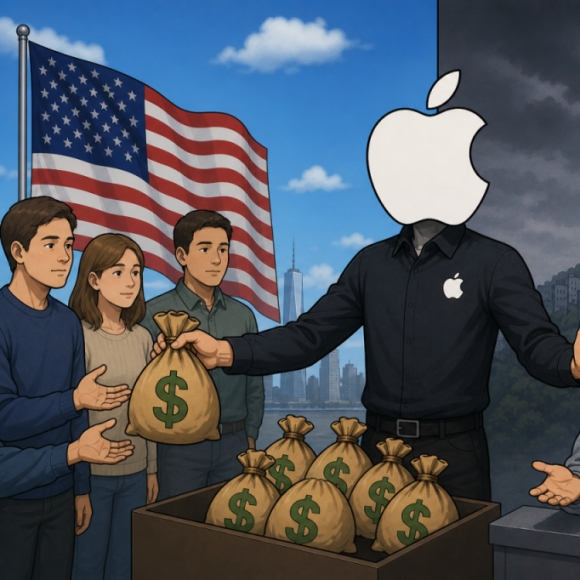
As US President Donald Trump announced a 125% tariff on China while granting a 90-day grace period for reciprocal tariffs with other countries, there are predictions that the price of the iPhone, America’s representative consumer product, could triple if production is moved to the US. According to Yonhap News on the 9th (local time), citing CNN, Dan Ives, Head of Global Technology Research at Wedbush Securities and a well-known Wall Street analyst, predicted that the price of an iPhone could soar to $3,500 (about 5.12 million won) if it is manufactured in the US.

Wall Street: "Price will triple...iPhone could cost $3,500"
On the 8th, White House spokesperson Karoline Leavitt said in a briefing, "President Trump believes Apple can move iPhone production to the US." However, Ives dismissed this as a "fictional story," asserting that "it is difficult to realize iPhone production in the US." He explained, "An iPhone produced in the US could cost more than three times the current price of about $1,000," adding, "This is because it would require replicating the extremely complex manufacturing ecosystem currently established in Asia within the US."

On the morning of September 20 last year, when Apple's first artificial intelligence (AI) smartphone, the iPhone 16 series, was released in Korea, citizens lined up to enter the Apple Store in Myeongdong, Jung-gu, Seoul to make purchases. Photo by Yonhap News
원본보기 아이콘
On September 20 last year, when Apple's first artificial intelligence (AI) smartphone, the iPhone 16, was released in Korea, buyers lined up at the Apple Store in Myeongdong, Jung-gu, Seoul. Photo by Kang Jinhyung
원본보기 아이콘Ives said, "For example, if a semiconductor plant were built in West Virginia or New Jersey, that would become a $3,500 iPhone," and predicted, "Even if Apple relocates just 10% of its supply chain to the US, it would take $30 billion (about 43.635 trillion won) and three years." In a previous report, he also argued, "The reality that a $1,000 iPhone is the world's top consumer product for American consumers would disappear," and "At the current price, it doesn't make sense and prices would rise sharply."
Seeking Production Bases Outside China...But India and Brazil Lack Capacity
According to CNN, even if the supply chain remains unchanged, the reciprocal tariffs announced by President Trump are expected to significantly raise iPhone prices. Investment bank Rosenblatt Securities predicted, "If Apple passes on the high tariff costs entirely to consumers, the price of the iPhone could rise by 43%." Neil Shah, Vice President of market research firm Counterpoint Research, also said, "It could vary depending on the production location," but added, "(The price) could rise by about 30%."

People are passing in front of the Apple Store located in Beijing, China. Photo by Reuters Yonhap News
원본보기 아이콘However, there are analyses that Apple is already seeking production bases outside China, such as India and Brazil. This is because moving the production of key components to countries with lower tariff barriers could help curb iPhone prices. According to the reciprocal tariffs initially announced by President Trump, India's rate was 26%, and Brazil's was the lowest at 10%. However, these countries are not considered to have enough production capacity to replace China.
On this day, about 13 hours after the start of reciprocal tariffs by country, President Trump announced that tariffs on China would be raised to 125%, while for other countries, reciprocal tariffs would be suspended for 90 days and only a basic 10% tariff would be imposed. On his social media platform 'Truth Social', he announced, "Tariffs on China, which has announced retaliatory tariffs against the US's reciprocal tariffs, will be immediately raised to 125%."
President Trump said, "Hopefully, at some point in the not-too-distant future, China will realize that the days of plundering the US and other countries are no longer sustainable or acceptable."


![[Culture Interview] "Unifying the Fragmented Music Market... Super Fans Are the Next Competitive Edge"](https://cwcontent.asiae.co.kr/asiaresize/304/2026042817051344090_1777363513.jpg)