China Raises Counter Tariffs Further
Seizing the Lead in the Tariff War
Seizing the Lead in the Tariff War
by Kwon Haeyoung
by Choi Yujeong
Published 10 Apr.2025 14:07(KST)
Updated 10 Apr.2025 14:51(KST)
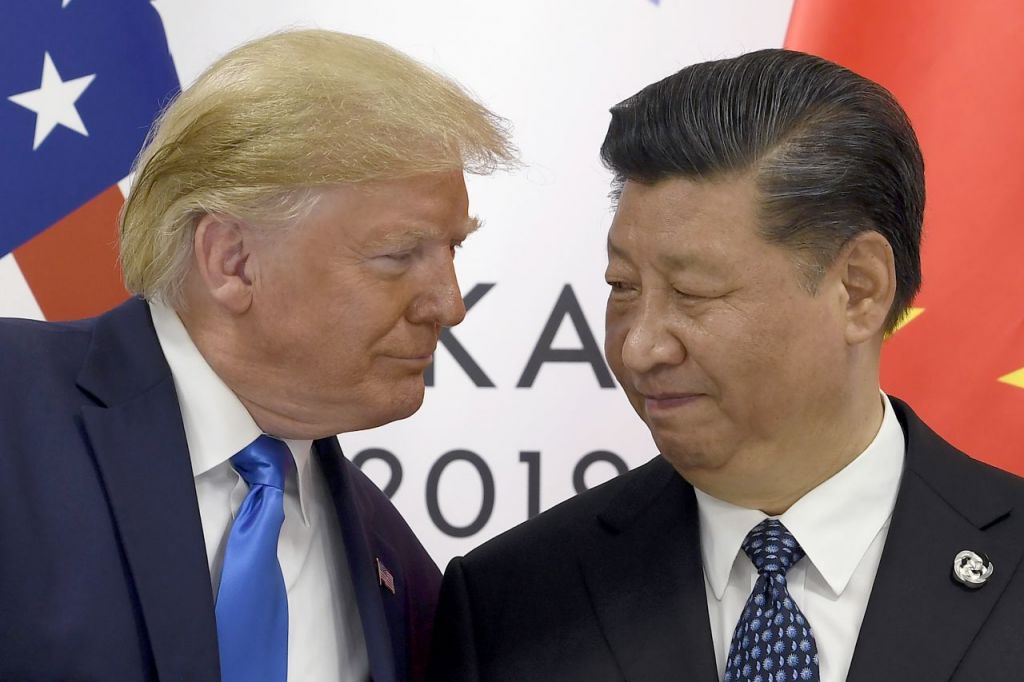
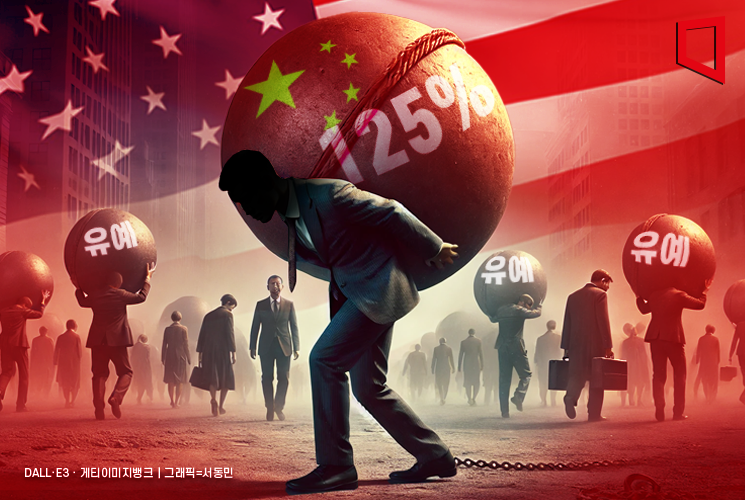
On the 9th (local time), U.S. President Donald Trump raised reciprocal tariffs on China to 125% and granted a 90-day deferment of country-specific reciprocal tariffs for other countries. This was a dramatic retreat approximately 13 hours after the full-scale implementation of reciprocal tariffs just after midnight.
This deferment of reciprocal tariffs came amid growing chaos in the financial markets, such as a sell-off in U.S. stocks and bonds, due to indiscriminate tariff bombardments against both allies and adversaries, and growing criticism within the U.S. over concerns about inflation and economic recession. It is also seen as a move to maximize pressure on China, which declared retaliatory measures against the U.S., and to focus firepower on the U.S.-China tariff war. It is clear that the main target of Trump's tariff war is China.
President Trump announced through a post on his self-created social network, Truth Social, that "China does not respect the world market at all" and that "the U.S. will raise tariffs on China to 125% and enforce them immediately."
For other countries except China, only a basic tariff of 10% will be imposed, and country-specific reciprocal tariffs will be deferred for 90 days.
President Trump said to countries that have contacted the U.S. for trade negotiations instead of retaliatory measures, "I approve a 90-day deferment (of reciprocal tariffs) and will immediately implement a measure to adjust the reciprocal tariff rate to a significantly lower 10% during this period." He stated, "More than 75 countries have contacted the U.S. to discuss trade, trade barriers, tariffs, currency manipulation, and non-monetary (non-tariff) tariffs," adding, "These countries have not taken any form of retaliatory measures against the U.S. in accordance with my strong recommendation. I appreciate their cooperation."
Previously, President Trump had imposed a '10% + alpha' reciprocal tariff on all trading partners worldwide. On the 5th, he first implemented the 10% basic tariff, and just after midnight on the 9th, he enforced additional punitive tariffs ('+ alpha') considering country-specific tariff and non-tariff barriers. However, only about 13 hours after the full-scale implementation of reciprocal tariffs, President Trump decided to apply only the 10% basic tariff to countries other than China and suspend the '+ alpha' tariffs for three months. However, for China, which imposed retaliatory tariffs against the U.S., he added a 50% tariff as the first round of retaliation and an additional 21% as the second round, on top of the initial 34% reciprocal tariff, raising the cumulative additional tariff rate on China to 125% since the beginning of Trump's second term.
The background for President Trump's 'two-track' tariff policy?separately responding to China and other countries just 13 hours after full-scale implementation?is believed to be China's ultra-hardline response. As China responded more strongly than expected by imposing retaliatory tariffs on U.S. products, the intention was to focus firepower on cornering China and seizing the initiative in the tariff war. Earlier, China had declared that the U.S. tariff measures were "unilateral bullying," imposed retaliatory tariffs at the same level, and placed U.S. defense companies on a sanctions list, signaling its determination not to back down. The European Union's move to jointly respond to the U.S. tariff bombardment is also analyzed as one reason for the U.S. adopting a 'divide and conquer' strategy.
Furthermore, warnings that the tariff policy could trigger not only an economic crisis in the U.S. but also a financial crisis are cited as a major reason for President Trump's dramatic deferment of reciprocal tariffs. Recently, the financial markets have seen not only a sell-off in stocks but also a surge in the sale of U.S. Treasury bonds, considered the world's safest asset. As Treasury prices fell, the yield on 30-year bonds soared about 50 basis points (1bp=0.01 percentage point) over the past three trading days. When bond prices fall, the pressure to liquidate trades financed with bonds as collateral increases, which can lead to a liquidity crunch and even a financial system crisis. President Trump also mentioned when meeting with reporters at the White House that, regarding the reason for the deferment of reciprocal tariffs, "(People) got a little scared," adding, "I was watching the bond market. Last night, I noticed people were a bit uneasy."
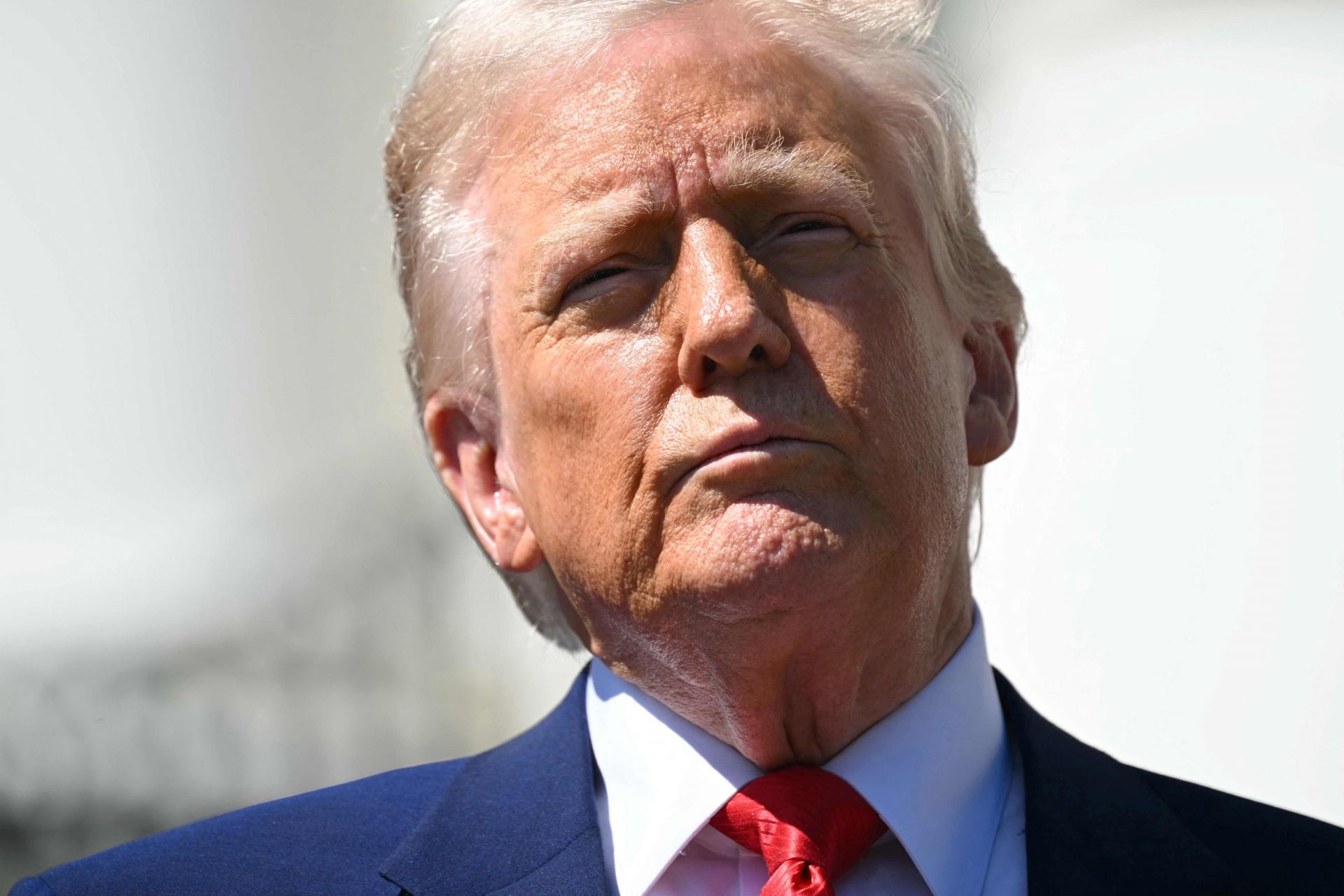
Photo by AFP Yonhap News
The market interprets President Trump's appointment of Scott Besant, a former Wall Street executive known for advocating flexible tariff policies, as Treasury Secretary as a move to address financial market turmoil and keep tariff negotiations in mind. Some observers predict that Trump's tariff bombardment could boomerang back on the U.S. economy and financial markets, causing the global tariff war to be short-lived.
The Trump administration continues to signal its intention to pursue negotiations with each country after the implementation of reciprocal tariffs. Secretary Besant explained regarding the deferment of reciprocal tariffs, "The solutions for each country will be customized, but it will take time," adding, "President Trump wanted to participate directly in the negotiations, so he granted a 90-day deferment." Jamison Greer, the U.S. Trade Representative, said regarding the deferment of reciprocal tariffs, "There are many countries that say they will cooperate instead of retaliate," and "The President is trying to find ways to negotiate with these countries."

Kwon Haeyoung roguehy@asiae.co.kr
Choi Yujeong yjchoi@asiae.co.kr
© The Asia Business Daily(www.asiae.co.kr). All rights reserved.

![[Culture Interview] "Unifying the Fragmented Music Market... Super Fans Are the Next Competitive Edge"](https://cwcontent.asiae.co.kr/asiaresize/304/2026042817051344090_1777363513.jpg)