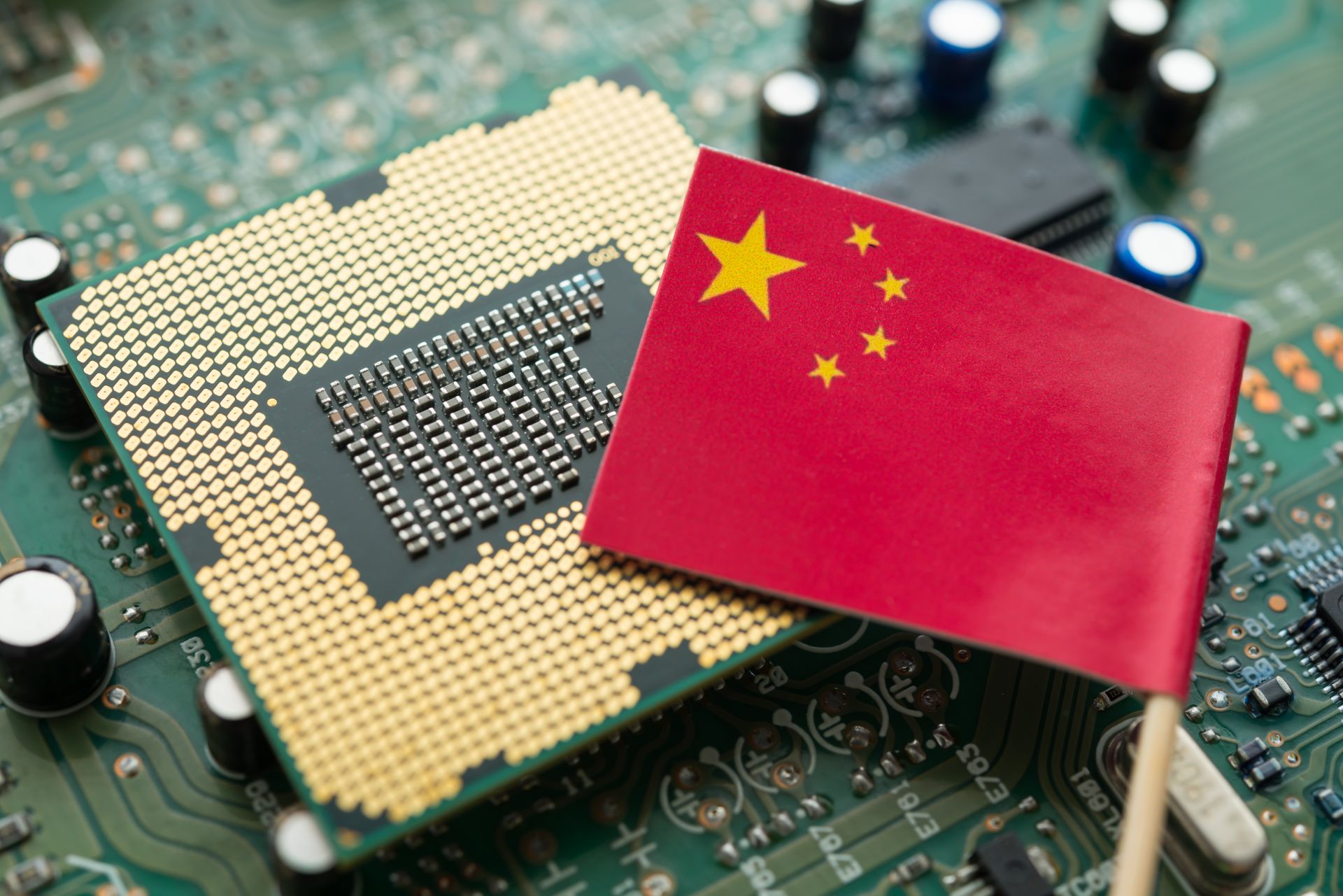
A senior executive of Chinese semiconductor agent company WPG Holdings recently stated in a phone interview with Asia Economy, "China has only achieved some of the 260 goals set in the 'Made in China 2025' plan in areas such as robotics technology, agricultural equipment, biopharmaceuticals, and marine engineering," adding, "China still faces challenges in fields like new materials and semiconductors."
Editor's Note'Made in China 2025' is a national industrial strategy announced by the Chinese government in 2015, aiming to become a global manufacturing powerhouse through the advancement of its manufacturing sector. China selected ten key industries?including semiconductors, aerospace, shipbuilding, automobiles, and robotics?to achieve technological self-reliance, with the ultimate goal of becoming number one globally. While Korea has traditionally been a manufacturing powerhouse, there are growing assessments that China is rapidly closing the gap, or even surpassing Korea in some sectors, through massive government-led investments, technology acquisition, and talent recruitment. Through this five-part series, we aim to analyze how far China's manufacturing industry has advanced.
[China’s Real Technological Power] ① How Advanced Is China's Semiconductor Technology?
On the 19th of last month, a domestic report stirred up the semiconductor industry. The 'In-depth Analysis of Technology Levels in Three Game-Changer Sectors' brief released by the Korea Institute of S&T Evaluation and Planning (KISTEP) revealed survey results from experts indicating that Korea's semiconductor technology has been largely overtaken by China. Opinions within the domestic industry were divided. Some warned of China's rapid growth and Korea's looming crisis, while others argued that Korea still holds an edge in core advanced semiconductor technologies. So, how advanced is China's semiconductor technology now, and how much has the gap with Korea actually narrowed?

In particular, he analyzed China's semiconductor technology level, saying, "It is impossible for China to surpass South Korea's current semiconductor level in the short term, and if US-China relations continue to deteriorate, it will take at least more than 10 years."
Overseas market research firms have expressed similar opinions. Canadian research firm TechInsights analyzed that China's semiconductor self-sufficiency rate was only 23% as of 2023. IC Insights also reported that China's semiconductor self-sufficiency rate was 16.7% in 2021 and is expected to reach about 21.2% by 2026.
Korean Semiconductors, Mostly Overtaken by China? Local Industry Evaluations
A senior executive at Chinese semiconductor agency WPG Holdings recently told Asia Economy, "Of the 260 or so targets set in the 'Made in China 2025' plan, China has only achieved some in areas such as robotics, agricultural equipment, biopharmaceuticals, and marine engineering," adding, "China still faces challenges in fields such as new materials and semiconductors."
He continued, "The three-year pandemic caused massive economic losses, which severely impacted subsequent R&D investments, and overall innovation has been lacking. Even optimistically, we estimate that only about 35% of the targets have been achieved."
In particular, regarding China's semiconductor technology level, he analyzed, "It is impossible for China to surpass Korea's current semiconductor level in the short term, and if US-China relations continue to deteriorate, it will take at least 10 more years."

Overseas market research institutions have expressed similar views. Canadian research firm TechInsights analyzed that as of 2023, China's semiconductor self-sufficiency rate was only 23%. IC Insights also projected that China's semiconductor self-sufficiency rate was 16.7% in 2021 and would reach 21.2% by 2026.
These figures fall far short of the 'Made in China 2025' goal of raising the semiconductor self-sufficiency rate to 70% by this year. Despite China's significant efforts to improve self-sufficiency in the semiconductor industry, a considerable gap still remains.
In terms of global semiconductor market share, China still lags behind leading countries. As of 2022, China's semiconductor market share was about 3.4%, still lower than Korea (17.7%), Japan (8.6%), and the US (52%).
This is interpreted as evidence that US export controls on semiconductors to China are effective. Since 2022, the US has banned exports of advanced semiconductor manufacturing equipment?including extreme ultraviolet (EUV) lithography machines?to China, and China remains reliant on deep ultraviolet (DUV) process-based semiconductor production.
The US has also begun supply chain investigations into domestic companies' procurement of Chinese legacy semiconductors, extending its regulations on China from advanced to legacy semiconductor sectors.

Another local industry official commented, "China's technology has improved compared to before, but there is still a significant gap due to the ongoing deterioration of the US-China trade war and the resulting suspension of talent exchanges. There is also a shortage of high-end semiconductor chip designers and talent capable of planning high-end products, and China's semiconductor value chain remains relatively weak, making direct competition with global conglomerates difficult."
China's Aggressive Investment... Full-Fledged Challenge in AI Semiconductors
Korea still maintains world-class technology in advanced microfabrication (3nm or below), high-bandwidth memory (HBM), and DRAM. Some analysts, however, note that China is rapidly narrowing the technological gap with aggressive investment and full government support, and may reach a level that threatens Korea in certain areas.
In fact, China's foundry (semiconductor contract manufacturing) company SMIC is reported to have succeeded in producing 7nm process chips. Previously, China's semiconductor manufacturing technology was considered to be at the 14nm level, but the 7nm chip used in Huawei's Mate smartphone series is believed to have been produced by SMIC, attracting industry attention. Although there is still a gap with Samsung Electronics and TSMC, who are moving toward 2nm processes, it is significant that this achievement was made under US export controls and sanctions.
YMTC also mass-produced 3D NAND flash products with more than 128 layers using its self-developed Xtacking technology, and last year, foreign media reported that a 512GB TLC (Triple Level Cell) memory chip with 160 layers was found inside the consumer SSD brand 'Zhitai TiPlus' from YMTC.
Last year, the Chinese government established the third phase of the National Integrated Circuit Industry Investment Fund (commonly called the Big Fund), worth 344 billion yuan (about 66.4 trillion won), to foster its semiconductor industry. This fund will be heavily invested in achieving self-reliance in high-end semiconductor technologies and R&D for AI semiconductors.
With such support, Chinese companies are also showing remarkable growth in the AI semiconductor market. In particular, the emergence of DeepSeek, dubbed the 'cost-effective AI monster,' is a representative example. Unlike previous AI model development, which relied heavily on high-performance semiconductors, DeepSeek drew attention by achieving performance comparable to ChatGPT at minimal cost through software parallel computation optimization technology. This demonstrates that Chinese semiconductor companies' strategies to remain competitive in the global AI race, even under US export controls on advanced semiconductors, are bearing fruit.
In addition, Chinese AI semiconductor companies such as Biren Technology and Cambricon have attracted a cumulative investment of 12 billion yuan (about 2.2 trillion won) by the first half of 2024, growing rapidly. Huawei is also reported to have significantly improved production efficiency by raising the yield rate of its self-produced Ascend 910C AI chip to 40%.
These technological advances and large-scale investments are playing a key role in strengthening China's competitiveness in the AI semiconductor market and are expected to impact the future global AI semiconductor competition landscape. Dan Wang, a Chinese technology expert and professor at Yale Law School, analyzed, "Even if China does not achieve its goals, the focus should be on improving self-sufficiency and narrowing the technology gap," adding, "In new fields such as AI semiconductors, the gap with advanced countries is narrowing."
IndexChina's Technological Power Reality
- Did Chinese Semiconductors Surpass Korea? ... "At Least 10 Years Behind"
-

Reporter Kang Nahum nahum@asiae.co.kr
-

Reporter Kim Pyeonghwa peace@asiae.co.kr
-
Edit Choi Yujeong yjchoi@asiae.co.kr
© The Asia Business Daily(www.asiae.co.kr). All rights reserved.
!["Please Help Us": How Much Do Those Bowing 90 Degrees These Days Actually Earn? [Data Pick]](https://cwcontent.asiae.co.kr/asiaresize/323/2026052010120870131_1779239528.png)