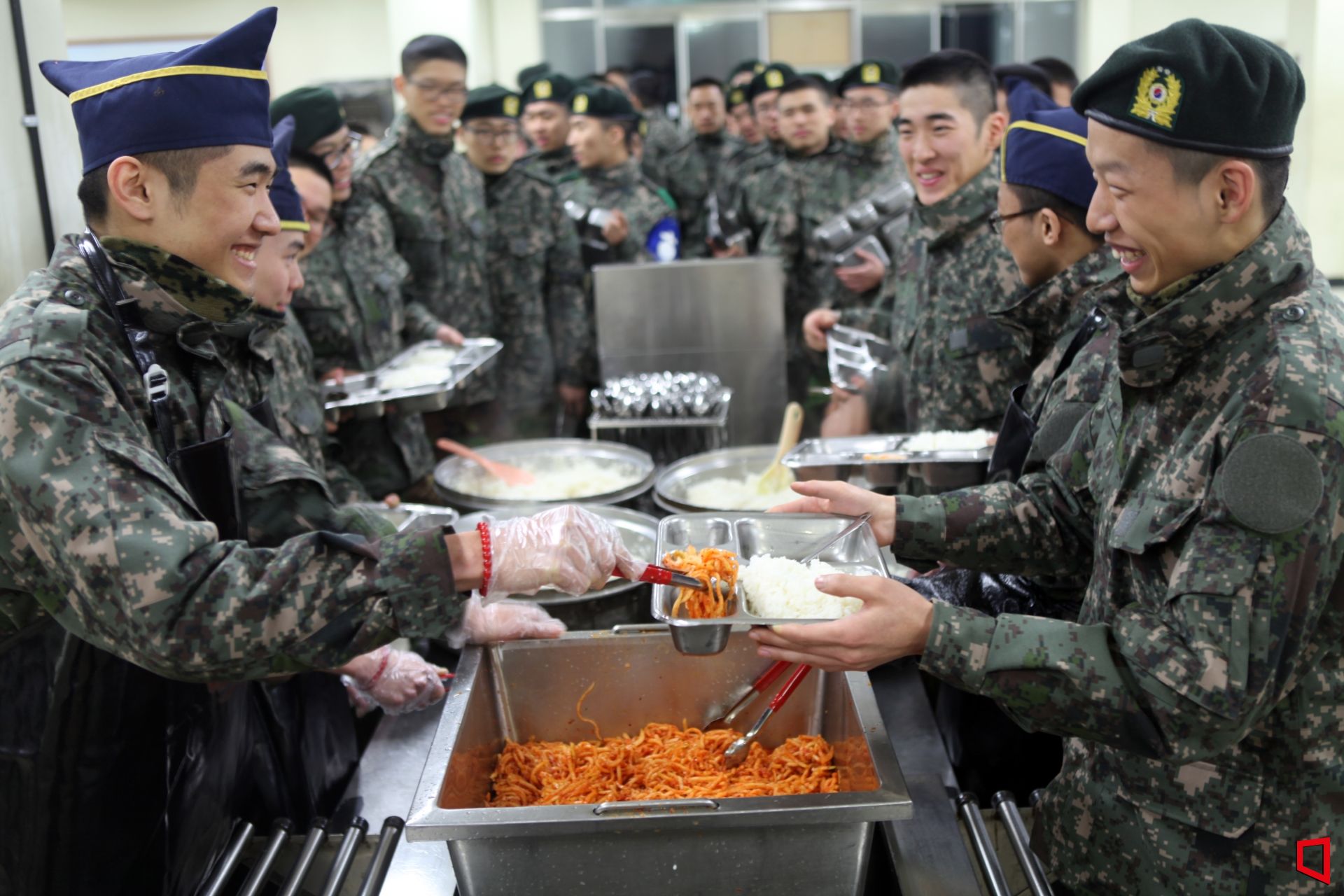
Starting this year, the military meal service market has been fully opened, causing the private meal service market to stir.
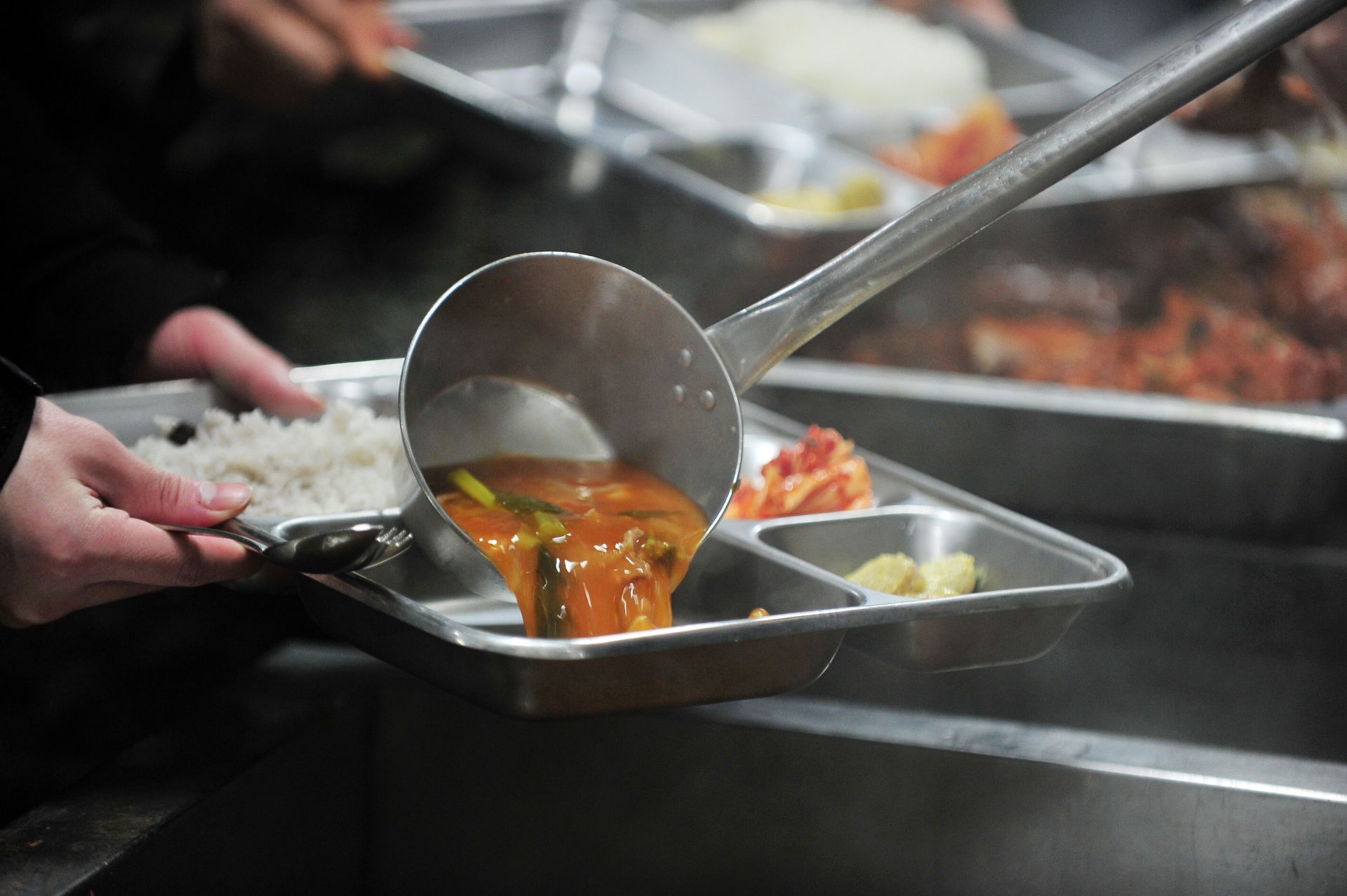
With the rise in dining out prices leading to an increase in cafeteria users, the group meal service market has rapidly grown, and intense industry competition over new food options is expected.Photo by Getty Images Bank
Full Opening of Military Base Meal Services... Expansion to 49 Outsourced Bases
According to the food service industry on the 14th, the government plans to expand the number of military bases outsourced to private companies to 49 this year and conduct meal service bids for at least 23 bases. In the Defense Acquisition Program Administration's Defense e-Procurement System, bids totaling 40 billion won have been announced over the past month, including the 5th Logistics Support Command's meal delivery outsourcing, the officers' cafeteria at Unit 5067, and the civilian outsourcing of the mess hall at the 30th Regiment of the Army Training Center.
The industry expects fierce competition, even though the volume is not large. Companies see this as a new market opening up, especially as they have been struggling to find new growth opportunities. According to the Ministry of Agriculture, Food and Rural Affairs and the Korea Food Service Society, the military meal service market is worth about 2 trillion won. Combined with the existing private food service market (about 7 trillion won), the total reaches 9 trillion won. While large corporations were previously restricted from entering, the government has gradually expanded access since 2023 to address concerns over poor meal quality. Last year, the competitive bidding rate was raised to 70%, and from this year, the market is fully open.

The military meal cost is 13,000 won per day (4,300 won per meal), which is lower than general industrial meal costs (6,000 to 7,000 won per meal), resulting in low profitability.
Despite this, companies seek military base catering because it ensures a stable supply of food and allows for various business expansions such as future food material distribution.
In addition to meal service operations, profitability can be improved by concurrently managing food material distribution.
Photo by Getty Images Bank
To secure an early lead in the market, companies have actively participated in military meal service bids since last year. Samsung Welstory was selected as the meal service provider for Korea Military Academy (12.7 billion won) and Korea Army Academy at Yeongcheon (10.2 billion won). Ourhome won the operating rights for the mess hall at the Air Force 20th Fighter Wing (42.7 billion won) and the mess hall at Army Unit 1989 (10.7 billion won).
Companies are also focusing on expanding the supply of various food ingredients such as ready-to-cook products and chicken bulgogi. According to the Korea Food Industry Association, 34 food companies supplied 240 items to military bases last year, a 39% increase from the previous year's 172 items. Suppliers include Ourhome, Hyundai Green Food, Daesang, Dongwon F&B, CJ CheilJedang, Shinsegae Food, Sempio Foods, Ottogi, and CJ Freshway.

Steady Growth in the Institutional Food Service Market
The domestic institutional food service market is dominated by the top four companies?Samsung Welstory, Hyundai Green Food, CJ Freshway, and Ourhome?which together account for over 70% of the market. As inflation continues, demand for relatively affordable meal services has increased, leading food service companies to achieve record-high results last year. Samsung Welstory, the industry leader, is estimated to have posted 1.8 trillion won in food service sales last year, up 6% from the previous year. The food service business accounts for 60% of its total sales.
During the same period, Hyundai Green Food's food service sales reached about 1 trillion won, accounting for 47% of its total sales. Hyundai Green Food provides food service at about 700 locations in Korea and abroad, and continues to attract new clients based on its experience serving large customers such as Hyundai and Kia Motors. Ourhome and CJ Freshway posted estimated sales of 900 billion won and 778.1 billion won, respectively.
The industry expects steady market growth, driven by expanded corporate welfare, free meal policies in schools, and strengthened meal services in hospitals, military bases, and welfare facilities. According to the Korea Food Service Society, about 17 million people use meal services daily in Korea, meaning one in three citizens uses a meal service. An industry official said, "Based on competitive pricing, the institutional food service market is expected to continue its positive momentum for the time being."

![[Report] "A Culinary Destination with a View of Gyeongbokgung"... Kim Dong-sun's High-End Dining Takes Over Gwanghwamun](https://cwcontent.asiae.co.kr/asiaresize/304/2026042114562634571_1776750985.jpg)
![[Gallery Stroll] Red Robe, Black Lines... Danjong Returns with the Face of Wounds](https://cwcontent.asiae.co.kr/asiaresize/304/2026042014183532691_1776662315.jpg)