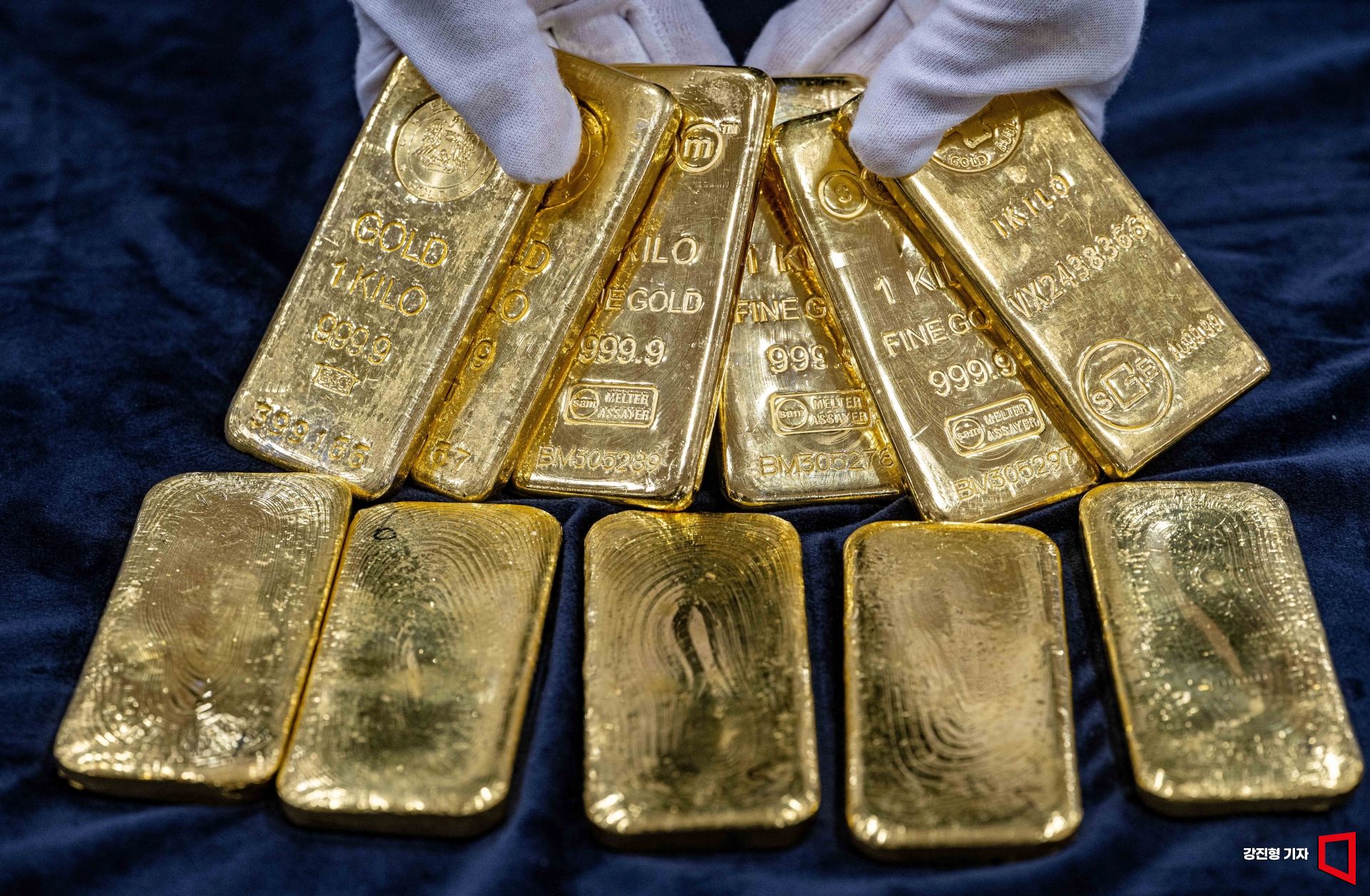
According to the Korea Customs Service on the 5th, the so-called 'Kimchi Premium' phenomenon, where the domestic gold price is formed 14 million to 27 million KRW (10 to 20%) higher per kilogram than the international price, has become prominent recently, leading to an increase in attempts to smuggle gold for profit from price differences.
The government is strengthening crackdowns to block attempts to smuggle gold for domestic and international price arbitrage.
Domestic gold prices are up to 27 million won per kilogram, 20% higher than international prices
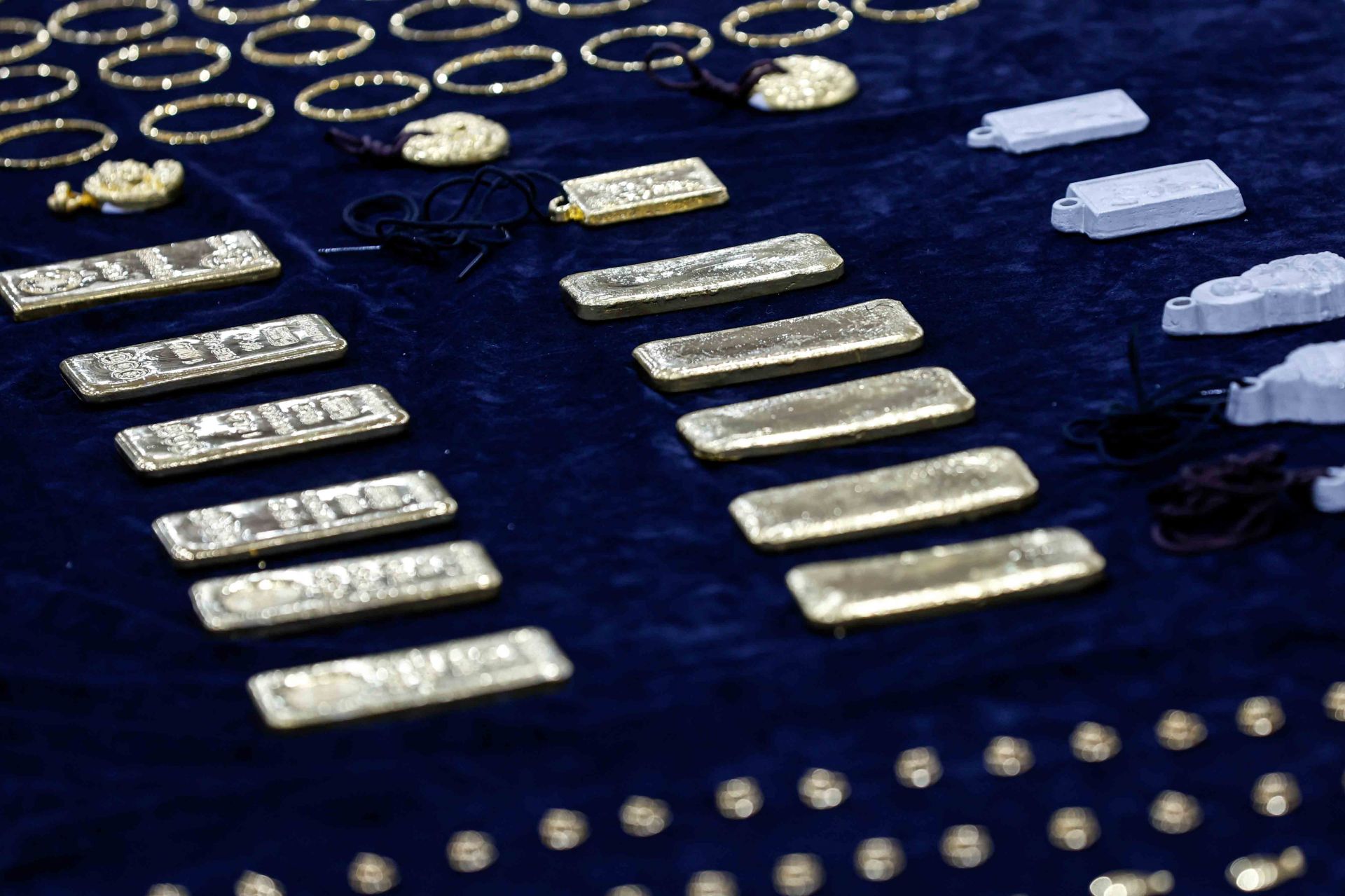
Gold smuggling mainly occurs in the form of 'direct domestic smuggling,' where gold is smuggled directly from foreign countries such as Hong Kong into the country, and 're-export to a third country,' where gold is transshipped through South Korea from foreign countries such as Hong Kong.
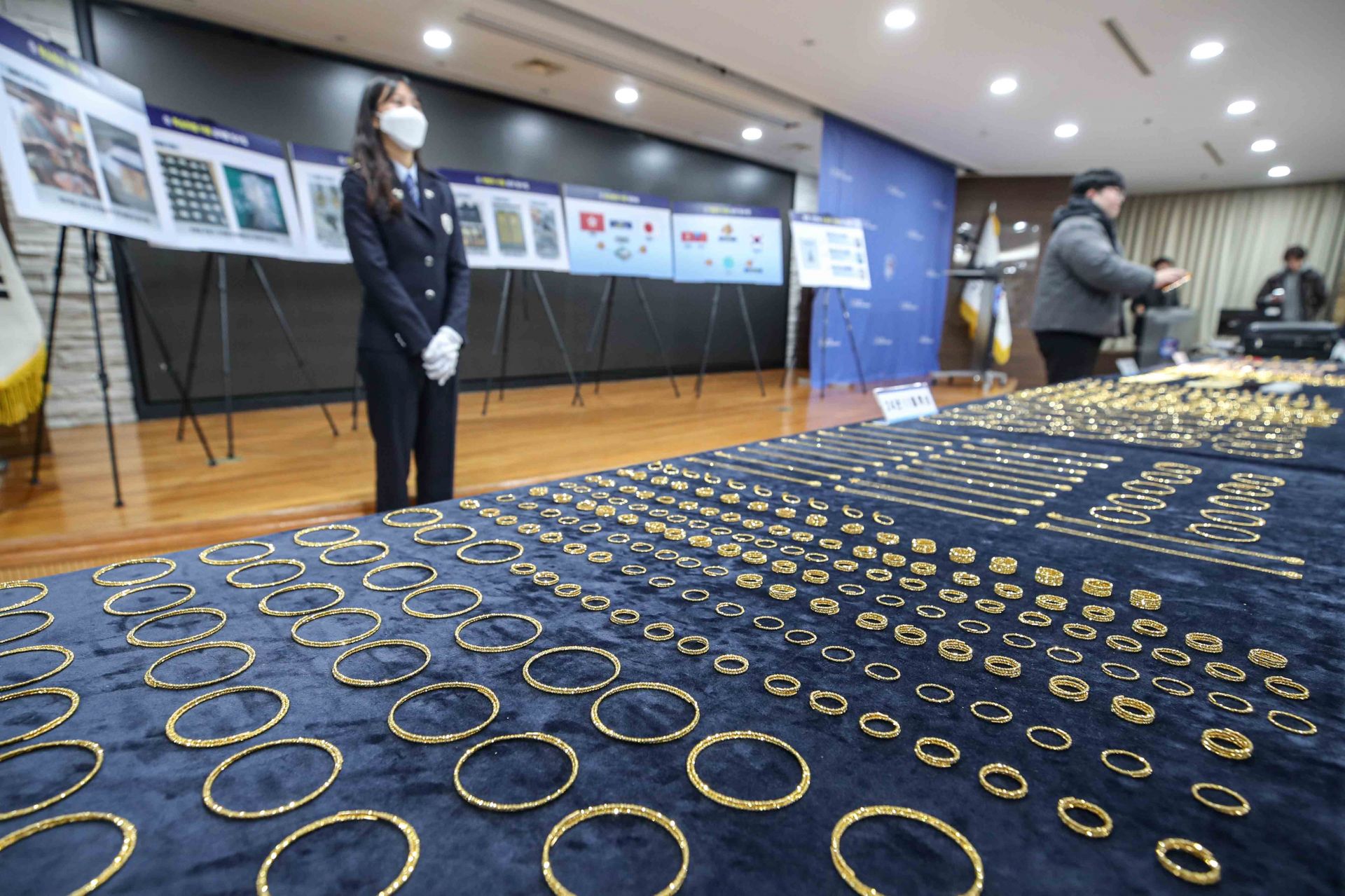
On the 5th, smuggled gold items were displayed at the Incheon Airport Customs Export-Import Clearance Building. Photo by Kang Jinhyung
Direct smuggling into Korea typically involves travelers from abroad bringing gold in through airports via direct or third-country routes, or disguising items such as bracelets and necklaces as for personal use and importing them via express delivery, mail, or general cargo. There are also cases where gold is manufactured or concealed in other forms, such as machinery, to evade detection.
In cases where gold is smuggled out of Korea to a third country, travelers departing from a foreign country meet with travelers departing for a third country at Incheon Airport's transfer area and hand over gold items, which are then smuggled out.
In particular, recently there have been cases where gold bars exported from places like Hong Kong are smuggled through Korea to Japan in order to evade local consumption taxes (10%).
Smuggling for price arbitrage surges... Frequent crackdowns
For example, the Korea Customs Service caught six travelers last month (between the 12th and 21st) attempting to smuggle 24 gold items (totaling 16.6kg, worth about 2.9 billion won) in 1kg bars and 0.3-0.5kg pieces from Hong Kong and Taiwan by hiding them in the bottoms of backpacks, inside pants, inside suitcase wheels, and on their bodies.


Previously, in November last year, a smuggler was caught disguising 30 gold items (rings, necklaces, bracelets worth about 67 million won) intended for sale as personal accessories and importing them via express cargo. In January this year, Incheon Airport Customs and the Northern Gyeonggi Provincial Police Agency jointly apprehended an organization that brought 78 gold bars (totaling 85kg, worth about 7.4 billion won) processed into clay form from Hong Kong into Korea and then attempted to smuggle them out to Japan.
A total of 39 suspects were apprehended, some of whom were lured into participating in the smuggling operation by the promise of travel expenses to Japan.
Korea Customs Service strengthens crackdown... Cooperation with Hong Kong and Japan customs
The Korea Customs Service believes that gold smuggling targeting the so-called "Kimchi Premium" is likely to continue for some time, and plans to strengthen inspections of high-risk travelers and cargo to block such attempts. For more effective crackdowns, Korea will also promote cooperation among the customs authorities of Korea, Hong Kong, and Japan, including the exchange of information on gold smuggling.

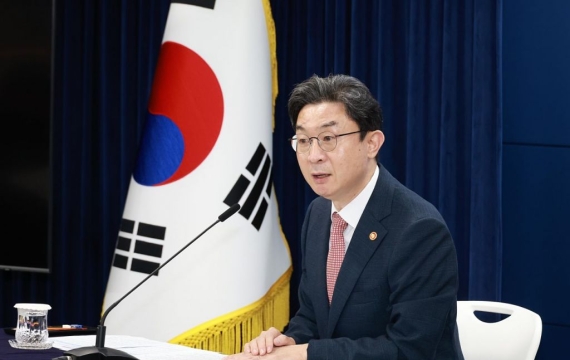
Kwangwoo Lee, Director of the Customs Investigation Division, is making a statement related to gold smuggling crackdown at the Import and Export Customs Clearance Building of Incheon Airport Customs on the 5th. 2025.3.5. Photo by Jinhyung Kang
원본보기 아이콘Lee Kwangwoo, Director of Investigation at the Korea Customs Service, said, "We believe that the recent increase in gold smuggling attempts is due to the so-called 'Kimchi Premium,' where domestic gold prices are higher than international prices," adding, "The Korea Customs Service will strengthen crackdowns to block gold smuggling attempts."
-

Reporter Jeong Ilwoong jiw3061@asiae.co.kr
-
Edit Kim Yumi ymkim91@asiae.co.kr
© The Asia Business Daily(www.asiae.co.kr). All rights reserved.