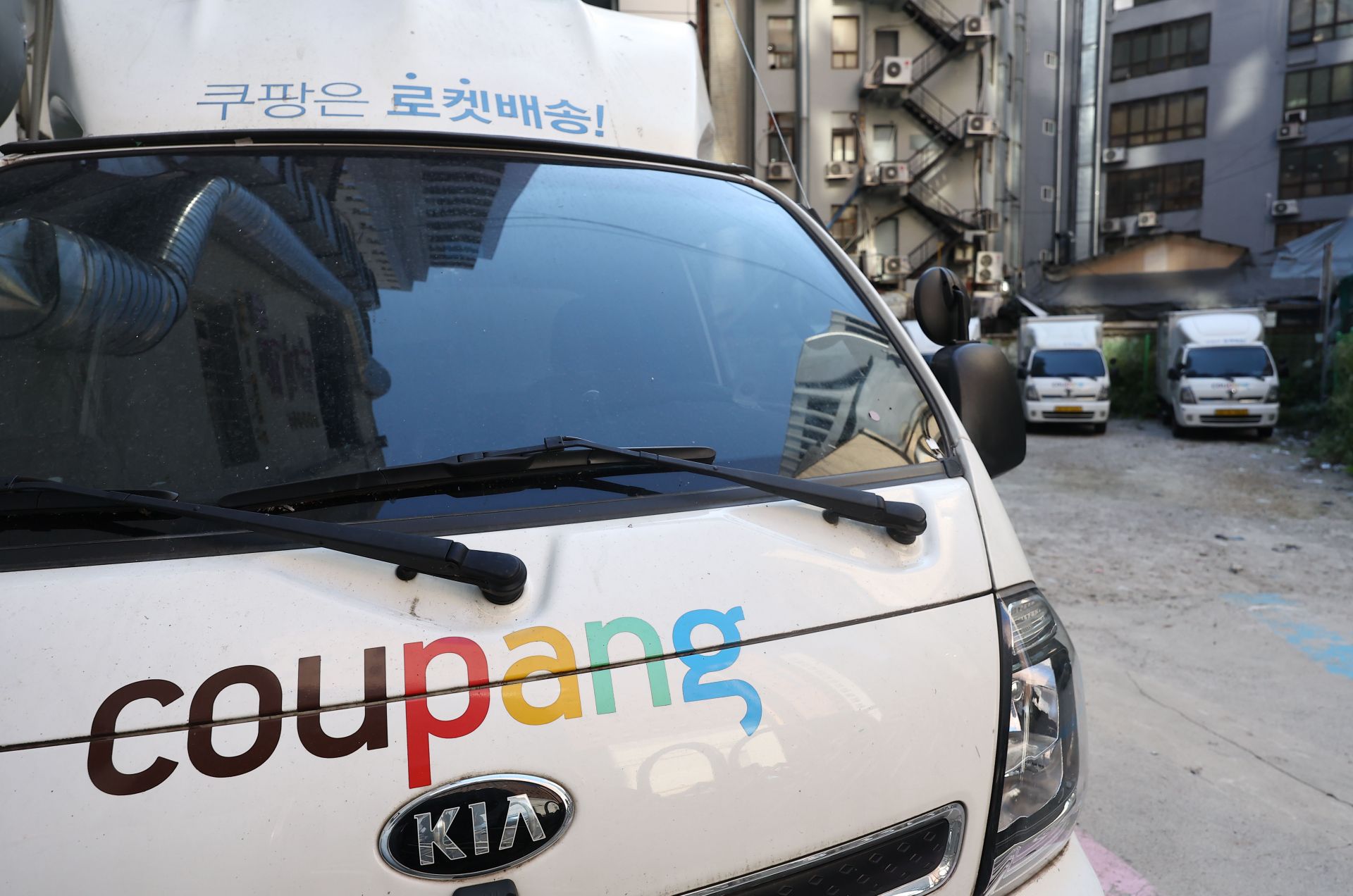
Thanks to its rapid growth last year, Coupang surpassed 40 trillion KRW in annual sales among retail companies. By overcoming the challenge of increasing its paid membership (WOW) fees, Coupang once again demonstrated its robust growth. As Coupang continues to dominate, domestic e-commerce competitors have seen their market positions shrink even further.
However, as Chinese e-commerce (C-commerce) platforms?facing the risk of withdrawal from the US market?strengthen their push into Korea with ultra-low-priced products, and as Emart forms a strategic alliance with China’s Alibaba, attention is focused on whether the domestic e-commerce market will be reshaped.
Coupang Soars Alone in Domestic Retail E-commerce

According to Coupang on the 26th, Coupang Inc. posted sales of 41.29 trillion KRW (30.268 billion USD) last year, a 29% increase from the previous year (31.83 trillion KRW, 24.383 billion USD). While domestic retailers have seen declining performance due to sluggish domestic demand, Coupang managed to earn nearly 10 trillion KRW more in just one year. Operating profit reached 602.3 billion KRW, marking a surplus for the second consecutive year. Taking into account the Fair Trade Commission’s fine in Q2 (163 billion KRW) and accounting costs from the ordinary wage ruling (40.1 billion KRW), operating profit exceeded 800 billion KRW.
Despite concerns over “Talpang” (users leaving Coupang) following the price hike of the paid WOW membership in the second half of last year, Coupang’s user base actually grew. As of Q4 last year, Coupang’s active customers (those who made at least one purchase) reached 22.8 million, a 10% increase from the previous year (20.8 million).
Coupang’s average revenue per customer also rose. Last year, per-customer sales were 446,500 KRW, up 6% year-on-year. Kim Bomseok, founder and chairman of Coupang Inc., said, “Last year, we improved logistics processes to increase same-day and dawn delivery volume by 45%, enhancing customer experience,” adding, “By continuously innovating on behalf of customers, we reduced costs while raising the bar for service quality.”
As Coupang surged ahead, rival e-commerce companies saw their sales plummet. Gmarket’s sales last year dropped 20% from a year earlier to 961.2 billion KRW, with operating losses widening by 35 billion KRW to 67.4 billion KRW. Fierce competition from C-commerce in the first half led to heavy marketing losses, and in the second half, consumer trust in e-commerce declined after the “TMEPF” (Tmon + Wemakeprice) incident, resulting in sluggish sales of high-priced items like digital appliances. The company also incurred one-off costs from voluntary retirements, and direct support for sellers affected by the TMEPF incident further widened the deficit.

SSG.com posted sales of 1.5755 trillion KRW and an operating loss of 72.7 billion KRW last year. Sales fell 6% year-on-year as the company reduced its scale and marketing expenses in pursuit of profitability. Cost-cutting through restructuring and relocating headquarters reduced operating losses by about 30 billion KRW.
11st recorded sales of 561.8 billion KRW last year, a sharp 35% drop from the previous year. However, by tightening its belt and cutting costs, operating losses were reduced by about 50 billion KRW, though the company still posted a 75.4 billion KRW deficit.
The concentration on Coupang in the domestic e-commerce market is accelerating. According to mobile index data from data platform IGAWorks, Gmarket’s monthly active users (MAU) last month were 4,700,128, down by about 600,000 from January last year (5,342,165). In contrast, Coupang’s MAU last month reached 32,396,590, an increase of 2.4 million from January last year (30 million). SSG.com and 11st recorded MAUs of 2,072,657 and 8,154,438, respectively, last month.

Emart Partners with Alibaba, Temu’s Direct Entry into Korea... Will There Be a Major Shift?
Industry insiders believe this year will see a full-scale battle between Coupang and C-commerce in the e-commerce market. Previously, Shinsegae Group and Alibaba Group (Alibaba International) announced a strategic alliance, signaling a check against Coupang.
Shinsegae Group’s Gmarket and AliExpress Korea established a joint venture (JV) called “Grand O Food Holding” in the first half of this year to begin full-scale cooperation. Gmarket and AliExpress Korea will be subsidiaries of the JV, operating their own platforms but sharing product listings to create synergy.

Shinsegae Group expects to secure more customers through its partnership with Alibaba, aiming to attract more users by leveraging its existing open market business and ultra-low-priced Chinese products. In particular, if Alibaba International’s global-level IT capabilities and stable investment continue, competitiveness could be further enhanced.
Alibaba Group is listed on the New York Stock Exchange, and among its affiliates, Alibaba International has been the fastest-growing over the past year. By leveraging Alibaba International, Shinsegae expects to quickly enhance shopping convenience through broader product selection, increased price competitiveness, and improved personalized shopping. Gmarket recently established a year-round delivery partnership with CJ Logistics to strengthen delivery competitiveness.
AliExpress, which is offering unlimited coupons, low prices, and overwhelming product volume, is also expected to benefit. As Gmarket sellers join AliExpress and Gmarket’s quality control and customer service expertise are added, more consumers may flock to the AliExpress platform. AliExpress has announced plans to invest 100 million USD by next year to build more logistics centers and improve delivery services and support for domestic sellers.

Temu’s direct entry into Korea is also drawing attention as a potential game changer in the domestic e-commerce market. Since entering Korea in July 2023 through direct purchase, Temu had not made aggressive investments.
However, Temu recently expanded into the open market business and began recruiting domestic sellers, signaling its full-fledged participation in Korea’s e-commerce competition this year. In fact, at the end of last year, Temu hired staff for marketing, logistics, and HR, and signed a long-term lease for a large logistics center in Gimpo. Currently, Temu’s MAU surpasses both Gmarket and SSG.com.
An e-commerce industry insider commented, “The biggest weakness of Chinese e-commerce companies is weak consumer trust and imperfect after-sales service. If these issues are addressed, it will be difficult to withstand the onslaught of Chinese e-commerce players.”
-

Reporter ming@asiae.co.kr
-

Reporter Park Jaehyun now@asiae.co.kr
-
Edit Lee Kijae happylee17@asiae.co.kr
© The Asia Business Daily(www.asiae.co.kr). All rights reserved.
!['WHO Declares International Public Health Emergency' Why the Untreatable 'Variant Ebola' Is More Deadly Than COVID-19 [Reading Science]](https://cwcontent.asiae.co.kr/asiaresize/323/2026052110164072055_1779326201.png)
!["Please Help Us": How Much Do Those Bowing 90 Degrees These Days Actually Earn? [Data Pick]](https://cwcontent.asiae.co.kr/asiaresize/323/2026052010120870131_1779239528.png)