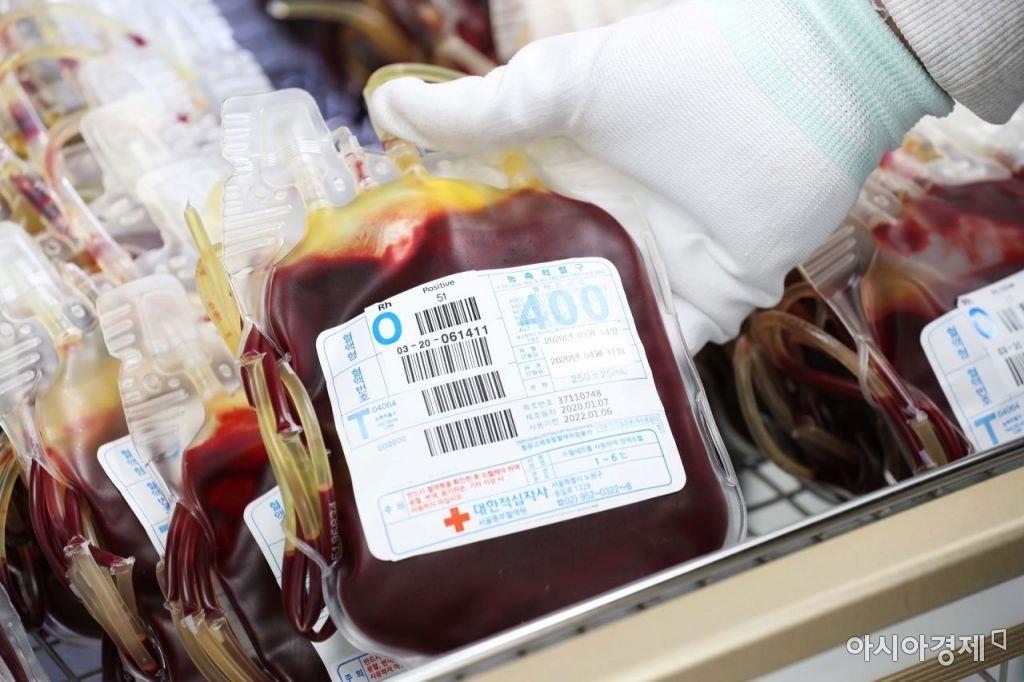
Due to the mass resignation of resident doctors, the number of medical staff at tertiary general hospitals decreased, resulting in approximately 22,200 fewer transfusions from February to July last year compared to the same period the previous year. It is presumed that the decrease in transfusions was caused by the reduction or delay of surgeries and treatments for patients with severe illnesses due to medical service gaps.
According to data submitted by Kim Yoon, a member of the National Assembly Health and Welfare Committee from the Democratic Party of Korea, from the Health Insurance Review and Assessment Service (HIRA) on the 18th, the total number of whole blood and blood component transfusions at tertiary general hospitals nationwide from February to July last year was 137,645 cases.

As the recent emergency room treatment crisis continues day after day, patients are moving to the Regional Emergency Medical Center at Ewha Mokdong Hospital in Yangcheon-gu, Seoul, where military medical officers have been additionally assigned to Kangwon National University Hospital, Ewha Mokdong Hospital, and Sejong Chungnam National University Hospital.
원본보기 아이콘This is a 13.9% (22,209 cases) decrease compared to 159,854 cases during the same period the previous year. Whole blood refers to blood as collected from donations, while blood component transfusions use only certain components of blood, such as red blood cells or platelets.
Of the 22,209 decrease in transfusions, 12,578 cases occurred in the Seoul metropolitan area. Among these, 66.5% (8,364 cases) were concentrated in the so-called "Big 5" hospitals, which are most frequently visited by patients: Seoul National University Hospital, Asan Medical Center, Samsung Medical Center, Seoul St. Mary's Hospital, and Severance Hospital.
The government believes that patients who could not receive medical care or treatment at tertiary general hospitals due to the medical crisis likely moved to general hospitals. However, according to HIRA data, the number of whole blood and blood component transfusions at general hospitals nationwide from February to July 2024 was 138,198 cases, only a 2.9% (3,847 cases) increase from 134,351 cases during the same period the previous year. This accounts for only 17.3% of the decrease in transfusions at tertiary general hospitals.

The decrease in the use of blood products can be interpreted as a reduction in surgeries and treatments for patients with severe illnesses. According to the top 20 most frequently claimed diseases along with whole blood and blood component materials at HIRA, transfusions are necessary for the treatment of diseases such as myelodysplastic syndrome, myeloid and lymphoid leukemia, multiple myeloma, lung cancer, and pancreatic cancer. Most of these are severe diseases that require prompt treatment.
The bigger problem is that patients who could not be treated at tertiary general hospitals may not have received appropriate surgeries or treatments. From February to July 2024, the number of patients receiving whole blood and blood component transfusions at tertiary general hospitals nationwide decreased by 20,958, but the number of patients receiving transfusions at general hospitals increased by only 4,755 during the same period. The office of the lawmaker claims that it is highly likely that 16,203 patients were unable to receive surgeries or treatments.
Kim Yoon stated, "The decrease in the number of transfusions essential for surgeries and treatments for patients with severe illnesses means that the likelihood of delays in surgeries or treatments for these patients has increased," and criticized, "As the prolonged medical crisis continues, the damage from surgery and treatment delays for patients with severe illnesses is increasing, but the government is not even accurately grasping the situation."
!['WHO Declares International Public Health Emergency' Why the Untreatable 'Variant Ebola' Is More Deadly Than COVID-19 [Reading Science]](https://cwcontent.asiae.co.kr/asiaresize/323/2026052110164072055_1779326201.png)
!["Please Help Us": How Much Do Those Bowing 90 Degrees These Days Actually Earn? [Data Pick]](https://cwcontent.asiae.co.kr/asiaresize/323/2026052010120870131_1779239528.png)