Company A, which has been operating a solar power plant in Yeonggwang, Jeollanam-do for 20 years, recently decided to wind down its renewable energy business. Even to keep its existing solar facilities running, it needs to repair equipment, but is hesitant to invest. This is because the government began to implement large-scale "output control"?forced power production shutdowns?on the mainland last year. Company A judged that if output control increases, costs will outweigh the profits from electricity generation. A company official said, "We will no longer prioritize the solar power business," adding, "If we face output control on top of intensifying competition, the damage will be too great."
Frequent Solar Power Outages on Land... 13-Fold Increase in One Year 27 Output Controls Last Year... Companies Say "Annual Damage of 40 Million Won" Solar Power Increased Tenfold in 10 Years, but Transmission Facilities Remain Stagnant
Honam Wastes Remaining Solar Electricity... Metropolitan Area Worries About Power Shortage Disruptions Inevitable Across High-Value Industries Like Semiconductors and AI Special Power Grid Law to Solve the Problem Still Held Up in the National Assembly
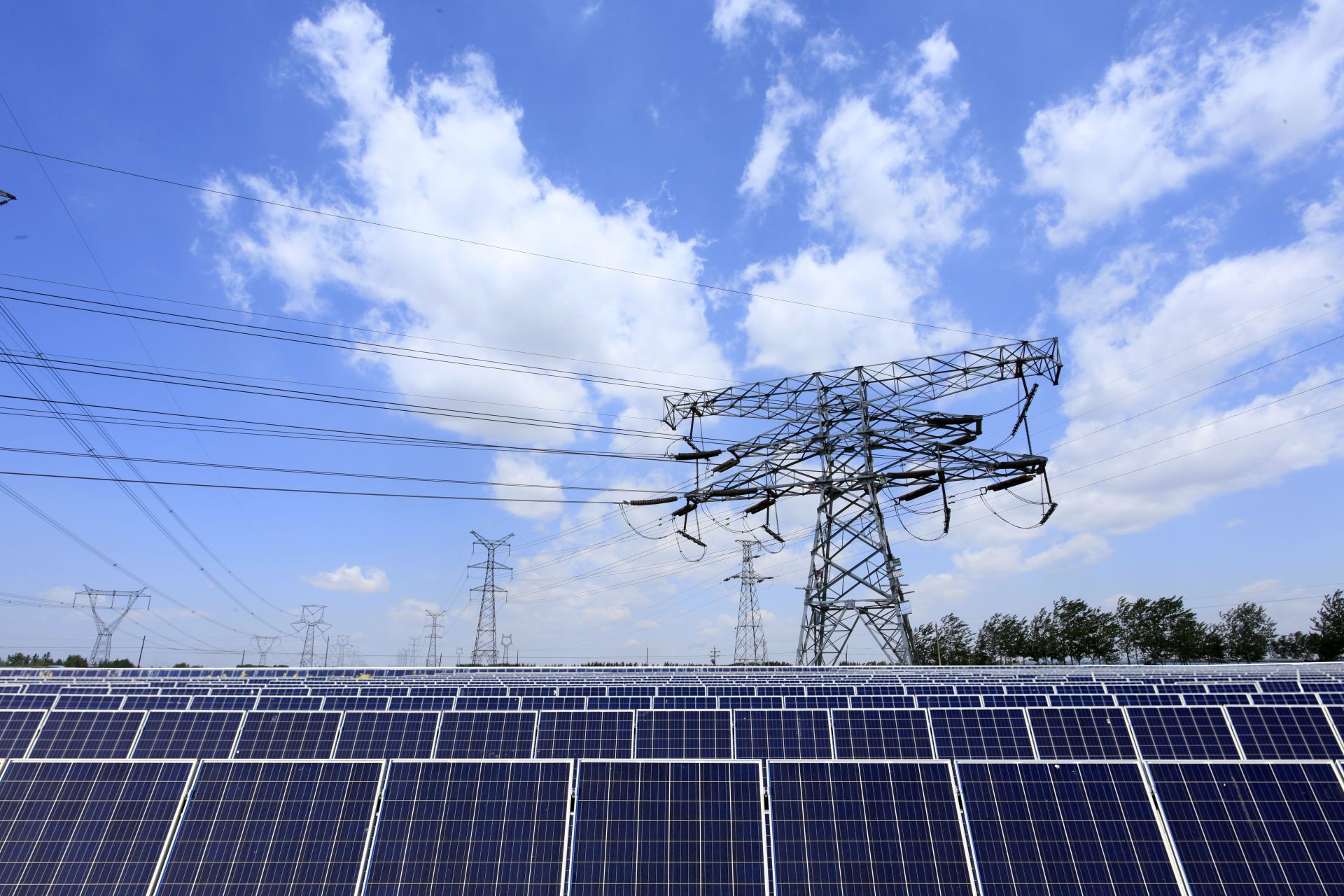
It has been confirmed that solar output control, which used to occur mainly in island regions, began to be widely implemented on the mainland last year. The rapid increase in solar facilities was not matched by government expansion of transmission lines to carry the electricity. A special law to address this issue is still stalled in the National Assembly. If the problem is not resolved quickly, there are concerns that the supply of eco-friendly renewable energy will be disrupted and it will become difficult to meet large-scale electricity demand from industries such as semiconductors.
Solar Capacity Grows Tenfold While Transmission Facilities Remain Stagnant
According to data obtained by Asia Economy from the Korea Power Exchange and the Public Data Portal on the 17th, there were 27 cases of output control applied to mainland solar power plants last year. Output control, which occurred only twice in 2023, increased more than thirteenfold in just one year. Output control for mainland solar power plants first started in 2021 (three cases). In 2022, there were none.
Output control is a measure that forces power plants to stop generating electricity, usually when production exceeds demand. If too much power suddenly flows into the grid, it can cause blackouts. This mostly occurred in Jeju Island, where it is difficult to export electricity to other regions. On the mainland, output control was rare since power could be sent to high-demand areas.
The unusual output control on the mainland is due to an imbalance between production and supply. According to the Electricity Statistics Information System, solar power generation capacity surged from 2.5 GW in 2015 to 27.4 GW at the beginning of this year. In contrast, transmission lines, which carry electricity, totaled 35,596 circuit-kilometers as of 2023?a mere 8.5% increase from 32,794 circuit-kilometers ten years ago. While the amount of electricity that could be generated by solar power increased tenfold in a decade, the transmission infrastructure to deliver it barely expanded.
The lack of transmission lines has also created regional imbalances. About 60% of mainland solar power plants are located in the Honam region, but most electricity-consuming companies are concentrated in the Seoul metropolitan area. The surplus electricity from Honam must be sent to the capital, but transmission lines are severely lacking. There are only two 345kV transmission lines connecting Honam to the Seoul area, with a capacity of just 4.5 GW. The rest of the electricity is essentially wasted. Most output control cases so far have occurred in the Honam region.
Resident opposition is a major reason why transmission lines have not been expanded. Transmission lines require towers, which many residents oppose due to concerns about aesthetics and health. Transmission line construction, which should take nine years, typically takes more than four additional years. The "Bukdangjin-Shintangjeong" transmission network connecting the west coast and the Seoul area is a prime example. Construction began in 2003 and was scheduled for completion in 2012, but due to strong resident opposition, it was only finished at the end of last year.
Honam Overflowing with Electricity, Seoul Area Suffering Power Shortages
If the transmission facility issue is not resolved, the spread of eco-friendly energy will inevitably be hindered. According to the 11th Basic Plan for Electricity Supply and Demand being prepared by the Ministry of Trade, Industry and Energy, the government plans to expand solar capacity to 55.7 GW by 2030. However, as output control becomes more frequent, power producers are likely to shy away from investment. The industry estimates that if 1 MW of solar capacity is installed on 3,000 to 3,500 pyeong of land, annual losses due to transmission constraints amount to about 40 million won per year.
The industrial sector will also inevitably be affected. High-tech, high value-added industries such as semiconductors and artificial intelligence (AI) consume massive amounts of electricity. For example, the semiconductor cluster being built in Yongin by 2050 will require 10 GW of power, equivalent to ten nuclear reactors. To supply electricity smoothly, surplus power from other regions must be utilized. If transmission facilities are not expanded, the paradox could arise where one region has excess electricity while industry suffers from shortages.
The industry predicts that output control will increase further this year. Kwak Youngjoo, president of the Korea Photovoltaic Industry Association, said, "The shortage of transmission lines is so severe that output control will inevitably increase every year," adding, "It is common for newly purchased solar power facilities to sit idle for years, unable to be used."
The "Special Act on the Expansion of the National Power Grid," designed to address the issue, has yet to pass the National Assembly. The core of the act is to establish a separate committee to drastically shorten the approval process and expand government support. The committee would also mediate conflicts between KEPCO and residents, speeding up the construction of transmission facilities. The bill was first introduced in the 21st National Assembly but was scrapped when the session ended; it has been reintroduced in the 22nd Assembly and is currently under discussion in the Industry, Trade, Energy, SMEs, and Startups Committee.
However, since time has already been lost, power supply issues are expected to persist for the time being even if the special act passes. The industry is therefore asking the government to prioritize purchasing eco-friendly energy over coal and gas when there is excess power production, but the government is opposed. A government official explained, "If we purchase electricity generated by solar power first, consumer electricity prices will rise, so we need to approach this cautiously."








![[Report] "A Culinary Destination with a View of Gyeongbokgung"... Kim Dong-sun's High-End Dining Takes Over Gwanghwamun](https://cwcontent.asiae.co.kr/asiaresize/304/2026042114562634571_1776750985.jpg)
![[Gallery Stroll] Red Robe, Black Lines... Danjong Returns with the Face of Wounds](https://cwcontent.asiae.co.kr/asiaresize/304/2026042014183532691_1776662315.jpg)