Premium chocolate brand Godiva has reduced the weight of some of its cake products by more than 30%. As the price of cacao, the main ingredient in chocolate, has soared, the company opted to reduce the weight of its cakes instead of raising prices. With Valentine's Day, the period of highest annual demand for chocolate, approaching, this is seen as a 'trick' price increase that shifts the burden onto consumers.
Up to 31% Reduction in Weight Instead of Price Increase
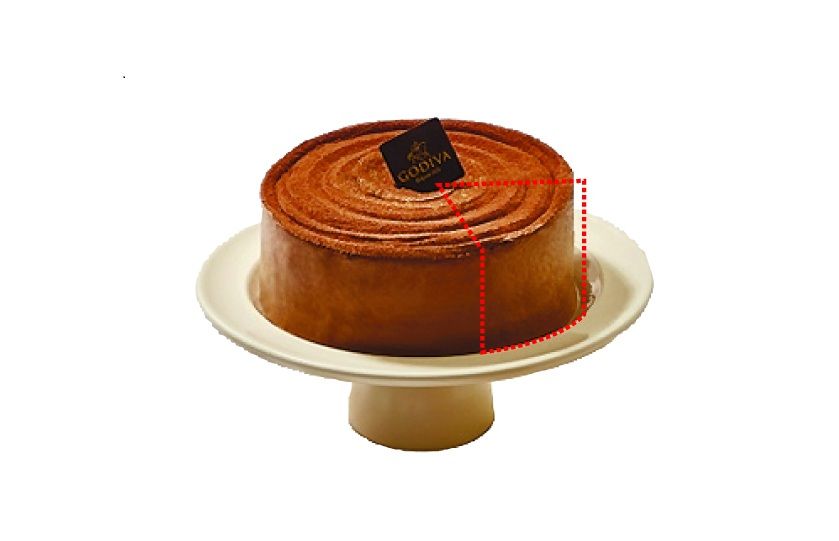
According to the food industry on the 4th, Godiva recently announced on its website that it would reduce the weight of two of its cakes by up to 31%. Specifically,the weight of the 'Chocolate Layer Cake' will decrease from 540g to 370g, and the 'Dark Chocolate Cake' from 540g to 430g. The diameter of the cakes will also shrink from 15.5cm to 14cm, and from 15-16cm to 13-14cm, respectively.

Godiva's 'Chocolate Layer Cake'. Recently, the weight of this product has decreased by 31%, from the original 540g to 370g. Godiva
원본보기 아이콘Godiva, a premium chocolate brand founded in Belgium in 1926, is a renowned chocolate franchise sold in over 100 countries worldwide. In Korea, there are a total of 36 stores in operation, managed and distributed by BSK Corporation since it acquired the business rights in 2012.
The parent company of BSK Corporation is Ilsin Textile, Korea's third-largest textile company. Ilsin Textile established BSK Corporation in 1996 to prepare for entry into the cosmetics business. The company signed an exclusive sales contract with the British cosmetics company The Body Shop International PLC in 1996, establishing 'The Body Shop' and supplying cosmetics domestically. This is why Godiva and The Body Shop stores were located side by side at Gwanghwamun intersection.
Unstable Raw Material Supply... Cacao Prices Surge Again
Godiva cited rising raw material costs as the reason for the weight reduction. In its announcement, Godiva explained, "The global instability in cacao supply continues to drive up costs, and the resulting increase in raw material costs has made it unavoidable to change the cake weights. We sincerely apologize to our customers."

In reality, the price of cacao, the main ingredient in chocolate, is soaring as production drops due to climate crises and pest damage. Ghana and Cote d'Ivoire, the world's top two producers, have been affected by heavy rains and droughts, and a surge in infection rates of the cacao swollen shoot virus disease (CSSVD) has also contributed to the problem.
After skyrocketing in mid-2023, cacao prices stabilized briefly but have surged again from late last year into early this year. On January 1, 2023, the price of cacao was $4,204 per ton, but by mid-April it had soared to $11,685, and in December reached an all-time high of $12,605. This is the highest level since statistics began in the 1970s.
Confectionery and Beverage Prices Using Chocolate Continue to Rise
As a result, the prices of some foods containing chocolate continue to rise. Orion raised prices of major chocolate products such as Choco Songi and Dige Choco by an average of 10.6% as of December 1 last year, while Haitai Confectionery increased prices of chocolate-heavy snacks like Pocky and Homerun Ball by an average of 8.6%. In addition, The Coffee Bean announced at the end of December last year that it would raise the price of beverages containing chocolate powder, such as Cafe Mocha and Double Chocolate, by 200 won each due to the increase in cacao prices.


The problem is that cacao prices are not expected to fall any time soon. The dominant view in the market is that rising cacao prices will continue for several years. An industry insider said, "Due to climate change, fluctuations in raw material prices like this will become more frequent and more volatile. Given that the domestic food industry relies heavily on imported raw materials, there is little choice."
The government has announced plans to ease the burden by including raw cacao beans in the 'regular quota tariff' system, which temporarily lowers tariffs on certain imports. However, experts point out that the effect may be limited in a long-term price increase phase. Another industry official said, "Quota tariffs help reduce import costs when prices spike in the short term, but if the situation persists, their effectiveness may diminish. Stabilizing the exchange rate is the best solution."
-

Reporter Han Yeju dpwngks@asiae.co.kr
-
Edit Kim Yumi ymkim91@asiae.co.kr
© The Asia Business Daily(www.asiae.co.kr). All rights reserved.
!["Please Help Us": How Much Do Those Bowing 90 Degrees These Days Actually Earn? [Data Pick]](https://cwcontent.asiae.co.kr/asiaresize/323/2026052010120870131_1779239528.png)