Last Year’s Retail Sales Index Down 2.2% from Previous Year
Biggest Drop Since 2003 Credit Card Crisis
Retail Sales Down for Three Consecutive Years... Longest Decline Since Records Began
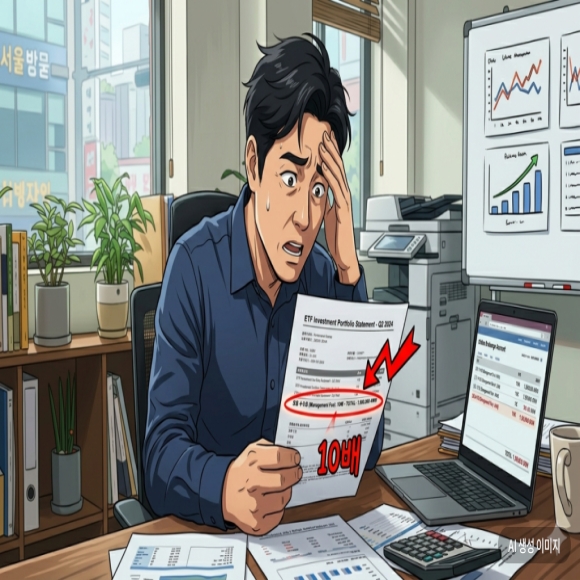
Consumers are keeping their wallets closed. Last year, the retail sales index, which reflects consumption of goods, saw its steepest decline in 21 years. This marks the first time since statistics have been compiled that retail sales have dropped for three consecutive years. The prolonged period of high interest rates and high inflation is the main cause, and there is little sign of improvement.


Retail Sales Down 2.2%, Three-Year Decline
According to the “Industrial Activity Trends for December 2024 and the Year” released by Statistics Korea on the 3rd, last year’s retail sales index fell by 2.2% compared to the previous year. This is the sharpest drop since the 2003 credit card crisis (-3.2%). Retail sales have declined for three consecutive years: -0.3% in 2022 and -1.5% in 2023. This is the longest streak since Statistics Korea began tracking consumption items.

The semi-durable goods sector, including clothing and shoes, led the decline with a 3.7% drop. Semi-durable goods are typically the first to be cut when prices rise or the economy worsens, as spending on them can be postponed without much impact on daily life. Durable goods, such as passenger cars and home appliances, also fell by 3.1%, while non-durable goods decreased by 1.4%.
The outlook is not promising. On a monthly basis, retail sales in December last year decreased by 0.6% from the previous month. Except for February (0.8%), every month showed a decline. After recording -3.6% in June and gradually improving to -0.8% in October, the trend worsened again afterward.
The government analyzed that sluggish retail sales are the result of prolonged high interest rates and high inflation. Kim Guibeom, Director of Economic Analysis at the Ministry of Economy and Finance, said, “The past three years have seen high interest rates and stagnant wages,” adding, “With disposable income falling, it would not have had a positive effect on purchasing goods.” High interest rates were maintained for a long time to curb high inflation, but with real wages declining for two consecutive years, consumer sentiment has been negatively affected.
Total Industrial Production Up 1.7% Thanks to Semiconductors


Total industrial production increased by 1.7% compared to a year earlier. After a sharp decline in the first year of the pandemic, industrial production has increased for four consecutive years since 2021 (5.3%). By sector, both manufacturing and services saw increased production. Mining and manufacturing output rose by 4.1% year-on-year, with gains in semiconductors and pharmaceuticals offsetting declines in electrical equipment and primary metals. Service sector production increased by 1.4% year-on-year, as gains in transportation, warehousing, finance, and insurance offset declines in wholesale and retail.
The growth in production was driven by semiconductors and automobiles. On a monthly basis, total industrial production declined for three consecutive months in September (-0.4%), October (-0.3%), and November (-0.3%) last year, but rebounded by 2.3% in December. Mining and manufacturing grew by 4.6% thanks to strong performances in semiconductors (5.6%) and automobiles (10.7%). The global growth of the artificial intelligence (AI) industry sustained demand for high-performance semiconductors, and the end of strikes at auto parts suppliers contributed to the positive trend. The service sector also grew by 1.7%, driven by increases in finance and insurance (5.3%) and wholesale and retail (2.8%).
The aftermath of the December 3 Martial Law had varying impacts across industries. Service sectors tied to domestic demand were hit the hardest. In December last year, accommodation and food services fell by 3.1%, the largest decline in two and a half years since June 2022 (-6%). In the same month, arts, sports, and leisure production also dropped by 6.9%. Gong Misuk, Director of Economic Trend Statistics at Statistics Korea, explained, “Accommodation, food services, leisure, and sports all recorded negative growth, and retail sales have not recovered,” adding, “It is possible to think that martial law may be related.”
Facility investment turned to a 4.1% increase last year. Both machinery, such as semiconductor manufacturing equipment (2.9%), and transportation equipment, such as other vehicles (7.8%), saw increases. In contrast, construction performance fell by 4.9%, the largest drop since 2021 (-6.7%). While civil engineering increased by 1.8%, building construction output fell by 6.9%.
The coincident index, which reflects current economic conditions, was flat compared to the previous month. The leading index, which predicts future economic trends, fell by 0.2 points from the previous month.
-

Reporter Song Seungseop tmdtjq8506@asiae.co.kr
-
Reporter Jo Youjin tint@asiae.co.kr
-
Edit Choo Myeonghoon chox2mh@asiae.co.kr
© The Asia Business Daily(www.asiae.co.kr). All rights reserved.