Reporter Lee Ji-eun from the Social Affairs Department recently encountered a literal ordeal while covering an anti-impeachment rally against President Yoon Seok-yeol.
Editor's NoteWe now live in an era where people search for information on YouTube before portal sites. YouTube's algorithm, which recommends only videos that match users' interests, is deepening confirmation bias on political and social issues. Individual YouTubers, divided into far-right and far-left, are gathering their supporters and showing us a new political landscape. But can we really trust the world they present? Are we only watching what we want to believe on YouTube, trapped in an algorithm-driven filter bubble? Asia Economy decided to investigate.
[YouTube Confirmation Bias]⑤ Protest Participants Assault Reporters... Hostility Toward Mainstream Media
YouTube channel operators encourage avoidance of news
Confirmation bias grows amid an uneasy social atmosphere
Confirmation bias grows amid an uneasy social atmosphere
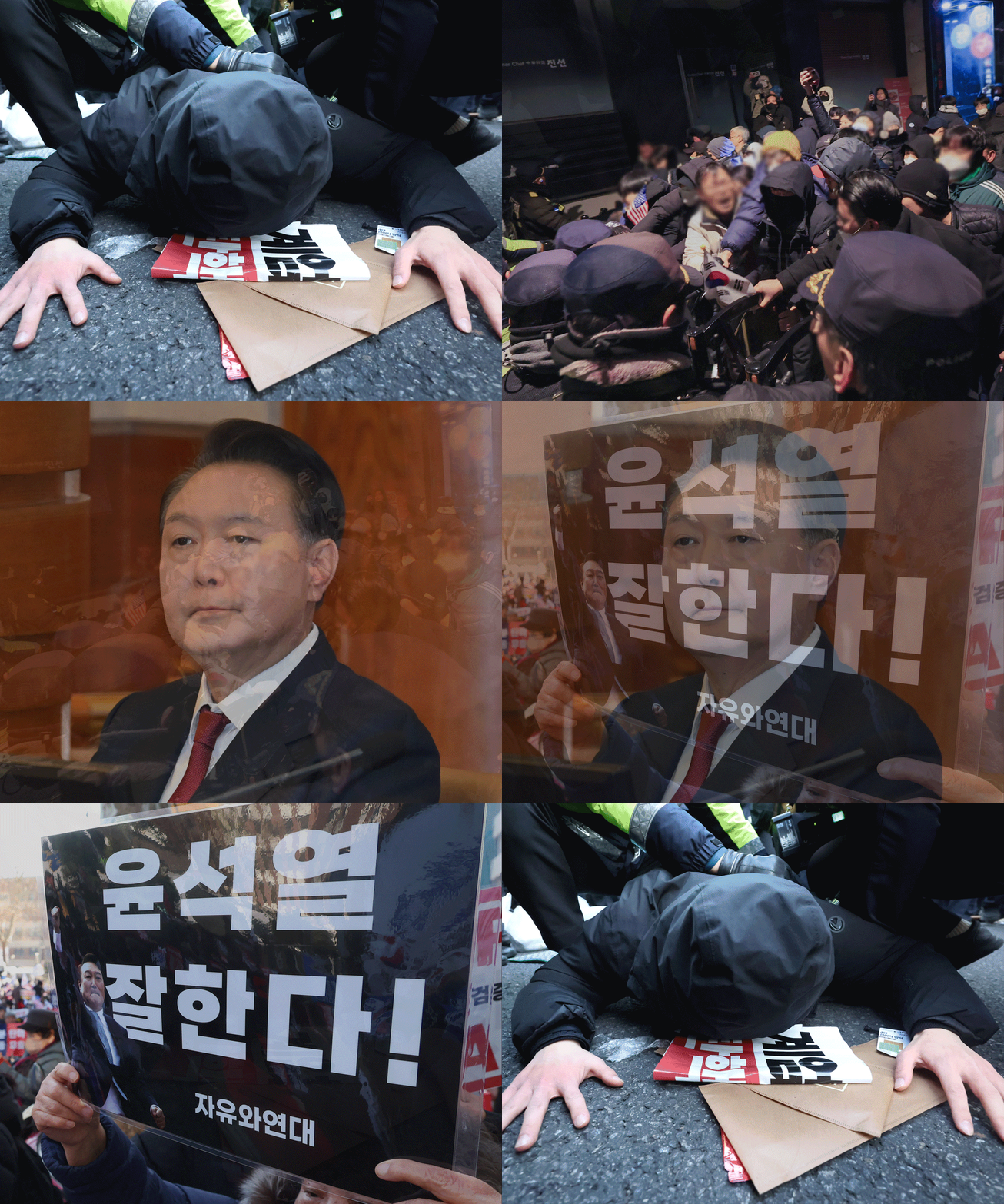
This happened because as soon as she briefly sat on the roadside to open her laptop, about 10 rally participants surrounded her.
They demanded that Lee show her press ID, KakaoTalk messages, and laptop screen.
In the end, she was only able to leave the scene after fully revealing which media outlet she belonged to and what she was writing on her laptop.
On the 19th, at the riot scene at the Seoul Western District Court, reporters were also assaulted by rally participants.
"You're a reporter, right? You're all caught on this YouTube live stream."
"Reporter! There's a reporter here!"
"White padded jacket. Block them so they can't escape!"
"Reporter! There's a reporter here!"
"White padded jacket. Block them so they can't escape!"
"In an instant, people surrounded me and pointed their phones at me, and I felt afraid I might be attacked. It's natural for journalists to cover events on site, but at protests, they are demonized. For fair reporting, all voices at a protest should be included, but often YouTubers who only amplify one side are welcomed, while media reporters are rejected."


How Did Hostility Toward the Media Begin?
Experts point out that politically biased YouTube channel operators are encouraging the public to avoid mainstream media. Regardless of political alignment, these operators emphasize phrases like "the truth the media won't report" in their video thumbnails, urging viewers to trust and watch YouTube instead.
Choi Sangbong, professor of Journalism and Broadcasting at Sungkonghoe University, told Asia Economy, "For people with a strong political leaning, reports from mainstream media often don't align with their views, so they may feel discomfort. But on YouTube, channel operators who share their values tell them they are right." Professor Choi added, "As viewers become immersed in YouTube channels that reinforce their own beliefs, they naturally begin to dismiss opposing views as untrue, displaying confirmation bias. Channel operators profit from these biased subscribers, and platform companies also benefit. This cycle inevitably becomes more provocative and widespread."
The chaotic atmosphere both domestically and internationally creates an ideal environment for YouTubers' political biases to permeate the public. Lim Myungho, professor of Psychology at Dankook University, said, "During times of political turmoil, social disasters, or economic hardship, it becomes harder to trust anyone." He continued, "When external chaos meets personal anxiety, people are more likely to believe stories that align with their own thoughts and make emotionally driven decisions."

Individual YouTubers emphasizing unverified or biased claims in video thumbnails, claiming facts not reported by mainstream media. YouTube capture.
원본보기 아이콘Some point out that the decline in trust in Korean media is not a recent issue, and that the media itself bears some responsibility. The Reuters Institute for the Study of Journalism released a report stating that 67% of Korean news consumers have intentionally avoided mainstream news. The most common reason given was 'because the news is untrustworthy or biased.'
Media scholars say that while the decline in media trust and the confirmation bias of those who believe in YouTube should be viewed separately, it is clear that mainstream media has neglected its role.
Nam Jaeil, professor of Journalism and Broadcasting at Kyungpook National University, said, "Mainstream media has failed to establish the ethics and journalistic standards required when dealing with political issues." He pointed out, "Instead of making public or ethical judgments, the media has fallen into a form of formalistic factualism, merely relaying statements from both sides. This bothsidesism has likely left citizens frustrated." He emphasized, "Since our society is already politically divided into two camps, the media should instead take on the role of mediator."

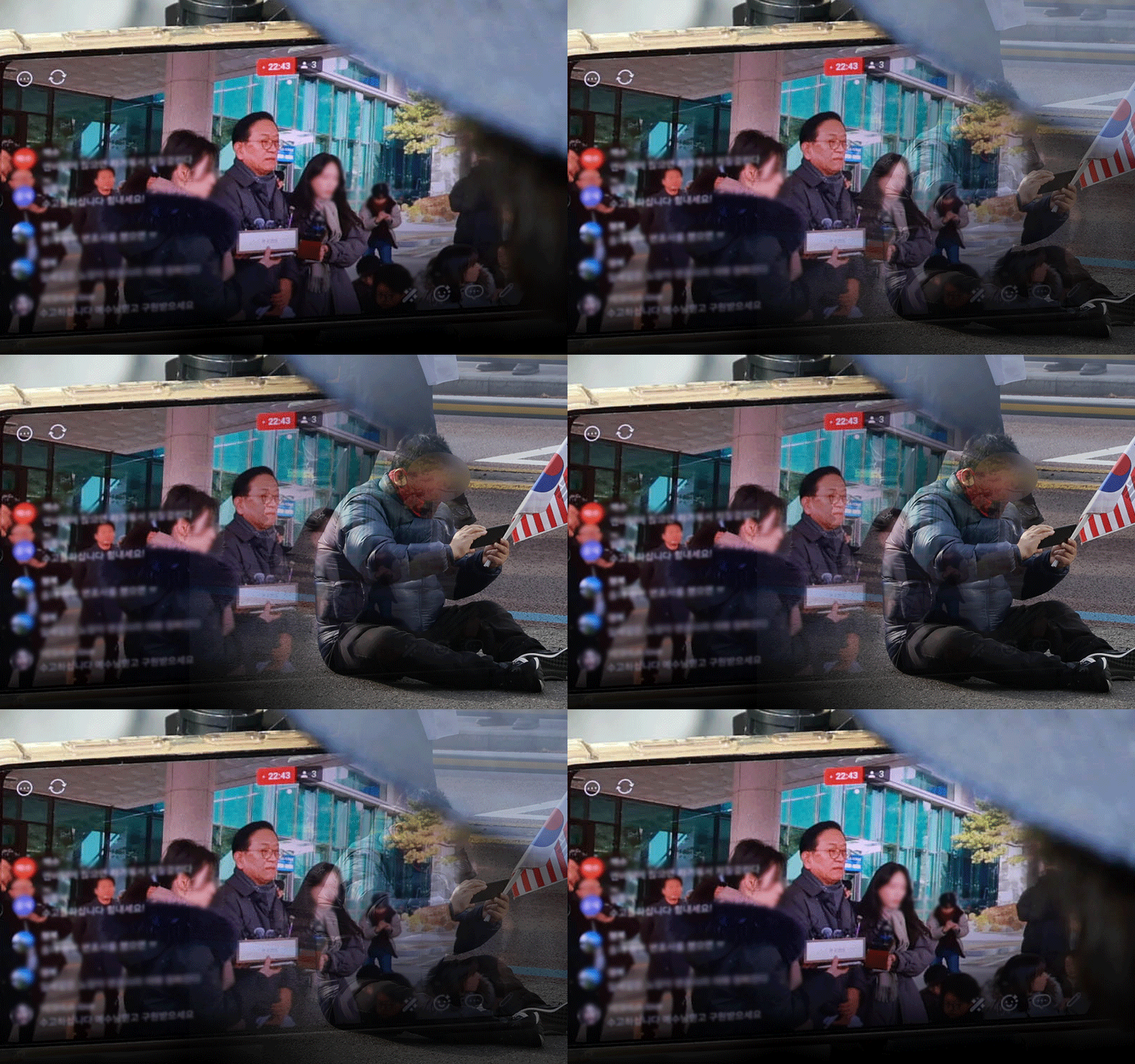
On December 19, 2024, in front of the Seoul High Prosecutors' Office building, lawyer Seok Donghyun, who is set to defend President Yoon Seokyeol, met with reporters to express his stance on the investigation into charges of insurrection and the impeachment trial. A YouTuber was live-streaming this scene on a mobile phone, and real-time comments were appearing on the screen. Photo by Heo Younghan
원본보기 아이콘Is There a Way Out of Confirmation Bias?
Experts first advise developing a habit of verification. This means comparing information from YouTube with that from mainstream media. Professor Choi said, "The simplest way to determine whether something on YouTube is fake news or not is to check how it is reported in mainstream media." He continued, "No matter how biased or partisan mainstream media may be, it is still more regulated and systematically operated than YouTube channel operators. Therefore, it's important to see how mainstream media covers the story."
The second point is not to give up communication with extremely biased groups. Professor Lim said, "In times of chaos, bias can become widespread. Political and social stability must come first." He added, "Nevertheless, rather than dismissing these people as a radical minority and responding with indifference, we should instead communicate with them and show that other values can exist. This is how we can foster a healthy social atmosphere."

IndexYouTube and the Trend Toward Confirmation
- How Did My Mother Come to Support President Yoon?
- "Media News Is Fake"... A Look Into the YouTube Channel Watched by the President
- [Report] Swayed by a YouTuber's Words... Inside the Filter Bubble
- The More Extreme the Situation, the Bigger the Jackpot... Inside the Minds of Political and Current Affairs YouTubers
- "Reporter! Block Them from Escaping"... Why Don't We Trust the News?
- Kim Eo-jun Also Did It... 'Election Fraud' Controversy That Emerged Every Election
-
Reporter Jeon Jinyoung jintonic@asiae.co.kr
-
Edit Hong Jayeon hongzaa@asiae.co.kr
© The Asia Business Daily(www.asiae.co.kr). All rights reserved.


![[Report] "A Culinary Destination with a View of Gyeongbokgung"... Kim Dong-sun's High-End Dining Takes Over Gwanghwamun](https://cwcontent.asiae.co.kr/asiaresize/304/2026042114562634571_1776750985.jpg)
![[Gallery Stroll] Red Robe, Black Lines... Danjong Returns with the Face of Wounds](https://cwcontent.asiae.co.kr/asiaresize/304/2026042014183532691_1776662315.jpg)