
"At this rate, we won't be able to avoid losses next year."
With international coffee bean prices soaring and a high exchange rate piling on, Dongseo Food, the leading domestic instant coffee company, is on high alert. Despite a recent price increase, anxiety is rising internally as the company relies entirely on imports for its main raw materials?coffee and sugar. A Dongseo Food official said, "If sales volume stays similar to this year, we expect significant losses," adding, "Since we've already raised prices recently, we'll have to defend our performance next year by cutting marketing costs and other measures."
Arabica Hits Record High in 47 Years... Exchange Rate Adds to the Burden
According to the industry on the 31st, as international coffee bean prices have hit all-time highs recently, the cost burden for coffee brands is expected to intensify in the new year.
Arabica, which is mainly used by Starbucks, the top coffee shop, and Dongseo Food, the leading instant coffee brand, reached its highest price in 47 years on the 10th. At that time, the price of Arabica coffee futures on the New York market soared to $3.44 per pound, surpassing the previous record of $3.38 (set in 1977). The closing price that day was $3.34, also an all-time high.

The surge in Arabica prices is largely due to 'climateflation' caused by abnormal weather. Brazil, the largest producer and supplier of half the world's coffee, has suffered a prolonged drought, disrupting coffee supplies. Although the drought has eased somewhat since October, a lack of moisture in the soil is making it difficult to cultivate coffee trees.
To make matters worse, prolonged political turmoil and uncertainty over impeachment have driven the won-dollar exchange rate even higher, adding to the woes of domestic coffee companies. On the 27th, the won-dollar exchange rate exceeded 1,486 won during trading hours, marking the highest level in 15 years and 9 months. Korea, often called the 'Coffee Republic' for its high per capita coffee consumption, relies entirely on imports, making the impact of a high exchange rate even more severe.
An industry official said, "We barely managed to hold on this year thanks to stockpiled inventory, but next year, companies will have little room to avoid price increases, so the concerns will deepen."
Low Customer Loyalty for Budget Coffee Brands: "Afraid to Raise Prices Even by 100 Won"
Dongseo Food and Starbucks have already raised prices as they could no longer absorb the increased raw material costs. Dongseo Food raised the shipping prices of its instant coffee, coffee mix, and coffee beverages by an average of 8.9% from the 15th of last month. As a result, the price of Maxim Mocha Gold Mix (180 sticks, 2.16kg) increased by 9.5%, from 23,700 won to 25,950 won. This means the price per stick rose by about 13 won, from 131.6 won to 144.1 won. Starbucks also raised the prices of its Grande (473ml) and Venti (591ml) size coffee drinks by 300 won and 600 won, respectively, in August.
The problem is that the effects of climateflation are expected to continue, making it likely that coffee bean prices will rise again next year. An industry official explained, "While the exchange rate may stabilize once political uncertainty clears, the coffee bean supply issue cannot be resolved in a short period of time."
Nevertheless, domestic coffee companies are aiming to minimize the impact by monitoring the situation in major producing countries and adopting strategic sourcing?buying beans whenever prices drop, rather than simply raising prices. A Twosome Place official said, "We currently have no plans to raise prices," adding, "We are closely monitoring market supply and demand to defend against price increases as much as possible."
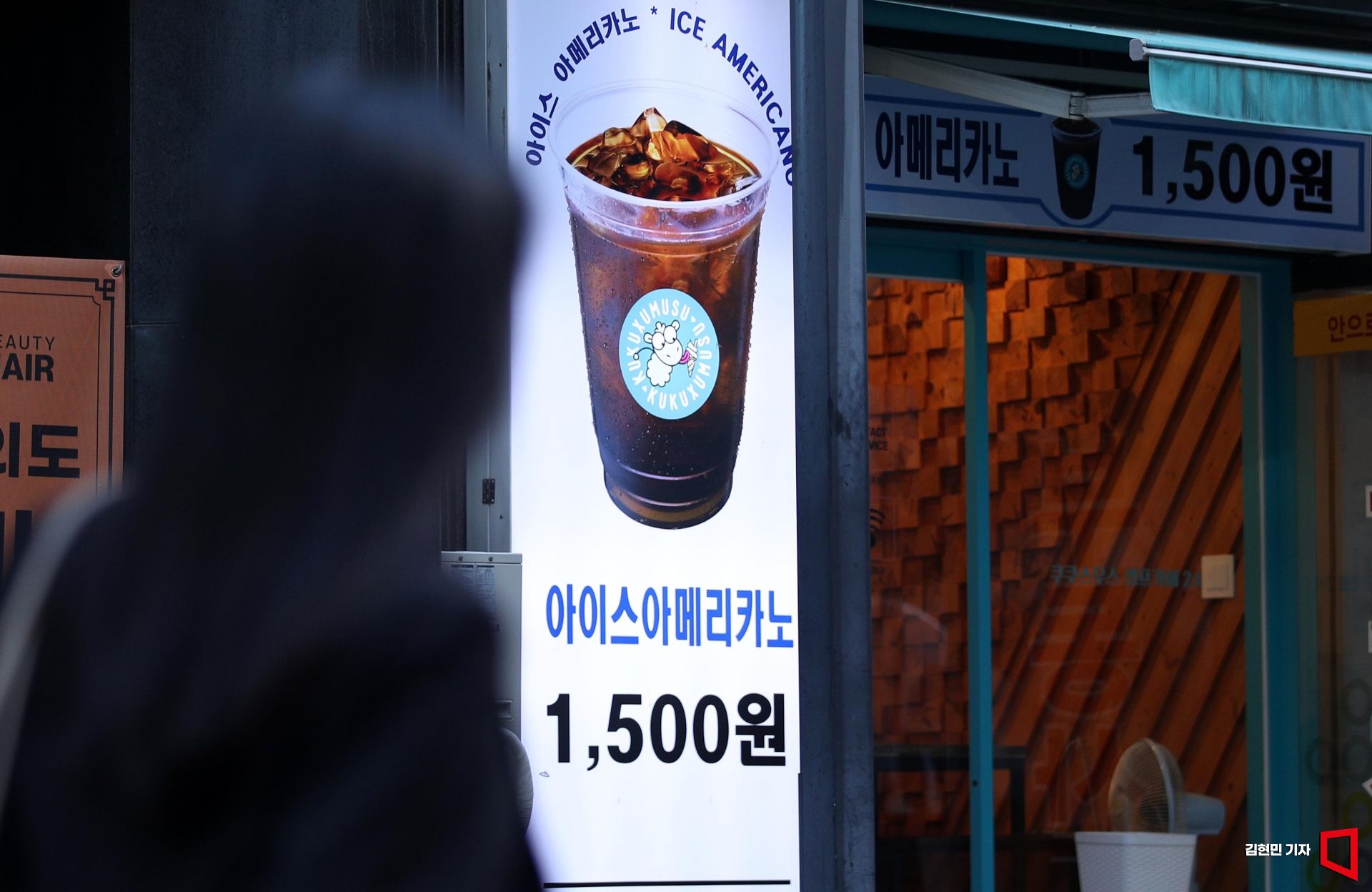
In particular, mid- to low-priced brands are being even more cautious due to fierce competition and low customer loyalty. Unlike Dongseo Food and Starbucks, these brands can be easily replaced, so even a 100-won price increase could be a fatal blow.
An Ediya Coffee official said, "Due to various factors such as international affairs, exchange rates, and climate change, the prices of raw materials including coffee beans continue to rise," adding, "We are trying to offset rising costs as much as possible through operational efficiency rather than price increases." A Mega Coffee official also stated, "We currently have no plans to raise prices," explaining, "The head office will absorb the increased costs of coffee beans, cocoa, and other raw materials as much as possible and offset them through economies of scale."

-
Reporter Im Onyu ioy@asiae.co.kr
-

Edit Park Chunghun parkjovi@asiae.co.kr
© The Asia Business Daily(www.asiae.co.kr). All rights reserved.
!["Please Help Us": How Much Do Those Bowing 90 Degrees These Days Actually Earn? [Data Pick]](https://cwcontent.asiae.co.kr/asiaresize/323/2026052010120870131_1779239528.png)