[Hamburger Rotting Experiment]④
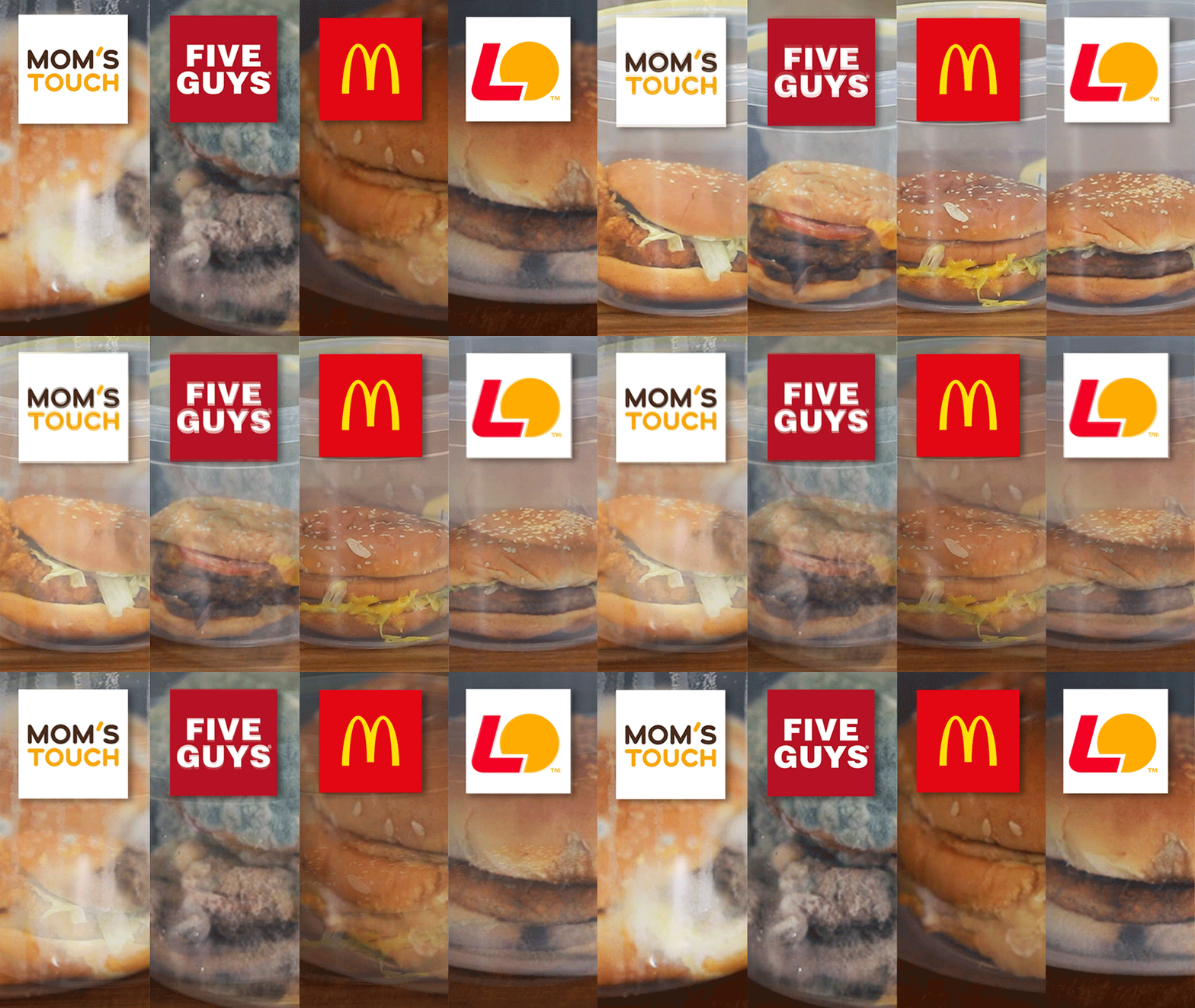
Five Guys, more than 80% covered in mold
Mom's Touch and KFC also showing increased decay
Lotteeria bun bottom showing signs of decomposition
It has now been a month since the Asia Economy food and beverage team began its experiment to verify the truth behind the viral rumor on YouTube and social media that "hamburgers do not rot." Among the six major brands?McDonald's, Mom's Touch, Lotteeria, Burger King, KFC, and Five Guys?all burgers except for the McDonald's Big Mac have shown clear external changes, such as mold growing on the buns and patties and a reduction in size due to moisture evaporation.
Even the Lotteeria Bulgogi Burger, which along with the Big Mac had the slowest rate of decay, developed a white mold and black spots about the size of an index finger on the bottom bun after 30 days. All the vegetables had dried out and were no longer visible, and the patty was completely devoid of moisture, making the entire burger appear shriveled and compressed. Generally, the decay seemed to start from the bottom of the product.
Except for the Big Mac... Experiment Burgers Decay Rapidly Over a Month


The Big Mac, which uses a double patty, developed a mold spot about the size of a thumbnail on the bottom bun, but there were no significant changes in color or appearance. The top bun with sesame seeds and the overall look of the burger remained largely unchanged compared to the start of the experiment. Ingredients like shredded lettuce and cheese were still visible to the naked eye.


The remaining test burgers, which had already shown significant decay, changed completely in appearance over the month. The Five Guys Bacon Cheeseburger, which was the first to show changes, was covered in dark blue mold on more than 80% of its surface as of this day. The mold, which spread from the patty to the bottom bun, turned dark gray, and except for the melted cheese, it was hard to distinguish the original ingredients. The Burger King Whopper's top bun was also covered in cement-colored mold. All the moisture had evaporated, leaving the burger dry and smaller than at the start of the experiment.


The degree of decay in the Mom's Touch Thigh Burger and KFC Zinger Burger, both using chicken patties, also became much more severe. The Thigh Burger developed dark blue and yellowish mold in cloud-like patterns on the top bun, similar to the state of the Five Guys Bacon Cheeseburger after two weeks. Only part of the chicken patty remained, with the rest having disintegrated. The Zinger Burger had mold growing on about half of the top bun, giving it a burnt appearance, while the other half and part of the patty had dark blue mold spots scattered across them.
Why Do Decay Rates Differ? Hamburger Companies Respond
Each brand included in the experiment has been closely monitoring the weekly updates. So far, the observed rate of decay for most hamburgers has been much faster than anticipated. Five Guys, which showed the most dramatic changes, explained, "We do not use any frozen ingredients at all and check the freshness of our ingredients twice daily, in the morning and afternoon, to maintain freshness."

Other manufacturers also emphasized that they do not use any food preservatives in their buns, vegetables, or patties. Currently, KFC, Mom's Touch, Lotteeria, and Burger King are known to source their buns from the same supplier. Global brands like McDonald's and Five Guys have their own contracted suppliers. The manufacturers believe that differences in the speed and spread of mold growth among the burgers are related to the composition of the ingredients used in each product.
Regarding the relatively slow onset of mold in the Bulgogi Burger, Lotteeria explained, "All raw materials are sterilized, pasteurized, or heat-treated, resulting in fewer microorganisms that promote mold growth. Unlike other brands' test burgers, our product does not include high-moisture ingredients like tomatoes or pickles, making it harder for microorganisms to thrive and thus slowing down the rate of spoilage."
For products using chicken patties, the breading acts as a protective barrier, causing moisture from tomatoes or vegetables to be absorbed by the bun rather than the patty, creating an environment conducive to mold growth. Beef patties grilled on a hot plate retain their juices, which can accelerate the decay of the bun or other ingredients. The industry also notes that cheese, made from fermented milk, can affect the rate of spoilage of other ingredients when exposed to room temperature.

Based on this, the Five Guys Bacon Cheeseburger, which contains thick layers of cheese, beef patty, tomato, and various vegetables, provides optimal conditions for microorganisms to grow and multiply. The Lotteeria Bulgogi Burger, by contrast, has a simpler composition with just a patty and lettuce. However, despite the Big Mac containing two beef patties, pickles, lettuce, and cheese?all high-moisture ingredients that should promote microorganism growth?its rate of decay has been remarkably slow. McDonald's commented, "Various companies, including ours, source patties, buns, and vegetables from the same suppliers," and stated that they had no special comment regarding the experiment.
-

Reporter Kim Heungsoon sport@asiae.co.kr
-
Edit Hong Jayeon hongzaa@asiae.co.kr
© The Asia Business Daily(www.asiae.co.kr). All rights reserved.
!["Please Help Us": How Much Do Those Bowing 90 Degrees These Days Actually Earn? [Data Pick]](https://cwcontent.asiae.co.kr/asiaresize/323/2026052010120870131_1779239528.png)