
China's Generation Z (born in the mid-to-late 1990s to early 2000s) has become captivated by rational "cost-effectiveness (value for money)" consumption. The perception that imported products are always superior is fading, and as a culture of "gukppong" (national pride) spreads, more people are choosing affordable and practical Chinese products in various sectors such as coffee, cosmetics, and smartphones.
Generation Z Immersed in Cost-Effective Consumption Culture
Chinese media are focusing on the consumption culture of Generation Z, who are obsessed with value for money. The Chinese outlet People's Daily recently reported, "The trend among Generation Z is rational consumption," and explained, "They prefer domestic (Chinese) brands that are high-quality and inexpensive." The report added, "In the first half of 2024, Chinese brands accounted for 66% of new skincare product sales, surpassing foreign brands," noting that this is "due to the influence of Generation Z's pursuit of cost-effective products."
Young Chinese consumers also tend to prefer domestic smartphone brands over iPhones. Apple, facing sluggish sales in China, recently lowered the price of the iPhone 16 by 500 yuan (about 97,000 KRW) just a month after its launch. With subsidies, the discount can reach up to 1,500 yuan (about 300,000 KRW). According to market research agency Counterpoint, iPhone 16 sales in China increased by 20% year-on-year in the first three weeks after launch, but overall iPhone sales dropped by 2% year-on-year in the most recent three weeks. Experts attribute this to the consumption tendencies of young people who prefer domestic brands such as Huawei, Vivo, Oppo, and Xiaomi.
The same trend is seen in the automotive market. According to sales rankings for the Chinese car market in the first half of 2024, released by the Passenger Car Association, six Chinese brands ranked among the top ten.
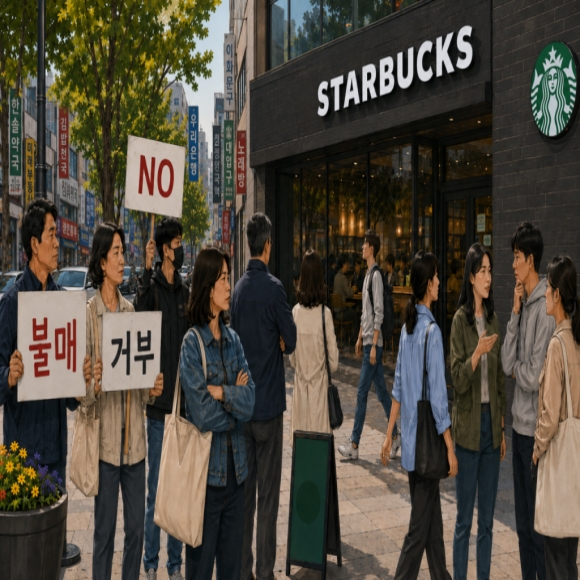
Domestic beverage brands selling coffee for 8.8?9.9 yuan and bubble tea for 5 yuan are also thriving. In contrast, Starbucks, beloved worldwide, is seeing declining sales in China. Last year, Starbucks lost its top sales spot in China to the domestic brand Luckin Coffee. At weddings, instead of preparing wine, it has become common to order large quantities of milk tea from local brands like Heytea or Peiwang Chaxi to serve guests. Xiao Wei, a groom who prepared Heytea for his wedding, told China Business News, "The 'Xi' in Heytea (Xi Cha) sounds the same as 'Double Happiness (Xi)' and is a good fit for weddings."


According to a recent survey by market analysis firm Xiaobaogao, 68.4% of Generation Z cited "cost-effectiveness" as the most important criterion when choosing products. Companies expect Generation Z's consumption to continue growing and are focusing more on the value-for-money, domestic-oriented consumption culture of this generation. Guangming Daily reported, "In the next 10 years, 73% of Generation Z will become office workers, and the new consumption scale they create will reach 16 trillion yuan."
Rising Interest in Eco-Friendly and Secondhand Products
Chinese Generation Z's interest in eco-friendly products is also increasing. According to the "Report on the Development of Internet Digital Consumption," released by the China Internet Network Information Center, the number of online shopping mall users in China has surpassed 900 million, with 230 million having purchased eco-friendly products. In a 2023 survey by the e-commerce site Taobao, the number of eco-friendly product buyers increased by 40% compared to three years ago, with most being from Generation Z.
Generation Z is also meeting their shopping needs by buying and selling goods on secondhand trading platforms, as it is both eco-friendly and economical. The daily average transaction volume on Xianyu, the Chinese equivalent of Danggeun Market, has surpassed 1 billion yuan (about 194.6 billion KRW). Over 100 million people registered products on Xianyu last year alone. Another secondhand product application, 95fen, has seen its transaction volume increase more than 30 times over the past five years. Of the users actively utilizing these two platforms, 70% are Generation Z. Practical household items are especially popular in secondhand trading, with shoes, bags, and clothing ranking among the top three categories by transaction volume.
Professor Jin Xun of the University of International Business and Economics explained, "Generation Z's interest in eco-friendly consumption influences brand product design and campaigns."
IndexChina Peekaboo
- Chinese Products Are the Best... Gen Z Values Cost-Effectiveness and Gains a Sense of National Pride
- Padding and Shuttlecock Prices Soaring... Is Pork the Culprit?
-

Reporter Kim Jinsun carol@asiae.co.kr
-
Edit Kim Yumi ymkim91@asiae.co.kr
© The Asia Business Daily(www.asiae.co.kr). All rights reserved.
!["Please Help Us": How Much Do Those Bowing 90 Degrees These Days Actually Earn? [Data Pick]](https://cwcontent.asiae.co.kr/asiaresize/323/2026052010120870131_1779239528.png)