Marine Corps recruit training must exceed the 5th week to wear the
red badge
by Yang Nakgyu
by Sung Kiho
Published 08 Oct.2024 14:40(KST)
Updated 08 Oct.2024 15:35(KST)
The Republic of Korea Marine Corps was established in response to the Yeosu-Suncheon Incident. On April 15, 1949, it began with a small force of 380 personnel, including its first commander, Colonel Shin Hyunjun. During the Korean War, the Marine Corps played a pivotal role in battles such as Janghang, Gunsan, and Iri, as well as the Tongyeong Landing Operation, the Incheon Landing Operation, and the operation to recapture Seoul. Nicknames like "Ghost-catching Marines" and "Invincible Marines" emerged. There were also crises. On October 10, 1973, during the Yushin regime, then-President Park Chunghee disbanded the Marine Corps Command and integrated the Marines into the Navy, just 24 years after its founding. The Marine Corps Command was reestablished in 1987, and after incidents such as the Yeonpyeong Island artillery battle in 2010, the reputation of the Invincible Marines was restored. To witness the birth of new Marines, we visited the Marine Corps Education and Training Group located in Pohang, North Gyeongsang Province.
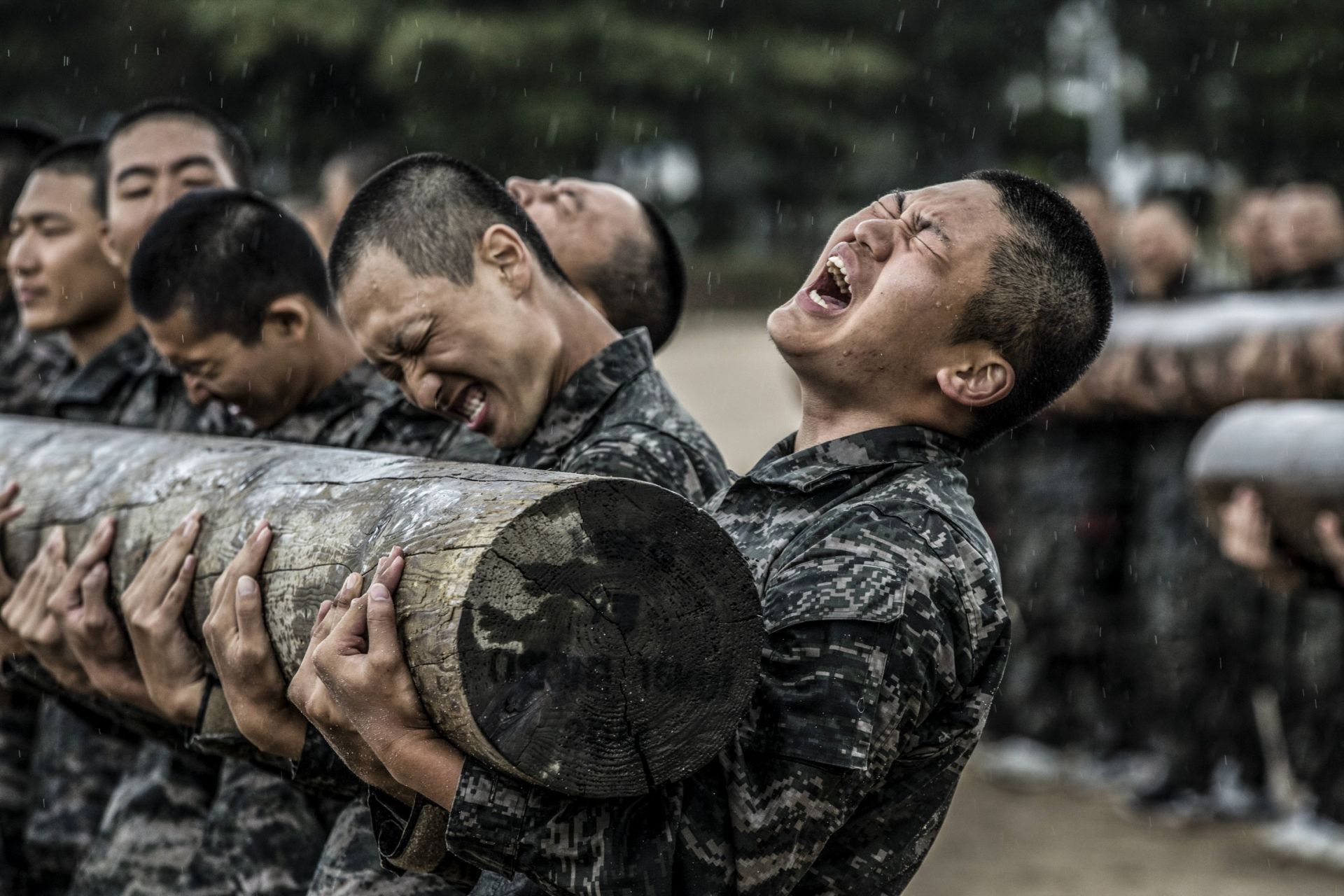
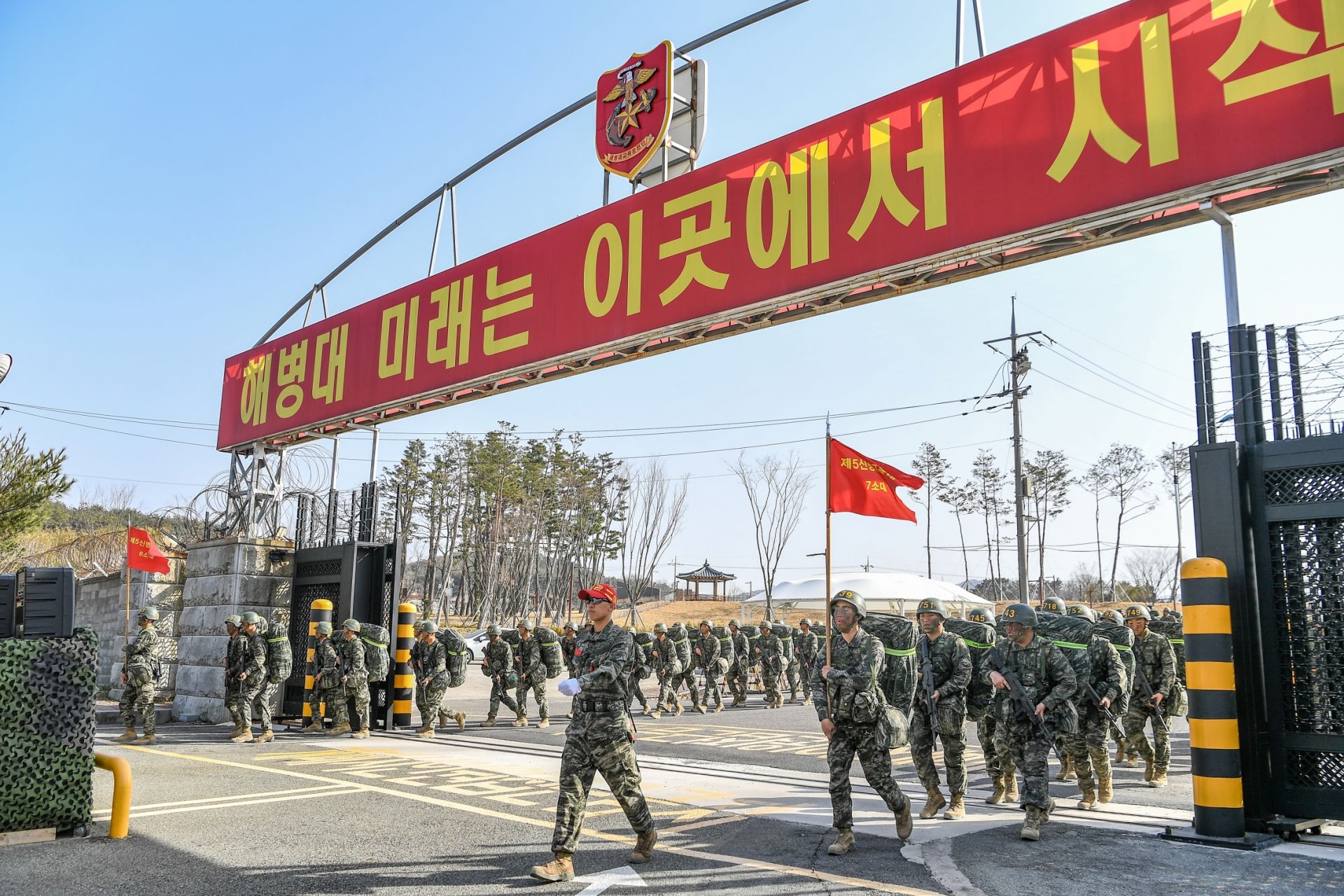
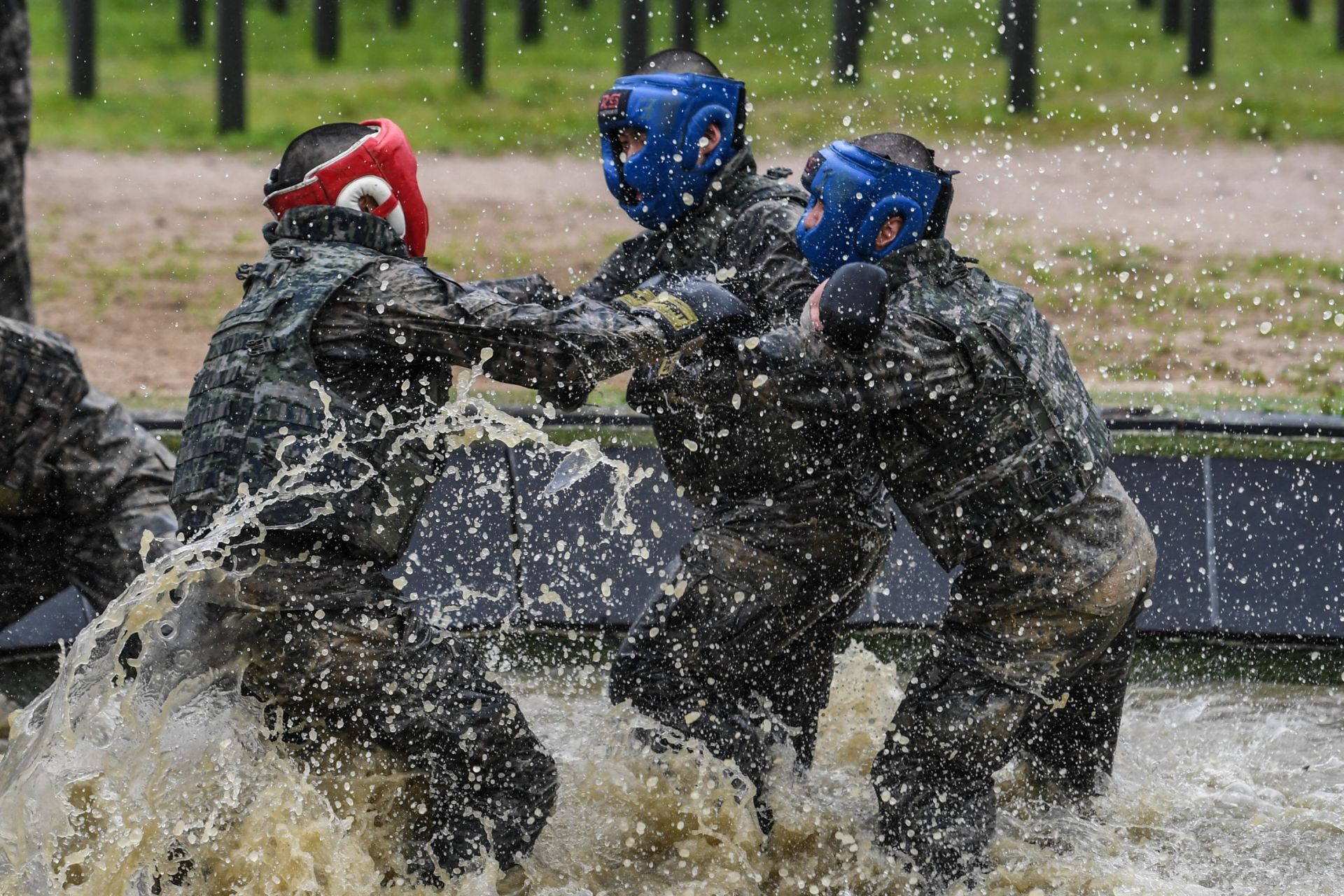
The Marine Corps Education and Training Group, responsible for new recruit training, trains about 10,000 recruits in 12 classes each year. The training program lasts six weeks. The first week focuses on military adaptation. Weeks two to four are dedicated to mastering basic military movements, marksmanship, combat swimming, CBR training, and other individual combat skills. The following week features Marine Corps specialized training, such as amphibious assault basics, KAAV boarding, and basic airborne training. The fifth week is known as the "endurance week," during which recruits are pushed to their physical and mental limits. Meal portions and sleep time are reduced by half, and recruits undergo basic obstacle training, individual combat, CBR gas training, and the Cheonjabong mountain conquest exercise. Only those who endure this "endurance week" earn the Marine Corps' symbolic "red name tag." Upon entering the training group, around 200 recruits were undergoing physical examinations. Their formation was not yet precise. These were the 1306th class, only three days into enlistment, mostly born between 2002 and 2004. Out of 2,128 applicants, only 1,453 were accepted for this class. The acceptance rate was 1.46 to 1. Their eyes still showed nervousness rather than military discipline.
red badge
Captain Park Kyungtae, head of recruit education, said, "We are seeing a generation enlisting who have had little experience with group living due to COVID-19," adding, "During the first week, we focus more on improving mental strength and building trust between recruits and instructors rather than physical training."
The results of the physical examinations, including urine tests, chest X-rays, and blood pressure checks, are available within two days. If conditions such as diabetes or pneumonia are detected, enlistment is canceled. Starting from the second half of this year, drug tests using urine and blood samples will also be conducted. Currently, the military only tests those who declare a history of drug use or are deemed necessary by a military doctor during the enlistment physical. Inside the medical building, medical officers and civilian staff reviewed recruits' medical questionnaires, checking their condition, surgical history, and family history. The living quarters were well organized. Lockers contained the same items: a helmet, canteen, and two towels. The only item allowing personal expression was cosmetics; each recruit could have one or two items, such as sunscreen. Civilian clothes were also present, worn upon entry and sent home after a week.
Upon leaving the living quarters, we saw the 1305th class, who had completed six weeks of training and were just two days away from their graduation ceremony, training across the field. They were different. Their chants were louder, their movements quicker, and their voices, hoarse from shouting, were full of discipline. They shouted, "Invincible Marines, Rising Marines, Ghost-catching Marine Corps. Ak!" Unlike the 1306th class, they wore octagonal caps, red name tags, and dog tags, marking them as "newcomers to amphibious operations." Recruits used their allotted 30 minutes of personal maintenance time to do laundry in the squadron-supplied dryers.
Sergeant Noh Shintak, a training instructor, said, "For the MZ generation (Millennials + Generation Z) recruits, instead of forcing training, we motivate them by explaining why the training is necessary," adding, "We also strictly reward them, such as by increasing weekend phone usage time based on training performance."
We followed the recruits to the dining hall. It was different from other military units. All meals were provided by Pulmuone, a company specializing in group catering. Five to six civilian nutritionists worked busily. It was a stark contrast to the Marine Corps slogans posted on the walls. The menu was diverse. There were special menus for "snack day" and "Korean food day" to suit the recruits' tastes.
Recruit Shin Donghyuk, who enlisted after working in the civilian sector, said, "I joined the Marines to prove myself through the challenges of military life," adding, "I was worried about the food before enlisting, but it actually tastes better than what I ate in civilian life."

Yang Nakgyu if@asiae.co.kr
Sung Kiho kihoyeyo@asiae.co.kr
© The Asia Business Daily(www.asiae.co.kr). All rights reserved.