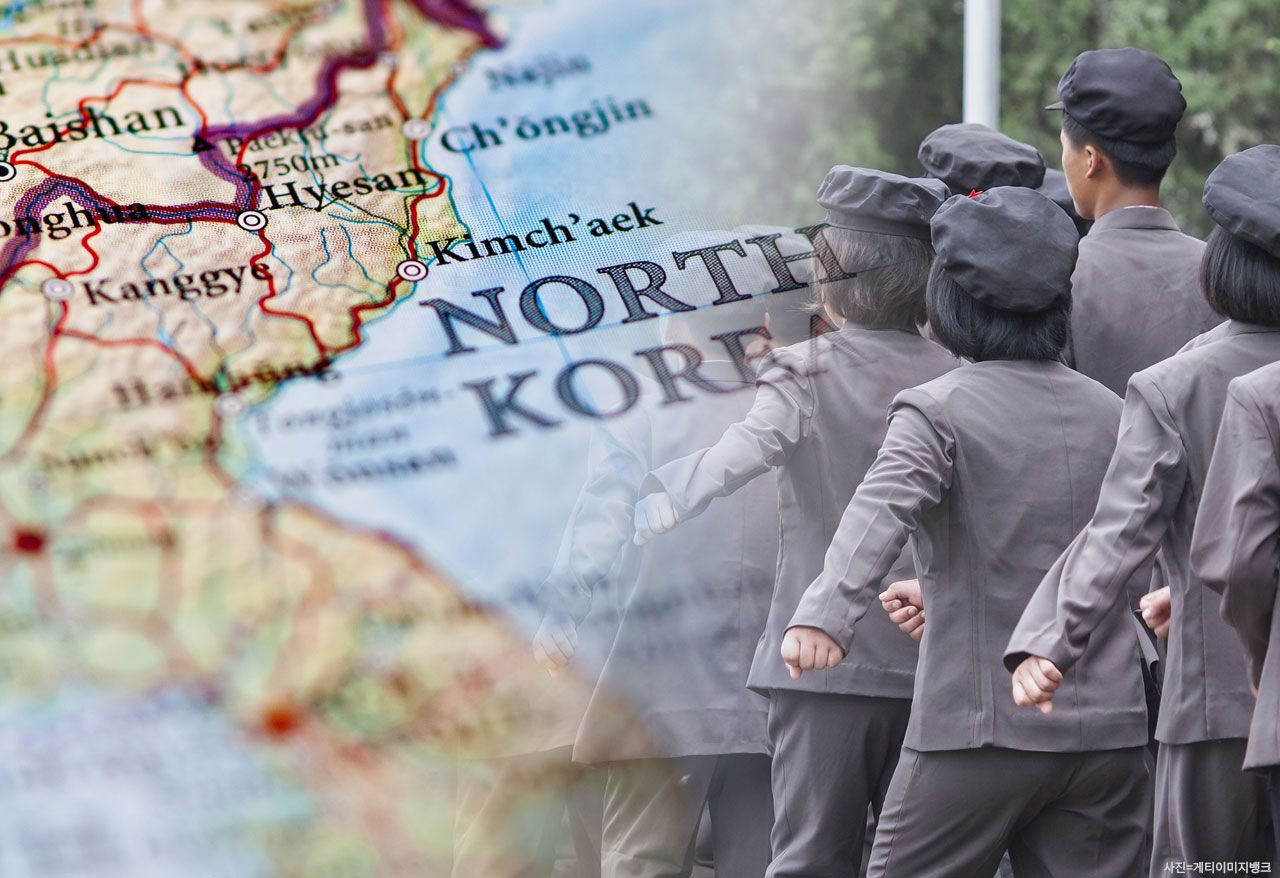
Recently, a North Korean defector in their 30s was caught attempting to cross back into North Korea at the Unification Bridge, highlighting the growing number of defectors struggling to adapt to life in South Korea. Most of them face economic difficulties, moving from one temporary job to another after government support ends.
![North Korean defectors waiting for third-country resettlement at the Chiang Saen Police Station in Chiang Rai Province, Thailand, May 2007. [Photo by Yonhap News]](http://www.asiae.co.kr/news/img_view.htm?img=2024082809472899005_1724806048.jpg)
North Korean defectors waiting for third-country resettlement at the Chiang Saen Police Station in Chiang Rai Province, Thailand, May 2007. [Photo by Yonhap News]
원본보기 아이콘On the 4th, Kim (29), a North Korean defector, said, "I've dreamed of returning to the North dozens of times," adding, "As someone in a similar situation, having left family behind in the North, I could relate a lot to this recent incident." Lim (27) said, "When I first came to South Korea, I received settlement support for two to three years, but after that, the support stopped and I lived as a basic livelihood recipient," continuing, "I know that many defectors are on basic welfare, so I wish there could be more discussion about the duration and scale of support." Park (24) lamented, "Coming alone to a strange land, I have to take care of and learn everything from scratch, but often I don't even know where or how to ask for help, which makes things overwhelming."

![At the North Korean Defectors Job Fair held at COEX, Seoul in December 2023, attendees are looking at the job posting board. <br>[Photo by Asia Economy]](http://www.asiae.co.kr/news/img_view.htm?img=2023120110350573460_1701394505.jpg)

Photo by Asia Economy
As of the end of June, there were 34,183 North Korean defectors in South Korea. The number entering the country has been steadily increasing: 63 in 2021, 67 in 2022, 196 in 2023, and 105 as of June this year. However, this year's Ministry of Unification support budget decreased by 4.475 billion won compared to last year. Park Daehyun, CEO of the defector community platform Woorion, emphasized, "The Ministry of Unification oversees all projects including employment, entrepreneurship, and scholarships, but lacks expertise," adding, "Various civic groups and organizations need to be able to actively cooperate with central government agencies."
Experts point out that more detailed policies for defectors are needed. Lim Eulchul, a professor at Kyungnam University's Institute for Far Eastern Studies, advised, "This recent attempt to cross back to the North reflects the reality of many defectors," and, "Sustainable support measures are needed so that they can develop the ability to become self-reliant in South Korea." Park Wongon, a professor of North Korean Studies at Ewha Womans University, said, "A more detailed approach is needed than the current government support policies for defectors."
-

Reporter Shim Seongah heart@asiae.co.kr
-
Edit Hong Jayeon hongzaa@asiae.co.kr
© The Asia Business Daily(www.asiae.co.kr). All rights reserved.