![[Image source=AFP Yonhap News]](https://cphoto.asiae.co.kr/listimglink/9/2024072608260565332_1721949965.jpg)

Last July, TSMC announced that its sales from January to June this year reached 1.266154 trillion Taiwanese dollars (approximately 53.77 trillion Korean won), marking a 28% increase compared to the same period last year.
[Korea’s Lowest Share of Large Corporations]
France Becomes No. 1 in FDI in Europe Through Corporate Tax Cuts and Deregulation
Fostering Domestic Industries with Massive Subsidies and Tax Incentives

A large TSMC logo is displayed at the venue of the TSMC Global R&D Center opening ceremony held in Hsinchu, Taiwan, in July 2023.
Photo by AFP
Major countries around the world, including the United States, China, and France, are actively supporting their large corporations through large-scale investments and regulatory easing. There is a growing call for the Korean government to strengthen its support for large corporations in line with global trends.
According to industry sources on the 24th, the United States is providing bold support, especially for eco-friendly energy and the semiconductor industry. Through the Inflation Reduction Act (IRA), $369 billion (about 493 trillion won) will be invested in “green industries” such as eco-friendly energy production, automobiles, and batteries. Manufacturing facilities related to electric vehicles and batteries receive up to 30% in tax credits, while facilities producing battery, solar, and wind power components receive a 10% tax credit. Buyers of electric vehicles that are finally assembled in North America and meet the required ratio of critical minerals in their batteries can receive up to $7,500 (about 10 million won) in subsidies. In the semiconductor industry, the U.S. is also investing a total of $280 billion (about 374 trillion won) to secure technological superiority.
China is actively using subsidy policies to promote the growth of companies producing high-tech intermediate and capital goods under the “Made in China 2025” strategy. In 2020, China provided about 100 billion yuan (about 19 trillion won) in subsidies to these companies, more than double the amount in 2015. To vitalize the market economy, China is easing restrictions on car purchases, relaxing financial regulations, amending the Foreign Investment Law, and easing regulations on platform companies and the gaming industry. In particular, in the automotive sector, the criteria for scrappage and upgrade subsidies have been doubled, and up to 20,000 yuan (about 380,000 won) is provided as a subsidy for the purchase of new energy vehicles.
Since the Macron administration, France has reduced the corporate tax rate from 33% to 25% and significantly eased labor regulations, simplifying dismissal criteria. The average administrative processing period for corporate permits has also been shortened from 17 months to 9 months. France is strengthening pro-business tax policies by abolishing the Corporate Value-Added Contribution (CVAE), which is part of the local economic contribution production tax, and reducing the Corporate Property Contribution (CFE) to half its previous level.
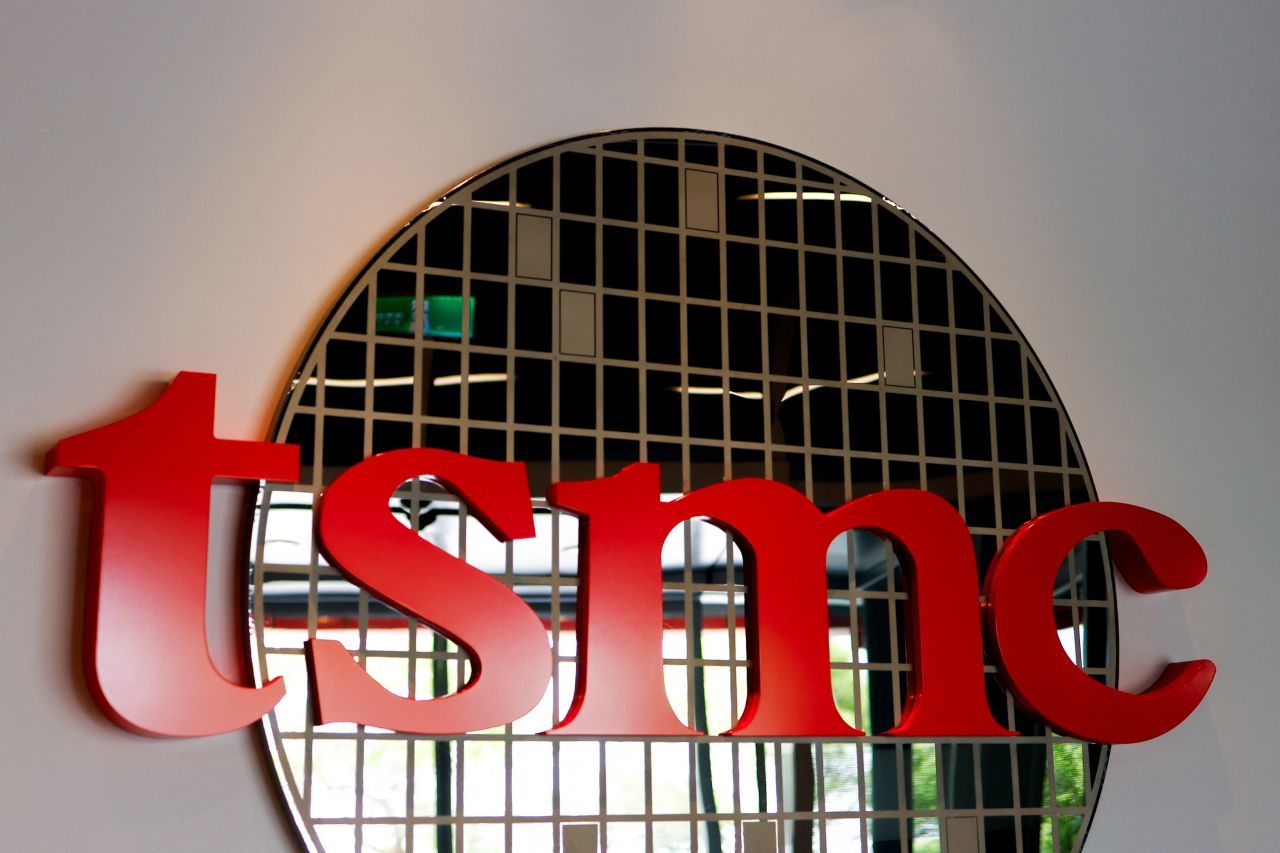
In Taiwan, TSMC is called Hoguk Shinsan (Sacred Mountain Protecting the Nation) and regarded as a key company.
France has also decided to invest 30 billion euros (about 45 trillion won) in future industries such as semiconductors, bio, energy, and aerospace to foster them as national strategic industries. To this end, France has established a roadmap for nurturing the regional semiconductor industry and is investing $6 billion, while actively supporting the reshoring (relocation of production bases to the home country) of major companies in the medical sector. As a result, France has ranked No. 1 in foreign direct investment (FDI) in Europe for five consecutive years. According to an Ernst & Young (EY) survey, the number of FDI projects for new plant construction or facility expansion in France last year was 1,194, surpassing the UK and Germany. Global companies cited France’s deregulation and pro-business environment as key factors in their investment decisions.
Choi Joon Sun, Professor Emeritus at Sungkyunkwan University Law School, said, “In the global era, national power depends on the number of large corporations and how much they dominate the global market. The reason why world powers cannot touch Taiwan is because Taiwan has the large corporation TSMC.” He added, “We must secure growth engines through active support and regulatory easing for large corporations.”
-
Reporter Choi Seoyoon sychoi@asiae.co.kr
-
Edit Kim Dongpyo letmein@asiae.co.kr
© The Asia Business Daily(www.asiae.co.kr). All rights reserved.
!["Please Help Us": How Much Do Those Bowing 90 Degrees These Days Actually Earn? [Data Pick]](https://cwcontent.asiae.co.kr/asiaresize/323/2026052010120870131_1779239528.png)