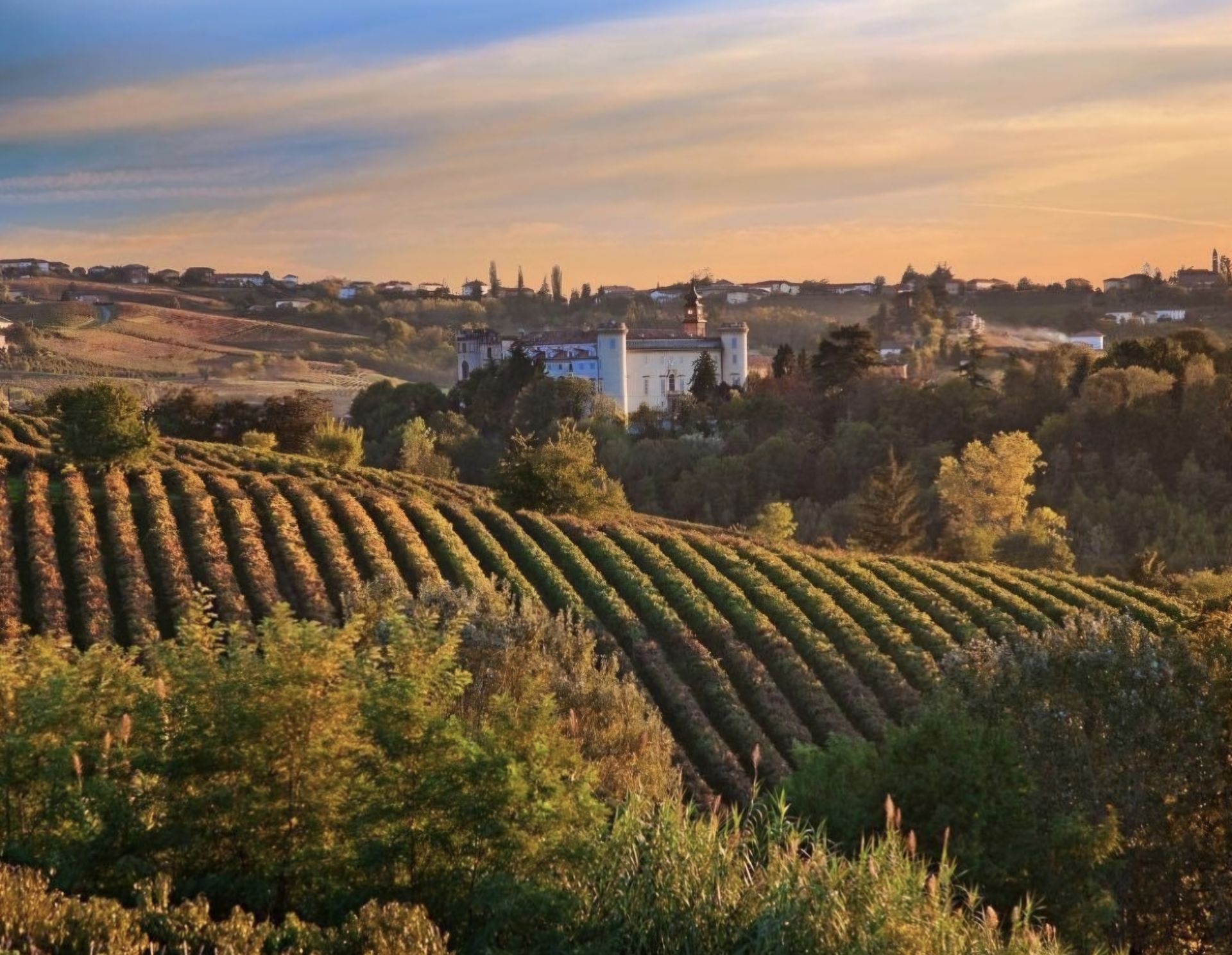


Overview of Gancia's underground wine cellar.
Editor's NoteThere is no such thing as the same wine under the sky. Even when grapes grown on the same land are vinified and aged in the same way each year, the results are always different. Wine is a 'drink of chance' created by the harmony of humans and nature. Each wine, disappearing silently after leaving behind only a single intense memory, holds an intriguing story. 'Akyung Wine Cellar' uncorks and shares the unique stories of wines, each crafted and matured under different circumstances.
The ancient Greek philosopher Aristotle stated in "Poetics" that humans have a natural tendency to 'represent' through 'imitation.' Here, imitation is not simply copying something as it is, but rather being inspired by nature or its creations and, based on that, creating something new in one's own way. It is through this act of representation that the creation of art truly begins.
There is a story of new creation in sparkling wine through imitation and representation. When talking about sparkling wine, most people first think of France's 'Champagne.' Champagne has always been and still is considered the epitome of premium sparkling wine, beloved by many. However, just because Champagne sits on the throne, it does not mean that all other sparkling wines are inferior to Champagne. Especially on hot days like these, many wine lovers think of Italy's sparkling wines, chilled to perfection with fresh aromas and crisp flavors that cool down the heat of the body, even before Champagne comes to mind.

(From the left) Carlo Gancia, the founder of Gancia, and the winery building as it appeared at the time of its establishment in 1850.
원본보기 아이콘The winery at the origin of Italian sparkling wine is 'Gancia.' While it began as an imitation and representation of Champagne, it ultimately succeeded in creating a unique Italian style. It is a landmark winery, often described as the first in the history of Italian sparkling wine, 'Spumante.'
Champagne Recreated in Piemonte... Becoming the First Spumante
Carlo Gancia, born in 1829 in Narzole, Piemonte, Italy, went to study in Reims, the heart of Champagne production, in 1848 before he even turned twenty. While working at a Champagne house in Reims, he systematically learned the traditional Champagne production method (Traditional Method, Methode Champenoise), and in 1850, he returned to Piemonte to establish 'Fratelli Gancia' with his brother Edouardo Gancia.
Carlo set out to produce high-quality sparkling wine based on the knowledge and experience he gained in France, but at that time, Piemonte did not cultivate the main grape varieties for Champagne, Pinot Noir and Chardonnay. As an alternative, he chose Moscato Bianco, a grape widely grown in Piemonte. Moscato is a white grape variety widely cultivated in northern Italy, known for its intense floral aromas and flavors of peach and pear, and is also called 'Muscat.'

A wine-producing region in Piedmont, Italy. The green area in the center is Asti, the main production area of the Moscato grape variety.
원본보기 아이콘Gancia began making premium sparkling wine using Moscato as the main ingredient and employing the same secondary bottle fermentation method as Champagne. After extensive experimentation and refining of the process, he introduced the first Italian sparkling wine in 1865. Initially sold under the name 'Moscato Champagne,' this wine was the first Spumante in Italy to use the secondary bottle fermentation method. Later, as legal restrictions dictated that only sparkling wine produced in France's Champagne region could use the term 'Champagne,' the name was changed to 'Moscato Spumante.'
The two brothers relocated in 1866 to Canelli, a long-standing wine production center, and established their foundation, and to this day, they continue to cultivate grapes and produce wine in this region. Later, Gancia, based on its high quality, was designated as the official wine supplier to King Vittorio Emanuele II of Italy in 1870, earning the title 'Supplier to His Majesty the King (Provveditori di Sua Maesta il Re).' The winery also gained recognition by winning awards at the Vienna Exposition in Austria in 1873 and the Paris Exposition in France in 1878, continuing its growth trajectory.
Switching to the Charmat Method... Gaining Global Recognition
Spumante refers to Italian sparkling wine. To be precise, Spumante denotes Italian sparkling wines with strong carbonation, while those with less carbonation are classified as 'Frizzante.' However, the term Spumante is often used generically for both. The Spumante first introduced by Gancia was known as Moscato Champagne and Moscato Spumante, and later became called 'Asti Spumante.' Asti is a wine-producing region in southeastern Piemonte and the main production area for Moscato grapes; sparkling wine made here is called Asti Spumante.
The Asti Spumante first created by Carlo continued to be popular into the 20th century, but faced a turning point after World War II. After the war, demand from American soldiers who had enjoyed Spumante in the region skyrocketed. To meet this sudden surge in demand, Asti Spumante producers switched from the time-consuming and expensive traditional secondary bottle fermentation method to the mass-producible Charmat Method.
The Charmat Method was first developed and patented in 1895 by Federico Martinotti, a winemaker from Asti. In 1907, Eugene Charmat of France improved and re-patented the method, which is now better known as the Charmat or tank method. Unlike the Champagne method, which conducts secondary fermentation in the bottle, the Charmat method carries out secondary fermentation in stainless steel tanks, where carbon dioxide is produced and dissolved into the wine.
In the Charmat method, base wine is placed in a stainless steel tank, and yeast and sugar are added. Secondary fermentation occurs at low temperatures in the pressurized tank, creating bubbles. The carbon dioxide produced during this process cannot escape and dissolves into the wine. The fermentation period of the carbon dioxide is directly related to quality; a longer fermentation period preserves more of the wine's aroma and produces finer, longer-lasting bubbles. Once fermentation is complete, the yeast is filtered out, and the wine with dissolved carbon dioxide is bottled. Unlike the general Charmat method, Asti Spumante uses grape must instead of base wine for fermentation, a process known as the Asti Method.
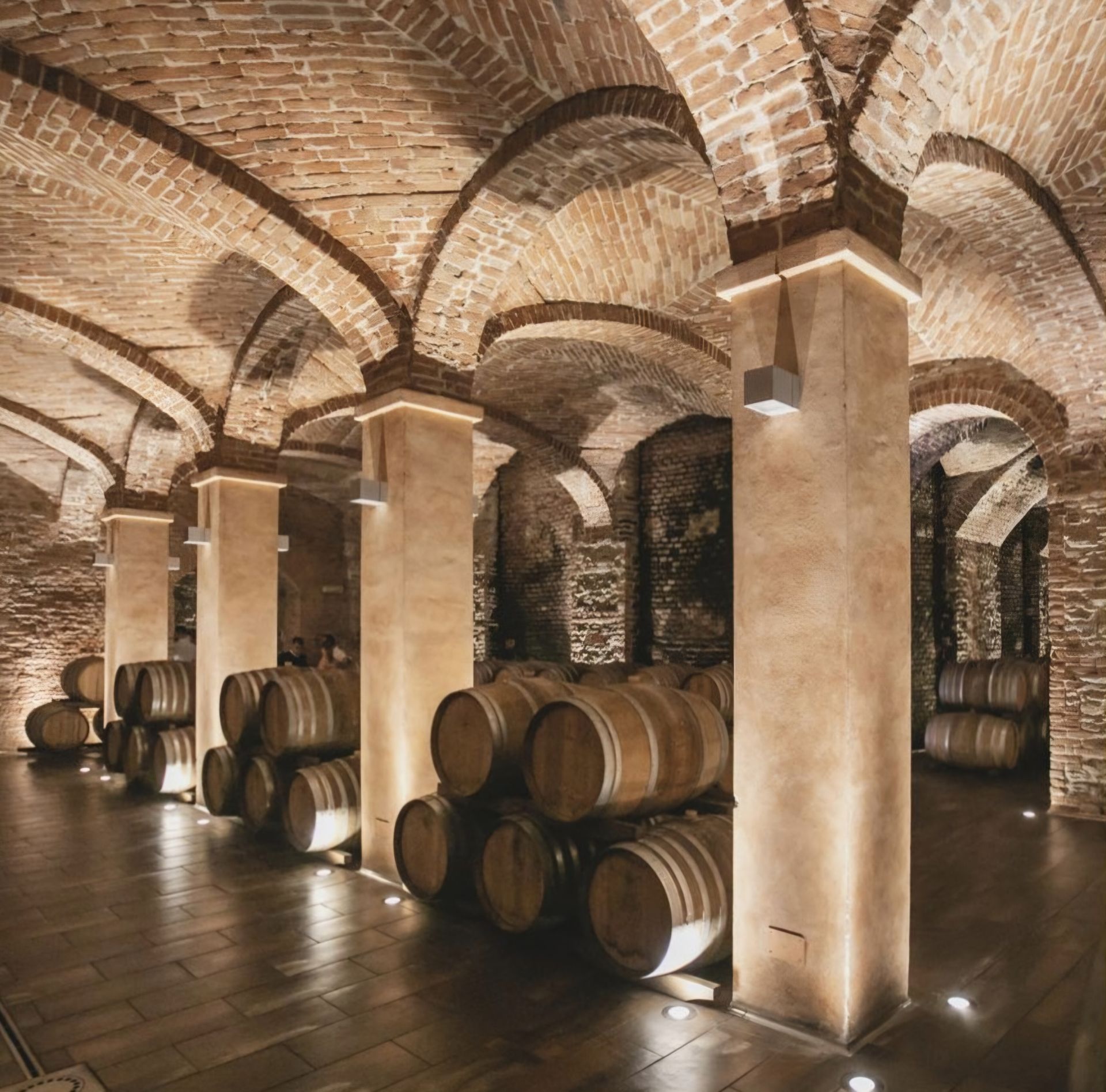
With the change in production method, Asti Spumante also underwent a change in name. In 1993, the Asti region was promoted to the highest classification, DOCG, under Italy's wine classification system, and the word 'Spumante' was dropped, allowing the wine to use the origin name 'Asti (Asti DOCG).' With this change, 'Gancia Asti DOCG,' which dropped 'Spumante' from its name, remains the winery's second highest-selling wine. Gancia Asti, with an alcohol content of 7.5%, has a straw and pale golden color, fragrant floral aromas, delicate notes of orange and sweet honey, and a sweet aroma that finishes with a refreshing and pleasant mouthfeel as a semi-sweet sparkling wine.
The Familiar Yet Still Sweet Name 'Moscato D'Asti'
While Asti Spumante introduced the names Asti and Gancia to the world, the most familiar and famous Asti among Koreans is undoubtedly 'Moscato D'Asti.' Meaning Moscato from the Asti region, Moscato D'Asti is a lightly sparkling wine (Frizzante) that enjoys great popularity among beginners not only in Korea but also abroad.
Moscato D'Asti is a light, sweet wine with prominent, rich aromas. According to DOC regulations, the pressure of the carbon dioxide must not exceed 2.5 atmospheres (atm). As a lightly sparkling wine, it is milder and softer than Asti Spumante, which typically has a pressure of over 4 atm, and its alcohol content is also lower, ranging from a minimum of 4.5% to a maximum of 6.5%, making it easy to enjoy. With its outstanding fruit and floral aromas and sweet taste, it is also highly popular as a dessert wine.

Although Moscato D'Asti is not as popular in Korea, the best-selling Gancia wine in Italy and around the world is 'Gancia Prosecco,' accounting for about half of the winery's sparkling wine sales. In terms of sales and popularity, there is no doubt that Prosecco holds the top spot among Spumante.
Prosecco is the most produced and most beloved Spumante in Italy, made in the northeastern regions of Veneto and Friuli-Venezia Giulia. Prosecco must use at least 85% of the white grape variety Glera, known for its light apple and melon flavors, and is vinified using the Charmat method in stainless steel tanks, resulting in a clean style with clear, fresh fruit flavors. Unlike the sweet Moscato D'Asti, Prosecco is made in a dry style with almost no sweetness.
IndexAkyung and Insellra
- "Reproduction Through Imitation"... The Origin of Italian Sparkling 'Spumante'
- Bordeaux, Diverse Varietals Used... Creative Blending Creates Works of Art
-

Reporter gooeunmo@asiae.co.kr
-
Edit Sung Kiho kihoyeyo@asiae.co.kr
© The Asia Business Daily(www.asiae.co.kr). All rights reserved.







![[Culture Interview] "Unifying the Fragmented Music Market... Super Fans Are the Next Competitive Edge"](https://cwcontent.asiae.co.kr/asiaresize/304/2026042817051344090_1777363513.jpg)