[Stage Voices] "I Bought It! The Cherry Orchard Is Now Mine"
The "Land Power" Shaped by Property Ownership
The Current Status of the Myth of Invincible Real Estate
Actor Park Hae-soo fulfilled his long-held dream of playing the role of Lopakhin in the 2024 LG Arts Center production of the play "The Cherry Orchard." He said, "I bought it! I bought it! The Cherry Orchard is mine now!"—a line he had always wanted to deliver.
This is the most dramatic scene in Anton Chekhov’s play "The Cherry Orchard," which is set in Russia after the abolition of serfdom in 1861, where a former serf purchases the land and house of his former master.
Lopakhin's family had been serfs serving the Ranevskaya (Lyuba) family for generations. After the emancipation of the serfs, Lopakhin, now of a different social status than his father, proves himself smart and business-savvy, eventually amassing great wealth. In contrast, the Lyuba family, accustomed to their aristocratic lifestyle, fails to recognize the changing times. As their family faces ruin, they ignore Lopakhin’s advice. Ultimately, Lyuba’s house and land are auctioned off, and Lopakhin becomes the successful bidder.
Compared to other European countries, Russia’s emancipation of the serfs came late, which hindered its economic development. Productivity remained low because of the serfs’ lack of motivation, and industrialization was delayed as the labor force remained bound to the serfdom system.

Photo of the LG Arts Center performance "The Cherry Orchard" starring Jeon Do-yeon (right) and Park Hae-soo. LG Arts Center
View original image"The Cherry Orchard" is now one of the most frequently staged of Chekhov’s plays. This is because the social backdrop of the cherry orchard—where remnants of the serfdom society linger—can be interpreted as a metaphor for modern society, which is stratified by wealth disparity.
American political scientist Michael Alberts, in his recently published book "Land Power" in Korea, examines the historical economic, social, and political influence of land. He argues that the land-owning class has historically consolidated dominant power. Land power remains relevant today. The fact that U.S. President Donald Trump claimed Greenland as American territory, and that China and Japan continue their conflict over the Diaoyu Islands, serve as evidence of this.
In Korea, which has experienced unprecedented high economic growth worldwide, a significant portion of wealth is concentrated in real estate. Houses and land function as a kind of power even in Korean society today.
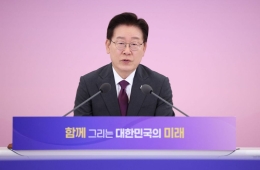
Recently, the question of whether the "myth of invincible real estate" can be broken has become a hot topic in Korea. This comes as President Lee Jaemyung has repeatedly criticized excessive real estate ownership.
Some argue, citing past policy failures, that government intervention should be approached with caution. However, given the already serious side effects of real estate concentration, there is also a strong view that leaving it solely to the market is not an option. The repercussions of intensified real estate concentration under market logic are varied.
Capital is diverted into unproductive sectors, leading to reduced productivity, while the increase in household debt results in weakened consumption. The deepening of asset inequality spreads to broader social conflict. It is also difficult to argue that the fatigue affecting Korean society—rife with excessive competition and overwork—is unrelated to the real estate problem. While some claim that the market alone can solve these issues, the market, though efficient, is not a cure-all.
It seems irresponsible to treat the astronomical housing prices in certain areas of Seoul as a separate market and use them as the basis for policymaking. The increase in real estate prices in Gangnam spreads to neighboring areas, driving up both housing prices and rental costs, which in turn pushes up commercial rent and service prices, ultimately affecting the overall cost of living for the entire community.
Hot Picks Today
 At President Lee's Call to "Give Enough to Shock," Whistleblower Rewards Become a Real Lottery
- If a Samsung Electronics Employee with a 100 Million Won Salary Receives a 600 Million Won Performance Bonus, Taxes Total 247.19 Million Won
- Lived as Family for Over 30 Years... Daughter-in-Law Cast Aside After Husband's Death
- "Who Is Visiting Japan These Days?" The Once-Crowded Tourist Spots Empty Out... What's Happening?
- Park Minshik Shaves Head: "I Will End Han Donghoon's Predatory and Parasitic Politics"... Ongoing Calls for Conservative Consolidation in Busan Buk-gu Gap within PPP
If Gangnam is treated as a separate market and society is divided into an extreme 1% and 99%, would the 1% truly be satisfied? Even within the 1%, a new sense of relative deprivation would arise toward an even smaller 1%. In the end, the 1% would be further split into the 0.01% and the 0.99%.
© The Asia Business Daily(www.asiae.co.kr). All rights reserved.