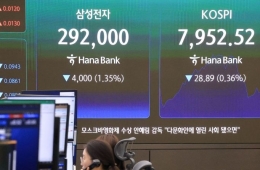
"Should You Buy Samsung Electronics and SK Hynix Now? Analysis Turns Question Marks into Exclamation Points [Weekend Money]"
Hana Securities' "6,000-Point Survival Strategy" Report
"Long-Term Semiconductor Contracts Need to Be Reinterpreted"
Analyzed as an Industry Linked to the AI Revolution,
Not Just a Simple Cyclical Recovery Sector
An analysis suggests that the domestic semiconductor industry should not be interpreted merely from a cyclical perspective, but rather as a key infrastructure within the new investment paradigm centered on artificial intelligence (AI).
!["Should You Buy Samsung Electronics and SK Hynix Now? Analysis Turns Question Marks into Exclamation Points [Weekend Money]"](http://www.asiae.co.kr/news/img_view.htm?img=2026042114104834482_1776748248.png)
On May 1, Hana Securities stated in its report, "6,000-Point Survival Strategy: Everyone Is Only Watching the End of the Cycle," that the significance of long-term semiconductor contracts should be reinterpreted, making this point clear.
Until now, the market has viewed the semiconductor industry through the lens of cycles. The main variables were when inventories peaked, when the average selling price (ASP) turned downward, and when profit estimates stabilized at lower levels. In other words, the semiconductor industry was considered a cyclical sector sensitive to economic trends.
The report analyzes that the semiconductor industry is not just a simple cyclical recovery sector, but one intrinsically linked to the AI revolution. AI has yet to be defined as a fixed industry. This ecosystem includes not only semiconductors but also data centers, servers, memory, networks, and devices, all interconnected. What matters more than the end of the semiconductor cycle is how long the structural demand for semiconductors can be sustained.
Therefore, there is a growing call for a reassessment of long-term semiconductor contracts. In the past, long-term supply contracts were mainly about addressing supply-demand imbalances. Moving forward, however, these contracts will function as strategic mechanisms for securing stable supply in the midst of technological hegemony competition. From the perspective of customer companies, securing high-performance memory and advanced packaging in a stable manner is a key competitive edge.
The report also suggests that the valuation standards for the semiconductor industry need to change. In terms of semiconductor exports, volume used to be the most important factor. If volume decreased, it was interpreted as a signal of industry improvement due to price hikes following inventory reductions. However, now both price and volume need to be considered simultaneously. With the explosive growth in AI demand, it is possible for both semiconductor prices and volumes to increase at the same time.
Hot Picks Today
 If They Fail Next Year, Bonus Drops to 97 Million Won... A Closer Look at Samsung Electronics DS Division’s 600M vs 460M vs 160M Performance Bonuses
- Opening a Bank Account in Korea Is Too Difficult..."Over 150,000 Won in Notarization Fees Just for a Child's Account and Debit Card" [Foreigner K-Finance Status]②
- Whistleblowers Could Earn Tens of Billions by Reporting Collusion... KFTC Announces Administrative Notice to Abolish Reward Cap
- Room Prices Soar from 60,000 to 760,000 Won and Sudden Cancellations: "We Won't Even Buy Water in Busan" — BTS Fans Outraged
- "Who Is Visiting Japan These Days?" The Once-Crowded Tourist Spots Empty Out... What's Happening?
Kim Dooun, a researcher at Hana Securities, stated, "The question the market should be asking about semiconductors is not 'When will the cycle end?' but 'Will it last longer than before?' He added, "When everyone is looking at the end of the cycle, the market may begin to reflect the start of a structural revaluation first."
© The Asia Business Daily(www.asiae.co.kr). All rights reserved.
!["Please Help Us": How Much Do Those Bowing 90 Degrees These Days Actually Earn? [Data Pick]](https://cwcontent.asiae.co.kr/asiaresize/307/2026052010120870131_1779239528.png)