[Interview] Lee Donghoon: "Legislation Needed for University Student Mental Health"
[University Students in Crisis] ③
Suicidal Ideation Rate Soars: 12.7 to 20.7 per 10,000
University Student Mental Health in the Red: Worsened After COVID-19
No Comprehensive Statistics—A "Blind Spot" for Management
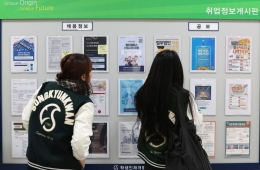
There is an insufficient institutional framework for systematically managing the mental health crisis among university students. Following the COVID-19 pandemic, the deepening of social disconnection and isolation, combined with anxiety over employment and mounting financial burdens, has left university students in a structure where they must endure alone.
In particular, universities operate under autonomous systems, and the education authorities remain focused on policies for elementary, middle, and high schools, effectively leaving university students in a blind spot for management. Professor Donghoon Lee of Sungkyunkwan University, who serves as Chairman of the National University Student Counseling Center Association and President of the Korean Counseling Psychology Association—the only nationwide research body in the field of university student mental health—met with The Asia Business Daily on April 22 and diagnosed, "The current crisis among university students is not an individual problem but a structural issue arising from both the breakdown of relationships and gaps in policy." The following is a Q&A with Professor Lee.

Professor Donghoon Lee of Sungkyunkwan University (President of the National University Student Counseling Centers Council and President of the Korean Counseling Psychology Association) is giving an interview to The Asia Business Daily. Photo by Yoon Dongju
View original image-How serious is the mental health crisis among university students?
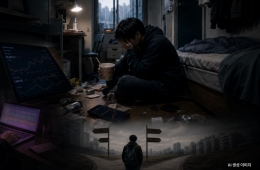
▲Emotional issues from elementary, middle, and high school often continue into university. Basic connections on campus, such as club activities or relationships with seniors and juniors, have essentially disappeared. Even within the same department and year, students rarely greet each other in class. For academic matters, they consult only with the professor. This means that, when facing the stresses of life, they are left to resolve everything on their own. Currently, the structure is such that everyone must endure alone.
-Why has the situation deteriorated to this extent?
▲During the two to three years of COVID-19, universities effectively came to a halt. Human beings grow through forming relationships, but that process was cut off. With increased smartphone use, students have become accustomed to spending time on screens rather than meeting people face-to-face. It is, literally, a state of being cast out alone into the wilderness. When things are difficult, people should ask for help, but now even the act of seeking help is something they fear. Emotional development has become that vulnerable. I believe the situation will become even more serious over the next seven to eight years.

Professor Donghoon Lee of Sungkyunkwan University (Chairperson of the National University Student Counseling Center Council and President of the Korean Counseling Psychology Association) is giving an interview with The Asia Business Daily. Photo by Dongjoo Yoon
View original image-How are isolation, withdrawal, and suicide connected?
▲There is a certain pattern observed in counseling sessions. When students feel stressed, they tend to cope with medication or avoidance. Without experiencing and overcoming failure, they simply endure, making it harder for them to handle disappointment when they enter society. If they fail to adjust to social life, they begin to isolate themselves and withdraw. If they venture outside again and fail, the cycle of withdrawal repeats. After four or five repetitions of this process, students often come to believe, "I am not needed," which in many cases leads to suicide.
-How many students do you believe seek help from counseling centers?
▲It is only the tip of the iceberg. There are far more students who do not come to counseling centers than those who do. This is also why cases of university student suicide or crisis often remain hidden. Universities, being sensitive to reputation and image, are reluctant to disclose related incidents. In many cases, suicides that occur off campus are excluded entirely from the university’s management framework.

Professor Dong Hoon Lee of Sungkyunkwan University (President of the National University Student Counseling Centers Association and President of the Korean Counseling Psychology Association) is giving an interview to The Asia Business Daily. Photo by Dongju Yoon
View original image-Why has university student mental health become a blind spot?
▲Because there is no responsible managing body. The Ministry of Education oversees only elementary, middle, and high schools, while universities are left to manage themselves autonomously. Even within universities, mental health has not been recognized as a core area. As a result, a structure has emerged in which no one takes responsibility. Recently, as issues such as suicide and depression among university students have grown more serious, university presidents are starting to take these problems more seriously.
-What is the most urgent issue?
▲Legislation. There needs to be a legal foundation in the Higher Education Act to address university student mental health. Only then can budgets and personnel be secured for more effective management. Currently, we do not even have an accurate grasp of the actual state of student suicide rates, self-harm, or depression. Without proper diagnosis, how can we offer solutions? In fact, there were moves to establish legal grounds for university counseling centers, but in 2021, this was pushed aside in favor of legislation for "human rights centers."
-Is there anything you would like to emphasize?
▲The crisis facing university students often continues from their school years. We all experience significant academic stress. A commonality among children who experienced isolation or withdrawal was that, whenever they encountered stress in school, their parents tried to resolve it with medication. We must not rely solely on medical approaches to mental health issues; rather, we should provide support models that address students’ developmental needs. The perspective that university students are simply adults and can be left alone also needs to change.
Related Articles
![[Exclusive] Pushed to the Edge: 43 Seoul National University Students Lost to Suicide in 20 Years, A Generation in Crisis](https://cwcontent.asiae.co.kr/asiaresize/37/2026050520090150711_1777979477.jpg) [Exclusive] Pushed to the Edge: 43 Seoul National University Students Lost to Suicide in 20 Years, A Generation in Crisis
[Exclusive] Pushed to the Edge: 43 Seoul National University Students Lost to Suicide in 20 Years, A Generation in Crisis
※ If you are struggling with depression or have concerns that are difficult to discuss, or if you have a family member or acquaintance facing such difficulties, you can receive 24-hour support from a professional counselor by calling the suicide prevention hotline ☎109 or through the SNS counseling service "Madeul-Lan (Your Heart-Listening Online Friend)."
© The Asia Business Daily(www.asiae.co.kr). All rights reserved.