EU Lowers This Year's Growth Forecast from 1.4% to 1.1% Amid Middle East Conflict Shock
"If the Hormuz Blockade Persists, Growth Could Be Halved"
Consumer Price Inflation Forecast Raised by 1 Percentage Point
Due to disruptions in energy supply and demand caused by the aftermath of the Middle East conflict, the European Union (EU) has revised its economic growth forecast downward for this year.
On May 21 (local time), the European Commission released its spring economic outlook, lowering the 2026 economic growth forecast from the previous 1.4% to 1.1%, and the forecast for next year from 1.5% to 1.4%. These represent downward revisions of 0.3 percentage points and 0.1 percentage points, respectively.
Among the EU's 27 member states, Germany (0.6%), France (0.8%), and Italy (0.5%)—the top three economies—are all expected to record growth rates well below the EU average.

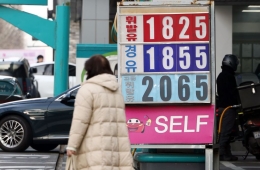
Meanwhile, the consumer price inflation forecast has been raised from 2.1% to 3.1% for this year, and from 2.2% to 2.4% for next year. Regarding this, the European Commission explained, "The EU, as a net energy importer, is highly vulnerable to energy shocks stemming from the Middle East conflict." The Commission added, "Sharp rises in energy prices are increasing household burdens and business costs, while reducing profits. As a result, income is effectively flowing out of the EU to energy-exporting countries."
This outlook is based on exchange rates, interest rates, and international oil and other commodity prices as of April 29. Valdis Dombrovskis, Executive Vice-President for an Economy that Works for People at the European Commission, warned that if the maritime blockade of the Strait of Hormuz continues for a longer period, economic growth in both this year and next year could be cut in half.
The fiscal deficit as a share of gross domestic product (GDP) is also expected to increase from 3.1% last year to 3.6% this year. This is because the governments of the 27 EU member states are increasing spending, such as raising defense budgets and supporting consumer fuel costs. In addition, interest payments on debt are also increasing. Even Germany, which was previously regarded as a model of fiscal discipline within the EU, is expected to post a deficit ratio of 3.6% of GDP this year.
Hot Picks Today
 "Only Two Per Person" Garbage Bag Crisis Was Just Yesterday... Japan Also Faces Shortage Anxiety
- "Samsung Electronics Employee with 100 Million Won Salary Receiving 600 Million Won Bonus... Estimated Tax Revealed"
- Lived as Family for Over 30 Years... Daughter-in-Law Cast Aside After Husband's Death
- 'Will Demand Finally Decline Due to High Prices?'... "I'll Just Enjoy Nearby Trips" as Japan and China See a Surge
- "Wore It Once, Then This? White Spots All Over 4.15 Million Won Prada Jacket... 'Full Refund Ordered'"
The EU has implemented fiscal rules through the 'Stability and Growth Pact', setting a limit on government deficits at 3.0% of GDP for member states. If a member state's government deficit exceeds this threshold, the EU may require corrective measures or impose fines. However, member countries with high fiscal deficits, such as Italy, are requesting a relaxation of these fiscal rules, as was done during the COVID-19 pandemic.
© The Asia Business Daily(www.asiae.co.kr). All rights reserved.