'N% Performance Bonus' Domino Starts in Semiconductors... Surge in Demands from Automotive, Shipbuilding, IT, and Bio Industries
Automatic Linkage and Removal of Caps: Push for Fixed Bonuses
Debate Over Whether Bonus Demands Are a Legitimate Labor Dispute
Lee: “Demand for Fixed Distribution of Operating Profit Goes Beyond Common Sense”
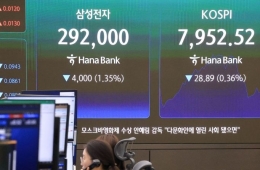
The controversy over performance-based bonuses, which began at SK hynix, has spread throughout the industry as Samsung Electronics reached an agreement, fueling calls for the “fixation” of performance bonuses across sectors.
The demand to automatically allocate a certain percentage of operating profit as performance-based bonuses, which originated in the semiconductor industry, is now spreading to the automotive, shipbuilding, IT, and bio industries. Concerns are mounting that performance-based bonuses—meant to vary according to results—may become, in effect, a second base salary. Furthermore, with the implementation of the so-called “Yellow Envelope Act,” even subcontractor unions are demanding the same bonuses as prime contractors, leading to warnings that the overall wage structure could be destabilized.

A close look at the performance bonus proposals spreading throughout the industry as of May 21 shows that they include “N% of operating profit,” “automatic linkage of performance bonuses,” and “removal of caps.” The intention is to make the payment of performance-based bonuses fixed, even though the principle should be distribution according to outcomes.
If the practice of paying a fixed minimum amount each year, regardless of business performance, becomes entrenched, companies will find it difficult to reduce bonuses when results worsen. There is also the burden of including performance-based bonuses in the calculation of average wages, which serve as the basis for severance pay. This is why experts emphasize the need for labor and management to reach clear agreements on bonus payment standards.
The demand to pay performance-based bonuses as a certain portion of operating or net profit is spreading throughout the industry in the course of collective bargaining. The Hyundai Motor Company union has submitted this year’s demands to management, including a monthly base salary increase of 149,600 won (excluding seniority-based raises), performance-based bonuses amounting to 30% of last year’s net profit, and guarantees for employment and labor conditions related to artificial intelligence (AI). Management argues that the criteria for bonus payments are unclear and insists that this matter needs to be addressed proactively.
The integrated union at HD Hyundai Heavy Industries, for the first time this year, has drawn up wage increase demands centered on “fair distribution of at least 30% of operating profit.” Unions at companies such as Hanwha Aerospace and HD Hyundai Electric are also calling for reforms to the bonus system, including the abolition of performance bonus caps.

The POSCO union, meanwhile, has filed for mediation with the Central Labor Relations Commission regarding the direct employment of partner company staff and the overhaul of the wage system, raising the possibility of the first strike in the company's history.
In the IT and bio industries, the risk of strikes is also becoming reality. The Kakao union, which proposed the automatic linkage of about 13% of operating profit for the performance bonus pool, held a strike vote on May 20, which passed. The Samsung Biologics union demanded that 20% of the company’s annual operating profit be fixed as a pool for performance-based bonuses, and went on a full strike from May 1 to May 5.
Additionally, with the Yellow Envelope Act as a catalyst, conflicts over performance-based bonuses are spreading throughout subcontractors and partner companies. Unions at subcontractors and partner companies of SK hynix and HD Hyundai Heavy Industries are demanding the same level of bonuses as their prime contractors.
Business circles point out that distributing operating profits as performance-based bonuses could immediately lead to decreased investment and hiring, exacerbate talent concentration in large companies, and further entrench the dual structure of the labor market. If prime contractors and their unions agree to pay a fixed proportion of operating profit as bonuses, subcontractors and partner companies are likely to face even greater financial difficulties as they are forced to cut costs.

In particular, there is growing debate about whether demanding performance-based bonuses under the threat of a strike is a legitimate subject of labor disputes. On May 20, President Lee Jaemyung also strongly criticized the situation at a cabinet meeting, stating, “The demand for a fixed distribution of operating profit goes beyond common sense.”
Hot Picks Today
 If They Fail Next Year, Bonus Drops to 97 Million Won... A Closer Look at Samsung Electronics DS Division’s 600M vs 460M vs 160M Performance Bonuses
- RIA Accounts Surpass 240,000 Subscriptions... Sold Nvidia, Bought Samsung Electronics
- Room Prices Soar from 60,000 to 760,000 Won and Sudden Cancellations: "We Won't Even Buy Water in Busan" — BTS Fans Outraged
- "Manhole Cover Blasts Open in 12 Seconds... The Reason Behind the 'Gangnam Flood Disaster' [Report]"
- "Who Is Visiting Japan These Days?" The Once-Crowded Tourist Spots Empty Out... What's Happening?
Park Jisoon, a professor at Korea University School of Law, commented, “It is up to companies to decide whether to distribute profits to attract talent or to invest in new businesses, but if performance-based bonuses are fixed as ‘N% of operating profit,’ it creates rigidity in setting priorities. This would have a significantly negative impact on sustainable management.”
© The Asia Business Daily(www.asiae.co.kr). All rights reserved.
!['WHO Declares International Public Health Emergency' Why the Untreatable 'Variant Ebola' Is More Deadly Than COVID-19 [Reading Science]](https://cwcontent.asiae.co.kr/asiaresize/307/2026052110164072055_1779326201.png)
!["Please Help Us": How Much Do Those Bowing 90 Degrees These Days Actually Earn? [Data Pick]](https://cwcontent.asiae.co.kr/asiaresize/307/2026052010120870131_1779239528.png)