Australia Orders Chinese Investors Out of Rare Earth Firms... China Immediately Pushes Back
Australian Government Orders Chinese Investors
to Divest Shares in Domestic Rare Earth Companies
Chinese Foreign Ministry Issues Immediate Official Criticism
The Chinese government has immediately pushed back against the Australian government's order requiring Chinese investors to sell their shares in Chinese rare earth companies within two weeks, calling on Australia to "respect investors' rights and interests."

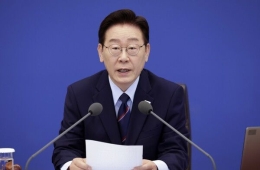
Guo Zhaokun, Spokesperson of the Chinese Ministry of Foreign Affairs, during the regular briefing in January 2025. Photo by Yonhap News Agency
View original imageAccording to the Chinese state-run media outlet Global Times on May 19, Guo Zhaokun, spokesperson for the Chinese Ministry of Foreign Affairs, stated at a regular briefing that day, regarding the Australian government's order for Chinese investors to sell their shares in Northern Minerals, "Australia must respect the legitimate rights and interests of Chinese investors and provide a fair and non-discriminatory investment environment for foreign capital."
Global Times also criticized the move as an example of "pan-securitization." Chen Hong, a professor at East China Normal University, argued, "Australia is politicizing business cooperation involving China," and claimed that "such actions only increase uncertainty in Australia's own investment environment."
Previously, Australian Treasurer Jim Chalmers issued a compulsory divestment order for a 17.6% stake in Northern Minerals (approximately 1.68 billion shares). The order applied to major Chinese shareholder Yuxiao Fund, as well as Hong Kong-based investment firms. This information was disclosed through an official filing the previous day. The company stated it is preparing a response plan and, in the meantime, will suspend trading of its securities.
This action by the Australian government is based on the Foreign Acquisitions and Takeovers Act. The government can restrict foreign investment or order compulsory share sales on the grounds of national security and the protection of strategic industries. It is also known that Australia has previously expressed concerns about the rare earth supply chain—used in defense, satellites, and electric motors—falling under Chinese control.
According to the Center for Strategic and International Studies (CSIS), China possesses about 60% of the world's rare earth reserves and accounts for approximately 90% of global processing. Since China imposed export restrictions on rare earths to the United States last year, the U.S. has begun expanding its supply chain to include other partner countries such as Australia.
Hot Picks Today
 "Stocks Are Not Taxed, but Annual Crypto Gains Over 2.5 Million Won to Be Taxed Next Year... Investors Push Back"
- "Don't Throw Away Coffee Grounds" Transformed into 'High-Grade Fuel' in Just 90 Seconds [Reading Science]
- Signed Without Viewing for 1.6 Billion Won... Jamsil and Seongbuk Jeonse Prices Jump 200 Million Won in a Month [Real Estate AtoZ]
- [Breaking] President Lee: "Sharing operating profit before taxes are deducted?... I don't understand"
- "Even With a 90 Million Won Salary and Bonuses, It Doesn’t Feel Like Much"... A Latecomer Rookie Who Beat 70 to 1 Odds [Scientists Are Disappearing] ③
Experts have previously warned that the Chinese government may retaliate against Australia in response to these developments. Peter Draper, Director of the Institute for International Trade at the University of Adelaide, told the South China Morning Post (SCMP) that "(the advantage of the forced divestment is that it isolates a critical part of the critical minerals supply chain from Chinese ownership, thereby promoting supply chain diversification)." He added, "The risk is that the Chinese government could retaliate in some way."
© The Asia Business Daily(www.asiae.co.kr). All rights reserved.