[Good Morning Market] Ongoing War Uncertainty... Profit-Taking Pressure Rises in Korean Stock Market
U.S. Stocks Close Slightly Lower
Consolidation Expected in Korea, Led by Semiconductors
"Rotation Possible into Neglected Sectors Including Defense"
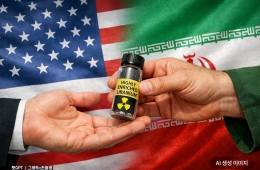
As uncertainty surrounding the possibility of war between the United States and Iran continues, it is expected that, on May 8, profit-taking pressure will increase in the Korean stock market, particularly among domestic artificial intelligence (AI)-related stocks.
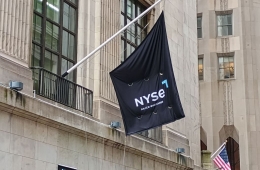
On May 7 (local time), the three major U.S. indices all closed lower. At the New York Stock Exchange (NYSE), the Dow Jones Industrial Average finished at 49,596.97, down 313.62 points (0.63%) from the previous trading day. The S&P 500 Index, which focuses on large-cap stocks, fell by 28.01 points (0.38%) to 7,337.11, while the tech-heavy Nasdaq Index ended at 25,806.196, down 32.75 points (0.13%).
In particular, semiconductor stocks—which drove the market rally with sharp gains the previous day—displayed a consolidation trend. As ARM plummeted by more than 10%, profit-taking was observed in previously surging semiconductor stocks such as Micron (-3.0%) and SanDisk (-5.0%). However, Qualcomm rose by more than 5%, buoyed by better-than-expected earnings and optimism about a large-scale share buyback.

On the 7th (local time), traders are working at the New York Stock Exchange in the United States. Photo by Reuters Yonhap News
View original imageAfter reports on May 6 suggested there was a growing possibility of a memorandum of understanding between the United States and Iran, expectations for an end to the conflict had increased. However, within a day, uncertainties over the negotiations re-emerged. This is attributed to a Wall Street Journal (WSJ) report that the U.S. administration under President Donald Trump is considering resuming 'Project Freedom,' which has heightened skepticism about a potential deal.
Nevertheless, the decline in U.S. stock prices and the rise in oil prices were both limited. Han Ji-young, a researcher at Kiwoom Securities, pointed out, "This suggests that the market's resilience to war-related risks remains intact."
He added, "More importantly, with the earnings season entering its final stage, the U.S. employment, consumption, and production indicators for April—which will be released next week—are expected to have a significant impact on the stock market." He explained, "During this process, periodic consolidation phases could occur. This is because markets such as the Nasdaq, Japan's Nikkei, and KOSPI have all experienced rapid short-term rallies since the beginning of this month."
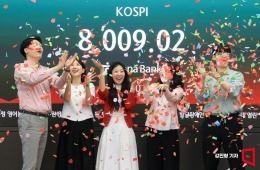
Regarding the outlook for the Korean stock market on this day, the researcher said, "Ongoing noise in ceasefire negotiations and the weakness of the Philadelphia Semiconductor Index in the U.S. are likely to lead to a consolidation trend, particularly among domestic AI value chain stocks." He added, "Following the ceasefire news and earnings announcements the previous day, rotation is expected to take place from defense—which saw a sharp decline due to profit-taking—to other previously neglected sectors."
Hot Picks Today
 As Samsung Falters, Chinese DRAM Surges: CXMT Returns to Profit in Just One Year
- "Most Americans Didn't Want This"... Americans Lose 60 Trillion Won to Soaring Fuel Costs
- U.S. Treasury Secretary: "30-Day Temporary License for Russian Crude Oil Transactions"
- Samsung Union Member Sparks Controversy With Telegram Post: "Let's Push KOSPI Down to 5,000"
- "Why Make Things Like This?" Foreign Media Highlights Bizarre Phenomenon Spreading in Korea
He further stated, "Stocks that have surged rapidly in a short period may give investors an incentive to realize profits." However, he also noted, "At the same time, it is worth recalling that the war is entering a phase toward a ceasefire and that upward revisions to this year's operating profit forecasts for KOSPI—led by semiconductors—continue to be made."
© The Asia Business Daily(www.asiae.co.kr). All rights reserved.