"Distorted Price Signals for Gasoline and Diesel... Indiscriminate Fiscal Measures Should Be Avoided" - Bruegel Institute

As the government plans to implement the fifth round of maximum price controls on petroleum products starting May 8, concerns have been raised about indiscriminate fiscal measures such as price caps and fuel tax cuts. Experts warn that keeping gasoline or diesel prices below market levels to curb surging inflation could blur the price signals received by consumers, ultimately leading to increased energy consumption. Instead, they argue that targeted support for vulnerable groups and assistance for electric vehicles and similar initiatives should be prioritized.
Bruegel, a European think tank, made these points in an article titled "The fiscal fault lines of Europe’s energy shock" published on its website on May 5 (local time).
The following is a summary of the key findings.
The global turmoil triggered by the U.S. and Israel’s war against Iran has once again exposed Europe’s vulnerability to fossil fuels. In the wake of this latest energy crisis, diesel and gasoline prices across Europe have surged by an average of 26% and 12%, respectively, since the outbreak of war. The TTF, the main benchmark for European natural gas prices, has also experienced renewed volatility. In the first weeks of the conflict, prices doubled from 30 euros to 60 euros per megawatt hour (MWh), before stabilizing at around 40 euros per MWh.
According to Bruegel’s "2026 European Energy Crisis Fiscal Response Tracker," governments across Europe have thus far pledged more than 11 billion euros in fiscal measures to cushion households and businesses from the shock. In absolute figures, Spain and Germany accounted for more than half of the total. Relative to gross domestic product (GDP), Greece, Spain, Bulgaria, and Ireland provided the largest levels of support.
However, interventions in many countries, including Germany, Italy, and Poland, have so far focused on cutting fuel taxes. Such measures risk distorting the price signals received by consumers, which could ultimately increase energy consumption at a time of limited supply.
These measures run counter to recommendations from the European Commission, the European Central Bank, and the International Monetary Fund, which advise against indiscriminate fiscal responses. Governments should avoid distorting market price signals. Instead, they should focus on supporting the most vulnerable groups and, ultimately, on backing investments that reduce fossil fuel consumption and advance Europe’s electrification. These developments also show that many European governments have not learned from the past. During the 2022 energy crisis, fuel tax cuts were only one element of a broader policy mix. For example, Germany’s response at the time included not only fuel tax cuts but also lump-sum support for households and subsidies for public transportation fares.
This time, countries such as the Netherlands, Belgium, and the United Kingdom are taking a more targeted approach, announcing heating cost support for vulnerable groups. The Netherlands has gone a step further by providing structural support for improving energy efficiency. Similarly, Sweden is offering households a fixed electricity bill subsidy to maintain incentives for energy savings. In addition, Sweden has allocated extra funds for electric vehicle subsidies and to help government agencies reduce fossil fuel consumption.
Beyond national measures, the European Commission adopted the "Middle East Temporary State Aid Framework (METSAF)" on April 29, targeting the fisheries, transport, and agriculture sectors. The Commission has also adjusted the "Clean Industry Deal State Aid Framework (CISAF)" to allow EU member states to cover up to 70% of electricity bills for energy-intensive industries, up from the previous 50%. While these measures are clearly defined, temporary, and set to expire at the end of 2026, they lack incentives for companies to invest in energy-saving measures. As a result, only countries with greater fiscal capacity are likely to take full advantage of them.
Hot Picks Today
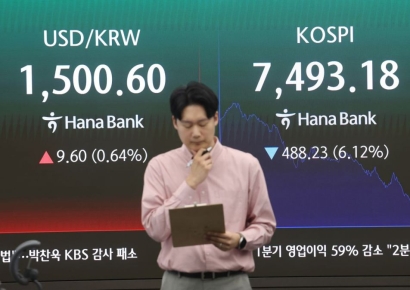 After Topping 8,000 Instead of Hitting 10,000... KOSPI Plunges—When Will It Rebound?
- "Samsung and Hynix Were Once for the Underachievers"... Hyundai Motor Employee's Lament
- [Breaking] Court Rules Against Samsung Electronics Union...1 Billion Won per Day Penalty for Exceeding Strike Scope
- Stronger Fines for Personal Data Leaks Start Tomorrow... Higher Sales Standards Applied
- "That? It's Already Stashed" Nightlife Scene Crosses the Line [ChwiYak Nation] ③
Public finances are already under pressure from the aftermath of the COVID-19 pandemic and the 2022 energy crisis. At that time, European governments spent hundreds of billions of euros on crisis response measures. Amid the uncertainty stemming from the Middle East conflict, European governments should focus on targeted and temporary relief measures, rather than tax cuts that distort prices. This shock should also be seen as a clear signal that structural change is needed. Accelerating electrification is essential for Europe to build greater resilience and reduce its exposure to the highly volatile global oil and gas markets.
© The Asia Business Daily(www.asiae.co.kr). All rights reserved.







