April Consumer Prices Up 2.6%, Highest in 21 Months... Petroleum Products Surge 21.9% (Comprehensive)
Cost-of-Living Index Rises 2.9%... Ongoing Burden of Perceived Inflation
Last month, consumer prices rose by 2.6%, marking the largest increase in 1 year and 9 months. Petroleum product prices surged by more than 20%, leading the overall inflation. As the impact of higher international oil prices due to the Middle East war quickly spread across daily life—including sectors such as transportation and dining out—it is expected that the burden on the livelihood economy will become even greater going forward.
According to the "April Consumer Price Trends" released by the Ministry of Data and Statistics on May 6, consumer prices in April increased by 2.6% compared to the same month last year. This is the largest rise since July 2024 (2.6%). Consumer prices had shown a relatively stable trend, hovering at the low to mid-2% range—2.4% in November last year, 2.0% in January this year, and 2.2% in March—but the increase expanded again to the upper 2% range last month.
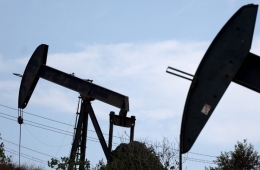
The main driver of this steep price increase was petroleum products. Petroleum prices soared by 21.9% year-on-year, reaching the highest level in 3 years and 9 months since July 2022 (35.2%). The surge in international oil prices triggered by the Middle East war has directly impacted domestic gas station prices. By item, diesel prices jumped by 30.8%, showing the steepest increase; this is also the highest in 3 years and 9 months since July 2022 (47.0%).
Gasoline prices also rose by 21.1%, reaching the highest level since July 2022 (25.5%), while kerosene prices increased by 18.7%, marking the largest rise in 3 years and 2 months since February 2023 (27.1%). The contribution of petroleum products to the overall consumer price index was 0.84 percentage points, meaning they alone accounted for about one-third of the total increase last month (2.56 percentage points).

On the 9th, as international oil prices surpassed 100 dollars causing gas prices at gas stations nationwide to rise, cars lined up at the Mannam Square gas station in Seocho-gu, Seoul, trying to refuel before prices go up further. March 9, 2026. Photo by Jinhyung Kang
View original imageOil Price Shock Spreads to Transportation, Aviation, and Travel
The oil price shock did not stop at petroleum products but quickly spread across all aspects of daily life. Transportation prices rose by 9.7% year-on-year, marking the largest increase since July 2022 (15.4%). Compared to last month (5.0%), this is a sharp jump of 4.7 percentage points in just one month.
In particular, international airfare jumped by 15.9%, leading the increase in transportation prices. The decisive factor behind the spike in international airfare was the rise in fuel surcharges, which are linked to international oil prices. Lee Dowon, Director of Economic Trends and Statistics at the Ministry of Data and Statistics, explained, "Airline fuel surcharges are calculated based on international oil prices in mid-February to mid-March, so the surge in oil prices immediately after the outbreak of war was directly reflected in April airfare." He added, "Not only international airfare but also some domestic airfare experienced upward pressure."
The impact of rising oil prices also extended to everyday services. Overseas group travel expenses rose by 11.5%, while car repair costs increased by 4.8%, and engine oil replacement fees recorded a double-digit rise of 11.6%. Laundry fees, which use petroleum chemical materials such as naphtha, also climbed from 6.7% last month to 8.9%. The cost of housing repair materials, including paint, wallpaper, and flooring, increased from 1.0% last month to 3.7%. Overall, personal services rose by 3.2%, and public services by 1.4%, respectively.

Since early this month, the premature heat wave has triggered a 'heatflation' phenomenon causing agricultural product prices to rise. In the past week, the price of a watermelon exceeded 30,000 won, and especially vegetables vulnerable to heat, such as cabbage and spinach, have increased in price. On July 14, spinach is displayed at Hanaro Mart Yangjae Branch in Seocho-gu, Seoul. 2025.7.14. Photo by Kang Jinhyung
View original imageAgricultural Products Act as a Buffer... Dining Out Slightly Slows, Processed Foods Remain Stable
Agricultural, livestock, and fishery products fell by 0.5% year-on-year, serving as a buffer to prevent further inflation. Key vegetables such as cabbage (-27.3%), onion (-32.0%), and radish (-43.0%) showed a sharp drop in prices as improved weather conditions led to increased supply, with fresh vegetables overall plunging by 12.7%. Fresh fruit prices also fell by 6.3%.
Dining out prices rose by 2.6%, a slowdown of 0.2 percentage points from the previous month (2.8%). Analysts attribute this to the fading base effect from last April's price hikes for coffee, hamburgers, and other items, leading to a smaller increase. Processed food price increases also slowed from 1.5% last month to 1.0%. Authorities explained that food companies' measures to lower shipment prices are gradually being reflected in the market, contributing to price stabilization.
The core inflation index, which shows the underlying trend of prices (excluding food and energy), rose by 2.2% year-on-year, maintaining the same level as the previous month. The index excluding agricultural products and petroleum products also recorded 2.2%, remaining steady.
Hot Picks Today
!["Stock Set to Double: This Company Smiles Every Time a Data Center Is Built [Click e-Stock]"](https://cwcontent.asiae.co.kr/asiaresize/93/2026050416112750184_1777878687.jpg) "Stock Set to Double: This Company Smiles Every...
"Stock Set to Double: This Company Smiles Every...
- Even Wealthy Investors in Cheongdam and Apgujeong Are Turning to Stocks After Se...
- “Did They Bet Too Early?” Losses Snowball for ‘Geopverse Ants’ as KOSPI Soar...
- "Going to Seongsu-dong?" Japanese Girl Group Faces Taxi Refusal in Seoul
- Who Called It an 'Old Man's Hobby'? "Tired of the Usual," Millennials & Gen Z Bu...
However, the cost-of-living index, which reflects items with a high share of household spending, rose by 2.9%, exceeding the overall inflation rate (2.6%) by 0.3 percentage points. In particular, non-food living expenses rose by 3.9%, indicating that the inflation burden felt by ordinary citizens in daily life is much higher than the statistical figures suggest. The government stated, "To minimize inflation uncertainty caused by heightened external volatility such as the Middle East war, we will prioritize countermeasures for petroleum products and intensively manage items closely related to people's livelihoods through the Livelihood Price Task Force (TF)."
© The Asia Business Daily(www.asiae.co.kr). All rights reserved.